
Trending
This story is from October 15, 2022
Hydrogen-powered Toyota Mirai test mule in India: Highlights
The Mirai FCEV features Toyota’s TCFS fuel cell technology that uses hydrogen as a fuel. The hydrogen is stored in three pressurised tanks with an overall capacity of 142.2-litres. The hydrogen power generating motor in the Mirai is capable of producing 128 kW or 171 hp and 221 Nm of peak torque.
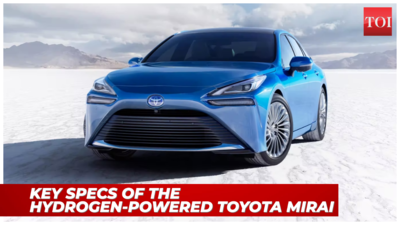
As part of the alternative fuels pilot project being carried out by Toyota and the Central government, the automaker has brought two cars into the country. The first was the ethanol-powered Corolla FFV-SHEV, watch TOI Auto’s review here. And the second is the hydrogen-powered Mirai, in which Union minister Nitin Gadkari was recently spotted riding shotgun. The two vehicles have been brought into the country to test if biofuel blends and green hydrogen technologies are viable options for Indians or not.

Currently, there are three types of hydrogen fuels available worldwide. The first is petroleum hydrogen, the second is black hydrogen derived from coal and the third is green hydrogen generated from water and organic waste. The Mirai Fuel Cell Electric Vehicle (FCEV), runs on green hydrogen.
The Mirai FCEV features Toyota’s TCFS fuel cell technology that uses hydrogen as a fuel. The hydrogen is stored in three pressurised tanks with an overall capacity of 142.2-litres. The hydrogen power generating motor in the Mirai is capable of producing 128 kW or 171 hp and 221 Nm of peak torque.
Toyota claims that the Mirai has a range of 650 km on full capacity and unlike EVs that need a considerable time to recharge, the hydrogen tanks can be completely filled up in just five minutes. In terms of emissions, an FCEV generates water and no other residues. The Mirai is currently being sold in other international markets.
While the proposition of hydrogen powered cars is exciting, India still has a long way to go before hydrogen becomes available in volumes that would make FCEVs a practical alternative.
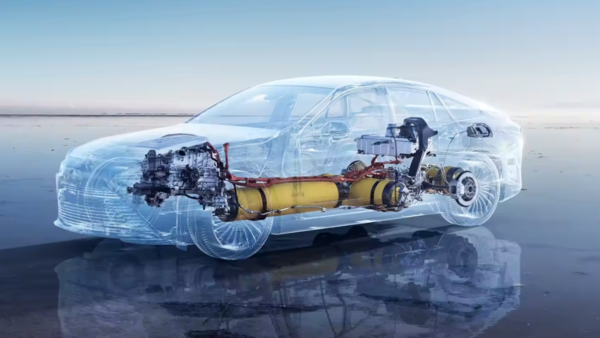
Toyota's FCEV tech
Currently, there are three types of hydrogen fuels available worldwide. The first is petroleum hydrogen, the second is black hydrogen derived from coal and the third is green hydrogen generated from water and organic waste. The Mirai Fuel Cell Electric Vehicle (FCEV), runs on green hydrogen.
The Mirai FCEV features Toyota’s TCFS fuel cell technology that uses hydrogen as a fuel. The hydrogen is stored in three pressurised tanks with an overall capacity of 142.2-litres. The hydrogen power generating motor in the Mirai is capable of producing 128 kW or 171 hp and 221 Nm of peak torque.
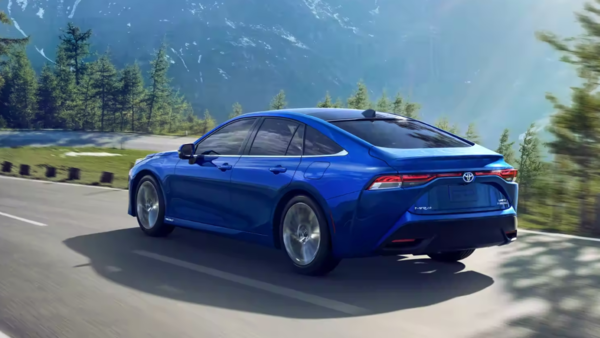
Toyota Mirai
Toyota claims that the Mirai has a range of 650 km on full capacity and unlike EVs that need a considerable time to recharge, the hydrogen tanks can be completely filled up in just five minutes. In terms of emissions, an FCEV generates water and no other residues. The Mirai is currently being sold in other international markets.
While the proposition of hydrogen powered cars is exciting, India still has a long way to go before hydrogen becomes available in volumes that would make FCEVs a practical alternative.
End of Article
FOLLOW US ON SOCIAL MEDIA
Visual Stories

Hot Picks
TOP TRENDING
Trending Stories
In Auto
Entire Website
- Exclusive: 2024 Maruti Suzuki Dzire design fully out with sunroof and more
- Kinetic Green targets Rs 10,000 cr revenue with new platforms, B2C focus
- MG Windsor EV: Variants-wise features explained
- Tata electric cars get big discounts of up to Rs 3 lakh, free charging and more
- Delhi drivers to get 50 percent discount on traffic fines: Here's how it works
- Karnataka man burns down Ola showroom over grievance: Company responds
- Modi Govt launches 'PM E-DRIVE' scheme with Rs 10,900 crore outlay for EVs: Details
- MG Windsor EV launched at Rs 9.99 lakh: Pay-per-km plan takes on petrol cars!
- Govt introduces free highway travel for private cars, with a condition: Details
- September 2024 auto launches: Hyundai Alcazar, MG Windsor EV, Tata Nexon CNG, and more
- Kolkata police commissioner, two health officials removed after Mamata's meeting with docs
- BAPS swaminarayan temple vandalised in New York; 'unacceptable', says Indian consulate
- Cow vigilantes killing a Brahmin is the wake-up call India needed
- Modi govt will bury bid to revive 90s-like terrorism in J&K: Amit Shah
- 'Look at own record': India condemns remarks by Iran's Supreme Leader Khamenei
- Attempt to derail Delhi bound Swatantrata Senani Express
- Will Atishi replace Arvind Kejriwal as Delhi CM?
- Apple's biggest 'iPhone update' for year 2024 rollout starts today
- Watch: BJP MLA falls on rly tracks while flagging off Vande Bharat train
- UPS vs NPS Calculator: Switch a no-brainer? Not really! Check top points

Popular Categories
Hot on the Web
Top Trends
Prince HarryWho is Ryan RouthUPI Transaction LimitArvind Kejriwal ResignationNEET UG Admission CriteriaKolkata Doctor Rape CaseUS Presidential ElectionsRohit SharmaSports Stars Turned Power CouplesIBPS RRB Clark PO ResultDonald TrumpCristiano RonaldoIndia vs Korea HighlightsBMW Accident Madhya PradeshUPS vs NPS CalculatorMiami Dolphins OwnerLive Cricket Score
Trending Topics
Living and entertainment
Latest News
Vempalle Shareef's story is now a lesson for degree students in Andhra PradeshGovt launches programme to tackle glacial lake outburst flood threat in Himalayas, all 190 high-risk lakes to be monitoredKhatron Ke Khiladi 14: Shalin Bhanot hosts a fun party for his co-contestants Krishna Shroff, Abhishek Kumar, KaranVeer Mehra and othersAstrological Influence on Zodiac Signs' Career ChoicesBike rally held to raise voter awareness in Jammu and Kashmir's Doda ahead of assembly electionsFalcons' Predictable Offense and Cousins' Prime-Time Woes Spell Trouble in PhiladelphiaTaurus, Daily Horoscope Today, September 17, 2024: Anxiety and stress diminishLiza Colon becomes 1st Latina to win Best Supporting Emmy Award'Oh no!': Hilarious goof-up leads to missed catch, leaves bowler in smile. WatchTop NFL Superstars Who Are Vegan: Derrick Morgan, David Carter, Theo Riddick and moreKSCA Invitational: Arjun Tendulkar takes match haul of 9 wickets in big Goa CA XI winAbhishek Kumar shares selfies with Alia Bhatt; recalls the time when he worked as a crowd artist in ‘Humpty Sharma Ki Dulhaniya’Shocking! Man celebrates birthday by lying among massive PythonsSohum Shah says 'Tumbbad 2' will be different from 'Munjya' and 'Stree 2': 'They are not making dadi-nani ki kahaniyaan'1031 candidates to contest Haryana Assembly Elections to be held on October 5: CEO J AgarwalSathiyan set to partner Sreeja in mixed doublesHere's why multiple WWE Hall of Famers refused to team up with Kevin Owens on SmackDownCarlito's Net Worth 2024, Current WWE Salary and More
Copyright © 2024 Bennett, Coleman & Co. Ltd. All rights reserved. For reprint rights: Times Syndication Service