
- Ex-IAS officer Dhanendra Kumar's 80th b’day, London trip, reunion plans gutted in fatal house blaze; how family tried to save him in vain
- IPL 2026: Mumbai Indians concerned about numerous dressing room 'leaks'
- Iran secretly bought Chinese satellite tech via UAE — then struck Abu Dhabi: Report
- IPL 2026 | 'We're told that he had a season-ending injury': Kumar Sangakkara calls out Curran over playoff absence
 Loading..






EC orders FIR against Rahul Gandhi for TV interview on Gujarat poll eve
File that could solve Bose’s death mystery ‘closed for 100 years’
Somnath temple visit: Rahul Gandhi listed as 'non-Hindu'
Woman passenger, Air India duty manager slap each other at Delhi IGI airport
Saudi prince vows new Islamic alliance 'will wipe out terrorists from earth'
Over 200 worshippers killed at Egypt mosque in deadliest terror attack
PIC: Adira's birth announcement cradle filled with goodies!
Rumoured 'Dabangg 3' actress leaks topless pics for publicity?
PIC: AbRam kissed by two girls!
PIC: Varun Dhawan gearing up for underwater stunts
PICS: Deepika Padukone back on ‘xXx’ sets
What made Hrithik run behind his son Hrehaan?
Purify your home with these houseplants
The easiest Shahi Paneer recipe!
Serve your drink in the right glass
Kangana unhappy with Hrithik for dragging Rangoli into their battle?
PIC: Arpita Khan's maternity photoshoot
Sonam Kapoor speaks about her alleged love affair
Hafiz Saeed's release is an attempt by Pak to 'mainstream' UN-proscribed terrorists: India
As the old order changeth, India's Bhandari fills up last vacancy at ICJ
Look at your career before commenting on Dhoni: Shastri
How to look good without make-up
7 mistakes people regret making in bed
Do you know about this new sexual orientation?
Azad's gift for Aamir will melt your hearts!
Aamir Khan - Flashback to the Future!
Sanjay Dutt and Salman Khan end their friendship?
5 authors who have been accused of plagiarism
Budget Cooling: Affordable ways to stay chill this summer
From Alia Bhatt to Sridevi: Who wore what at Justin Bieber’s concert




















Budget 2026 Live Updates: 10 key things individual taxpayers should know
Union Budget 2026 Live: With ‘bahi-khata’ in hand, FM Sitharaman leaves for Rashtrapati Bhavan ahead of Budget
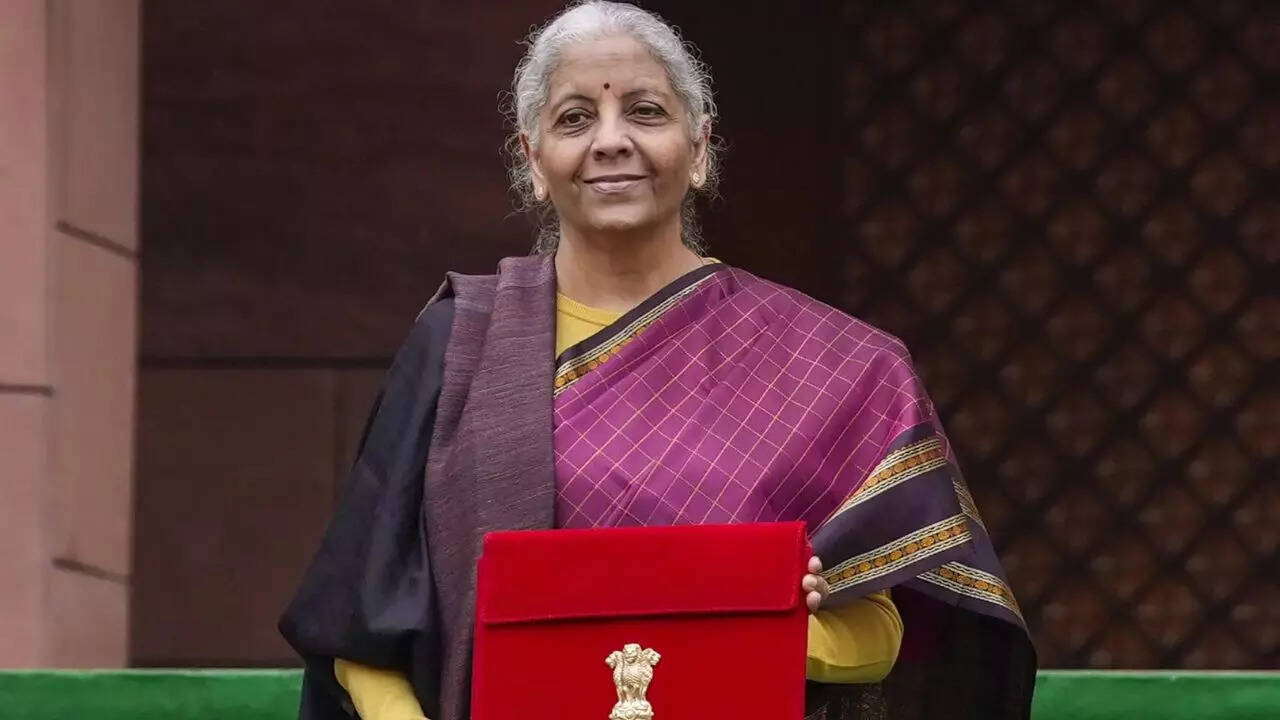
Union finance minister Nirmala Sitharaman on Sunday left Kartavya Bhavan for Rashtrapati Bhavan carrying her trademark ‘bahi-khata’—a tablet wrapped in a red cloth embossed with the golden national emblem.
Sitharaman is set to present her record ninth consecutive Union Budget in the Lok Sabha at 11 am.
She was accompanied by Union Minister of State for Finance Pankaj Chaudhary, Chief Economic Adviser Dr V Anantha Nageswaran, Central Board of Direct Taxes (CBDT) chairman Ravi Agrawal and other senior officials of the finance ministry.
As part of the ongoing Budget Session of Parliament, the Finance Minister will present the Union Budget for the 2026–27 financial year. During the presentation, she will place before the House the statement of estimated receipts and expenditure of the Government of India for the year.
Sitharaman will also table two statutory statements under Section 3(1) of the Fiscal Responsibility and Budget Management (FRBM) Act, 2003—the Medium-term Fiscal Policy-cum-Fiscal Policy Strategy Statement and the Macro-Economic Framework Statement.
According to the Lok Sabha List of Business, she will further seek leave to introduce and formally move the Finance Bill, 2026, which gives legal effect to the government’s financial proposals.
Budget 2026 Live: $5 trillion economy is about timing; focus must shift to $10 trillion, says expert
According to Rishi Shah, partner and economic advisory services leader at Grant Thornton Bharat, a $5 trillion economy is increasingly a matter of timing rather than ambition, and the policy focus now must shift to laying the foundations for a $10 trillion economy. Achieving that scale will require a distinctly Indian growth strategy—one that converts demographic size into sustained productivity. This means maintaining high-quality public capex to crowd in private investment, building manufacturing ecosystems that can scale and absorb labour, and sharply reducing regulatory and compliance frictions that limit firm growth. Equally critical is a step-change in human capital—aligning skilling with industry needs and embedding innovation and IP creation into the production cycle. Fiscal credibility and efficient expenditure will be essential to anchor investor confidence as India pursues long-term, productivity-led growth.
Union Budget 2026: Rail passengers hope for tax relief, better rail services
One traveller said he had high hopes from the Budget, applauding last year’s revision of income tax slabs. "I have a lot of expectations with the Budget. The Budget last year was really good. They revised the Income Tax slab, and it benefited the middle class. In the wake of current geopolitical situation, Budget becomes really important. India projects itself as a soft power, in this regard Budget gets very important for our relations with other countries. We signed a trade deal with EU, that is very important. As far as the domestic economy is concerned, govt is focussing a lot on shipping industry. I expect a lot of things related to that this time. There is great development in infrastructure too," the passenger told ANI.
Another passenger, Shiv Mangal Rahi, who works in the private IT sector, said, "I am a private sector employee in the IT sector. The government provided us with major relief the last time. I expect something for us this time as well, that there be some relaxation in the tax slab and the new tax regime be made even better...I hope for improvement in facilities at the Railway stations and trains, infrastructure is important. I think govt will do something regarding inflation too."
Vijay Gupta, another commuter, highlighted the need for better railway services along with more support for taxpayers. "The number of trains should be increased. Something should be done about the delay in trains. If the number of tracks are increased, it will be good for passengers travelling during festivals...There was good relief for taxpayers in the Budget last year. If the tax slabs are revised again, it will be really good for middle class," Gupta told ANI.
Union Budget 2026 Live: ‘Incentives alone won’t create jobs’ - Why Budget must focus on scale
According to Rishi Shah, partner and economic advisory services leader at Grant Thornton Bharat, as global supply chains realign, manufacturing competitiveness will hinge on India’s ability to help firms scale faster and specialise more deeply, rather than compete on marginal costs. He said Budget policy must therefore be structural in nature—accelerating firm growth, enabling technology absorption and promoting cluster-based specialisation—so that employment generation and export competitiveness emerge as outcomes of sustained scale.
Shah added that job creation will depend on systematically integrating MSMEs with anchor manufacturing units, while encouraging specialisation, vendor development and quality upgradation across clusters. Such an ecosystem-based approach, he noted, would allow smaller firms to participate in large supply chains without sacrificing flexibility.
He also pointed out that the most binding constraint remains friction from visible costs and compliance burdens, including logistics, approvals and regulatory overlap. Reducing these frictions, Shah said, is critical to making manufacturing profitable at scale, as incentives alone will not deliver durable competitiveness or sustained job creation.
Union Budget 2026 Live: 'Hope this budget will move development forward,' says Uttar Pradesh minister Suresh Kumar Khanna
Uttar Pradesh minister Suresh Kumar Khanna on Sunday said he hoped the Union Budget would accelerate development and create more employment opportunities, while also boosting business growth under the leadership of Prime Minister Narendra Modi.
Speaking to ANI in Lucknow, Khanna said he expected the Budget to push development forward and include measures aimed at generating maximum employment. Referring to India’s economic rise under the Modi government, he expressed confidence that the Budget would further strengthen business activity across the country.
Meanwhile, Union finance minister Nirmala Sitharaman is set to present the Union Budget for the 2026–27 financial year in the Lok Sabha today during the ongoing Budget Session of Parliament. As per the Lok Sabha List of Business, the House will convene at 11 am.
During the presentation, Sitharaman will place before Parliament the statement of estimated receipts and expenditure of the Government of India for 2026–27. She will also table two statutory statements under Section 3(1) of the Fiscal Responsibility and Budget Management (FRBM) Act, 2003 — the Medium-term Fiscal Policy-cum-Fiscal Policy Strategy Statement and the Macro-Economic Framework Statement.
The List of Business further notes that the finance minister will seek leave to introduce and formally move the Finance Bill, 2026, in the Lok Sabha.
Budget 2026 Live: Govt may to present Rs 54.1 lakh crore budget for FY27, growth of 7.9% YoY, says report
Sitharaman is likely to present a Rs 54.1 lakh crore Union Budget for FY2026–27, marking a year-on-year rise of 7.9 per cent, according to a report by Sunidhi Securities & Finance Limited.
The report said the size of the Union Budget, measured by Total Expenditure (TE) as a share of GDP, offers the clearest signal of the government’s fiscal stance.
After averaging 14.8 per cent of GDP between FY23 and FY25, Total Expenditure was pegged at 14.2 per cent of GDP, or Rs 50.65 lakh crore, in the Budget Estimates (BE) for FY26. However, taking into account weaker nominal GDP growth and lower revenue buoyancy, the report pegged the Revised Estimates (RE) for FY26 Total Expenditure at roughly 14.0 per cent of GDP, or Rs 50.15 lakh crore.
It said, "For FY27, we estimate TE at Rs 54.1 tln, implying 7.9 per cent YoY growth, consistent with a calibrated fiscal consolidation path rather than fiscal tightening".
The report also expects expenditure to ease further to around 13.8 per cent of GDP in FY27, pointing to a gradual consolidation in fiscal policy.
According to the authors, this path aligns with a calibrated fiscal consolidation strategy rather than aggressive tightening, highlighting the government’s effort to preserve macroeconomic stability without derailing growth support.
On the fiscal deficit, the report projected the FY27 target at 4.16 per cent of GDP, or Rs 16.37 lakh crore, compared with 4.4 per cent of GDP, or Rs 15.69 lakh crore, in the FY26 Budget Estimates.
Union Budget 2026 Live: Top focus areas?
Sujan Hajra, Chief Economist & Executive Director, Anand Rathi Group lists what he thinks should be the top focus area:
Export sector–focused measures – With rising tariff and geopolitical risks, exports are critical for growth, FX stability, and employment; improving competitiveness, diversification, and logistics delivers economy-wide spillovers.
Infrastructure – Public capex has a high multiplier and crowds in private investment, lowers costs, and anchors medium-term growth amid global uncertainty.
PLI schemes for manufacturing – At this stage, PLIs should deepen supply chains and boost scale and exports rather than expand coverage, strengthening manufacturing competitiveness.
Jobs – Sustainable job creation follows from export growth, infrastructure build-out, and manufacturing scale, rather than from standalone employment schemes.
Fiscal management – Maintaining fiscal credibility keeps borrowing costs low and preserves policy space, especially in a volatile global environment.
Healthcare – With Ayushman Bharat and digital health systems in place, the focus should now be on delivery efficiency and outcomes, rather than large spending expansion.
Education – As NEP implementation progresses, priority should be execution, teacher quality, and industry-linked skilling, with growth benefits accruing over time.
Social security schemes – After building a wide DBT-based welfare framework, the emphasis should shift to better targeting and consolidation to avoid crowding out capex.
Budget 2026: Union finance minister Sitharaman arrives at Kartavya Bhawan
Union finance minister Nirmala Sitharaman arrived at Kartavya Bhawan on Saturday ahead of presenting the Union Budget in Parliament for a record ninth consecutive time.
This will be the second full Budget of the National Democratic Alliance (NDA) government since it returned to power for a third straight term in 2024.
The FY27 Budget is being presented at a time of heightened complexity for the Indian economy. While domestic demand has remained resilient and inflation has eased from recent highs, the global economic environment continues to be marked by uncertainty.
Geopolitical tensions, volatile commodity prices, uneven monetary easing by major central banks and increasing trade fragmentation are weighing on the outlook. Compounding these challenges are the punitive 50 per cent tariffs imposed by US President Donald Trump on Indian goods, which have unsettled financial markets, triggered sustained foreign investor outflows and pushed the rupee to record lows.
So far, broad-based income tax and GST cuts, increased infrastructure spending and interest rate reductions by the Reserve Bank of India have helped cushion the economy against these external shocks. However, the tax cuts have also reduced government revenues, narrowing the fiscal space available to support growth in the upcoming Budget.
Union Budget 2026 Live Updates: FM Sitharaman leaves for finance ministry
Union finance minister Nirmala Sitharaman left her residence for the Ministry of Finance on Saturday ahead of the presentation of the Union Budget for 2026–27.
As per the Lok Sabha List of Business, the House will convene at 11 am for the Budget presentation.
During the session, Sitharaman will place before Parliament the statement of estimated receipts and expenditure of the Government of India for the 2026–27 financial year. She will also table two statutory statements under Section 3(1) of the Fiscal Responsibility and Budget Management (FRBM) Act, 2003 — the Medium-term Fiscal Policy-cum-Fiscal Policy Strategy Statement and the Macro-Economic Framework Statement.
The List of Business further notes that the Finance Minister will seek leave to introduce and formally move the Finance Bill, 2026, which gives legal effect to the government’s financial proposals.
Sitharaman is set to present her ninth consecutive Union Budget, a record in India’s parliamentary history.
Union Budget 2026 Live Updates: Energy security in focus
“Energy security should be central to Budget 2026 as it is a foundational driver of long-term growth. India’s installed power capacity is now close to the 500 GW mark, with non-fossil sources accounting for nearly half, but future growth—especially with the expansion of energy-intensive technologies such as AI, data centres and advanced manufacturing—will require a much larger, more reliable and resilient energy base. This argues for a balanced strategy that scales renewables, storage and grid capacity, while also ensuring adequate baseload power. In parallel, expanding strategic petroleum reserves through a private-sector-led framework would strengthen resilience against external supply shocks and price volatility.” Rishi Shah, Partner and Economic Advisory Services Leader, Grant Thornton Bharat tells TOI.
India Union Budget 2026 Live: FM should aim to sustain growth momentum
“The GoI has carried out extensive fiscal reforms since 2018. These comprised structural reforms affecting both the revenue and expenditure sides of the Budget. Tax reforms included implementation of GST in 2017 followed by extensive CIT reforms in 2019 and reforms of PIT in 2025. The GST 2.0 was implemented in September 2025. As far as import taxes are concerned, there has been a reduction in the effective tariff rate over time2. Together these reforms almost complete the current generation of reforms on the side of taxation. The Direct Tax Code as per the Income Tax Act, 2025 will also be effective from 01 April 20263. On the expenditure side, there has been a notable structural change involving a fall in the share of revenue expenditures and increase in the share of capital expenditures. With respect to fiscal consolidation, in the FY26 Budget, the annual targeting strategy was changed to focus on a reduction in the debt-GDP ratio rather than the fiscal consolidation targets of the amended FRBM Act 2018 although the Act has not been modified subsequently. Fiscal reforms in the post-Covid years aim to stabilize India’s medium-term growth prospects. In this background, the FY27 Budget may be formulated to sustain growth in spite of the global uncertainties while continuing with fiscal consolidation,” says EY in its latest Economy Watch edition.
Budget 2026: Stock markets to remain open for a rare session
Stock markets will remain open on February 1, the day the Union Budget is presented. The Bombay Stock Exchange (BSE) and the National Stock Exchange (NSE) have issued separate circulars confirming that trading will proceed as usual, with standard market hours in place.
According to the exchanges, the pre-open session will be held from 9 am to 9:08 am, followed by regular equity trading from 9:15 am to 3:30 pm.
The BSE noted that while major segments such as equity, futures and options, and commodity derivatives will function normally, certain specialised sessions will not take place. “Trading Members may note that trading in the T+0 Settlement Session and Auction Session for settlement default will not be conducted on Sunday, February 01, 2026,” the exchange said.
Sunday trading is a rare event for Dalal Street, as both NSE and BSE are usually closed on weekends and designated public holidays. February 1 will therefore be one of the few recent Sundays when markets operate on a regular schedule.
Union Budget 2026 Live Updates: FM could unveil measures to steady growth, boost manufacturing, jobs
Finance minister Nirmala Sitharaman is expected to unveil measures in the FY27 Budget aimed at sustaining growth while strengthening India’s manufacturing base and job creation, according to experts. With global trade tensions and economic uncertainty weighing on the outlook, the government may focus on boosting labour-intensive sectors, extending support for MSMEs, and refining production-linked incentive (PLI) schemes to drive investment and exports.
Policy steps could also include incentives for skilling, apprenticeships and domestic value addition, alongside continued capital expenditure on infrastructure to crowd in private investment. The broader goal will be to maintain growth momentum, generate employment and enhance India’s resilience amid a challenging global environment.
Union Budget 2026 Live Updates: Anticipation builds across households, industry and financial markets
This year’s presentation comes with a distinctive touch. Scheduled for a rare Sunday, the Budget breaks from routine timing, adding an extra layer of significance to an event already steeped in tradition. The unusual schedule has heightened anticipation as finance minister Nirmala Sitharaman prepares to present in the Lok Sabha.
Union Budget 2026 Live: Consolidate India’s economic resilience
“For FY 2026–27 the objective should be to consolidate resilience into sustained, broad-based expansion. The policy focus should remain on improving the efficiency of capital expenditure, lowering logistics and energy costs, encouraging research and development and accelerating the green and digital transitions that will define the next decade of growth. Strengthening the innovation ecosystem, empowering small enterprises, and deepening capital markets will be essential to attract long-term investments,” says Assocham in its Budget memorandum.
Union Budget 2026: Nirmala Sitharaman to present 9th straight Budget today, focus on growth and reforms
Finance minister Nirmala Sitharaman will present her ninth consecutive Union Budget on February 1, with the proposals expected to focus on sustaining growth, maintaining fiscal discipline and advancing reforms to shield the economy from global trade headwinds, including US tariffs.
The Budget for the April 2026–March 2027 fiscal year (2026–27) will be presented on a Sunday, marking a first in independent India’s history.
So far, Sitharaman’s broad-based income tax and GST cuts, higher infrastructure spending and interest rate reductions by the Reserve Bank of India have helped the economy absorb the impact of the steep 50 per cent tariff imposed by US President Donald Trump on Indian goods.
However, the upcoming Budget will be closely watched for fresh measures aimed at keeping the growth momentum intact amid an uncertain global trade environment.
India Budget 2026 Live: India’s strong growth despite Trump tariffs
The World Bank, in its January 2026 issue of the Global Economic Prospects, has revised upwards its June 2025 estimate of India's real GDP growth for FY26 by 0.9% points to 7.2% with domestic demand remaining robust, reflecting strong private consumption, supported by earlier tax reforms and improvements in real household earnings in rural areas. The IMF (World Economic Outlook Update, January 2026) also revised India's real GDP growth for 2025 (FY26) by 0.7% points to 7.3% as compared to its previous forecast.
The World Bank observed that alongside resilient services exports, merchandise exports rose in November 2025 despite increases in US import tariffs on many Indian goods partly reflecting buoyant demand from the US and other trading partners, supported by efforts to diversify export markets to increase resilience. World Bank growth projection in FY27 remained at 6.5% given the strong momentum in domestic demand.
Growth is forecasted to increase to 6.6% in FY28, underpinned by robust services activity, as well as a recovery in exports and a pickup in investment. With this, India is projected to maintain the fastest growth rate among the world’s largest economies over the period from 2025 (FY26 for India) to 2027 (FY28 for India).
India Budget 2026 Live: The GCC push
India has emerged as the world’s leading hub for Global Capability Centres (GCCs), hosting more than 1,600 centres that deliver advanced digital, engineering, R&D, analytics, cybersecurity, automation, and global business services for multinational enterprises. As GCCs move from traditional support functions to performing high-value, innovation-intensive roles, their operating models have become increasingly sophisticated. However, India’s transfer pricing (TP) framework has not kept pace with this evolution, resulting in a rising volume of disputes related to cost allocations, employee-related expenses, valuation of intra-group services. These challenges create uncertainty, delay dispute resolution, and undermine India’s positioning as the most preferred global destination for GCC expansion.
To restore certainty, India needs a more contemporary and sector-specific TP framework tailored to GCCs. The Government may consider issuing clear guidance on acceptable TP models for different categories of GCC functions, including routine services, engineering and R&D support, digital transformation, and low value-adding intra-group services. There is a strong case for simplified safe harbour rules or a dedicated fast-track Advance Pricing Agreement APA mechanism for GCCs, which would allow organisations to lock in multi-year certainty and avoid repetitive disputes. More importantly, aligning TP positions with modern business realities, such as cloud-based delivery, platform costs, hybrid workforces, and global shared services would reduce friction between taxpayers and tax authorities, says FICCI.
Uttarakhand CM Pushkar Singh Dhami expresses high expectations from Union Budget
Uttarakhand chief minister Pushkar Singh Dhami on Saturday said he had high expectations from the Union Budget to be presented on February 1, noting that the state often receives more than anticipated in such allocations.
Finance minister Nirmala Sitharaman is set to present a record ninth consecutive Union Budget on Sunday.
Speaking to ANI, Dhami said that several major projects from Uttarakhand were being monitored through the PRAGATI portal, launched by Prime Minister Narendra Modi in 2014 under the Digital India initiative. He said 42 projects worth around Rs 3.5 lakh crore from the state were under review and added that Uttarakhand had already benefited significantly. “We have high expectations from this Budget, and we usually receive more than we expect. This time too, we hope to receive more than expected,” he said.
The chief minister also stressed the need for special financial arrangements for Uttarakhand, pointing out that the state hosts a floating population far larger than its resident population due to major religious events and tourism. He said pilgrimages such as the Char Dham Yatra and Kanwar Yatra take place annually, with the Kumbh Mela also proposed, while visits to Adi Kailash and the Char Dham have seen a steady rise. Monthly festivals in Haridwar and Rishikesh and the winter pilgrimage further add to tourist inflow, he said, underscoring that these factors should be taken into account while framing allocations.
On his meeting with Congress leader and former chief minister Harish Rawat, Dhami said he regularly interacts with senior leaders to draw on their experience and suggestions for the benefit of the state.
Union Budget 2026 Live Updates: Enhancing export competitiveness
“Progressively more FTAs would eventually open up export markets for India and facilitate product diversification. This strategy should be continued further to make India’s exports more competitive; focus should also be on reducing logistics cost,” says Dr D.K. Srivastava, Chief Policy Advisor, EY India.
Budget 2026 Live: Push to Indian manufacturing
“Budget 2026 is expected to deliver a decisive push to Indian manufacturing and exports by simplifying customs structures and export compliance. Fewer tax slabs should eliminate long-standing classification disputes, while clearer Advance Authorisation and EPCG norms can ease access to critical capital goods and reduce turnaround time for manufacturers. Machinery and equipment makers are likely to benefit most from targeted tariff rationalisation on export inputs, improving global competitiveness. With SEZ rules aligning closer to international standards, working capital pressures and litigation risks should ease, enabling smoother cross-border operations. These reforms will strengthen supply chain predictability, flow through to retail via stable pricing and consistent availability, and ultimately benefit consumers through better quality, affordability, and innovation. If executed well, Budget 2026 can act as a growth catalyst, accelerating factory expansion, boosting exports, and reinforcing India’s position as a reliable global manufacturing hub,” says Abhinav Mathur, CEO & MD, Something’s Brewing & Kaapi Machines.
Union Budget 2026 Live: FM Nirmala Sitharaman to present Union Budget for record ninth time
Union finance minister Nirmala Sitharaman will present the Union Budget for the financial year 2026–27 in the Lok Sabha during the ongoing Budget Session of Parliament. As per the Lok Sabha’s List of Business, the House will convene at 11am.
During the Budget presentation, Sitharaman will place before the House a statement of the estimated receipts and expenditure of the Government of India for 2026–27. She will also table two statutory statements under Section 3(1) of the Fiscal Responsibility and Budget Management (FRBM) Act, 2003 — the Medium-term Fiscal Policy-cum-Fiscal Policy Strategy Statement and the Macro-Economic Framework Statement.
The List of Business further notes that the Finance Minister will seek leave to introduce the Finance Bill, 2026, and formally introduce it in the Lok Sabha. The Finance Bill provides the legal backing for the government’s financial proposals.
This will be Sitharaman’s ninth consecutive Union Budget.
Earlier, on Thursday, the finance minister tabled the Economic Survey of India for the financial year 2025–26 in Parliament. Presented ahead of the Budget, the Economic Survey follows a long-standing convention of outlining the state of the economy before the announcement of future fiscal plans.
Often described as the country’s annual economic “report card,” the Economic Survey offers a detailed, data-driven assessment of the economy’s performance over the past year and lays out a broad roadmap for policy direction going forward.
Union Budget 2026 Live Updates: Economic Snapshot ahead of Budget
1. As per the first advance estimates (FAE) of national accounts, India’s real GDP is estimated to grow by 7.4% in FY26, increasing from 6.5% in FY25.
2. Both manufacturing and services PMI showed levels of 55 and 58, respectively, in December 2025 implying continuing but somewhat milder expansion of demand in these sectors.
3. IIP growth accelerated to a 25-month high of 6.7% in November 2025 from 0.5% in October 2025.
4. CPI inflation remained low, although increasing to 1.3% in December 2025 from 0.7% in November 2025, while core CPI inflation edged up to 4.7% from 4.3% in the previous month.
5. Headline WPI inflation turned positive at 0.8% in December 2025 from (-)0.3% in November 2025, reflecting mainly a slower pace of contraction in vegetable and fruit prices.
6. GoI’s gross tax revenues (GTR) grew by 3.3% during April–November FY26 with a growth of 7.2% in direct taxes and a contraction of (-)1.0% in indirect taxes.
7. GoI’s total expenditure grew by 6.7% during April–November FY26, with a growth in revenue expenditure at 1.8% and that in capital expenditure at 28.2%.
8. GoI’s fiscal and revenue deficits during April–November FY26 stood at 62.3% and 68.2% of their respective annual budget estimates.
9. Growth in gross bank credit increased to a 13-month high of 11.5% in November 2025.
10. Net FDI outflows were lower at US$0.4 billion in November 2025 and net FPI inflows fell to US$0.7 billion in November 2025.
Budget 2026 Live: Top points to watch for
“The Budget, at its core, is an accounting exercise that signals policy direction through expenditure choices. Its focus must therefore remain on building both hard and soft infrastructure, strengthening education and skills, improving the ease and cost of doing business, and creating sustained incentives for R&D and innovation. Equally important are investments in food quality and healthcare, which underpin workforce productivity and long-term fiscal sustainability. All of this has to be pursued within a credible framework of fiscal responsibility to preserve macro stability and market confidence,” Rishi Shah, Partner and Economic Advisory Services Leader, Grant Thornton Bharat tells TOI.
Budget 2026 Live: Bengal doing its part, Centre not paying dues: WB finance minister Chandrima Bhattacharya ahead of Budget
Ahead of the Union Budget 2026, West Bengal Finance Minister Chandrima Bhattacharya accused the Centre of withholding the state’s dues, saying the state government was meeting its obligations but was not receiving its rightful share.
Speaking to reporters, Bhattacharya said the Centre had failed to cooperate with states despite repeated reminders. She remarked that while political parties in the Centre and the states may differ, they are constitutionally required to work together. Claiming that West Bengal was regularly raising the issue at GST Council and pre-Budget meetings, she said the state was paying what it owed but was not being paid what was due to it.
Bhattacharya also took a swipe at the Centre for presenting the Budget on a Sunday, calling it yet another attempt to “create history.”
Earlier in the day, Congress president Mallikarjun Kharge criticised the Narendra Modi-led government ahead of the Budget, alleging that the Centre’s own policies had pushed the economy into serious difficulty.
Union Budget 2026 Live Updates: What reforms can you expect?
“Most of the bold reforms have already been undertaken by the government in FY26, notably GST rationalisation, implementation of labour codes, and measures to support consumption. For Budget 2026, the emphasis is likely to be on deepening and broad-basing these reforms - improving compliance, easing implementation at the state level, and enhancing policy certainty - rather than announcing headline-grabbing changes. This consolidation phase could be equally growth-enhancing over the medium term,” Sujan Hajra, Chief Economist & Executive Director, Anand Rathi Group tells TOI.
Union Budget 2026 Live: Aerospace and defence
“Extending tax exemptions to aviation training simulation devices and aircraft ground support equipment will promote a comprehensive aviation leasing landscape in India. This will support the growth of the aviation sector and enhance India's position in global aviation markets,” says EY in its Budget recommendations.
Union Budget 2026 Live Updates: Deloitte recommends accelerating digital and infrastructure push
Modernise logistics infrastructure: Use AI-driven route optimisation, automated freight matching and integrated inland waterways.
- Expand multimodal logistics parks, dedicated freight corridors and port digitalisation to cut turnaround time and logistics costs.
- Trade facilitation through technology: Promote adoption of AI-based customs clearance, e-invoicing and real-time shipment tracking for exporters.
- Cluster-based export hubs: Develop integrated manufacturing and export hubs for electronics, EVs and speciality chemicals to build scale and global visibility.
- Cluster-based hubs of production: Develop focused clusters with incentives for manufacturing using local resources and catering to influence zones in proximity to the production hubs.
- Expand the scale and scope of smart cities: With increasing investment in tier-2 and tier-3 cities as emerging growth hubs, promote planned urbanisation to help decongest megacities and ensure balanced regional development.
- Promote more urban clusters to ensure self-sustainable growth nodes in peri-urban areas.
- Invest in digital public goods, including AI-driven education platforms and digital health infrastructure.
- AI-based training to last-mile MSMEs and local bodies.
India Budget 2026 Live: Atmanirbharta in electronics manufacturing
FICCI says the Electronics Industrial Park can focus on enhancing manufacturing scale and value chain depth by localizing key components near OEMs/EMS, boost global competitiveness by emulating dense supplier ecosystems like in Shenzhen and Bac Ninh (strategic industrial hub in northern Vietnam), promote inclusive growth by supporting MSMEs with shared infrastructure, test labs, and logistics, and ensure sustainability through green energy, water reuse, and safe worker housing.
Budget 2026 Live: Technology, media, and telecommunications
“The TMT sector is expected to benefit from reforms that allow businesses to claim Input Tax Credit (ITC) on essential services currently excluded under Section 17(5) of the CGST Act. This includes services like insurance and renting of motor vehicles, which are necessary for business operations. Additionally, the introduction of centralized registration for large taxpayers will simplify compliance processes and reduce administrative burdens,” says EY in its Budget recommendations.
Budget 2026 Live: Operationalise the GST 2.0 framework
The Union Budget 2026–27 is expected to operationalise the GST 2.0 framework, built on three foundational pillars announced by PM Modi on the 79th Independence Day. These next-generation reforms aim to bring relief to the citizens, farmers, middle class and MSMEs:
- Pillar 1: Structural reforms: Correction of Inverted Duty Structures to align input and output tax rates, minimising accumulation of input tax credit and promoting domestic manufacturing.
- Pillar 2: Rate rationalisation: A transition from the existing four-slab GST system to a simplified two-slab structure, supplemented by a special rate for select categories. This aims to enhance transparency and reduce classification disputes.
- Pillar 3: Ease of living: A suite of tech-enabled measures aligned with procedural changes to streamline compliance, registration and refund processes under GST, says Deloitte.
Budget 2026 Live: Case for strategic oil reserves
Strategic oil reserve build up should remain in the public sector realm and adequate budget provision should be there and it should be treated as a defence spending. Energy security is extremely important as demand for energy will increase at an accelerated pace in India as the per capita incomes pick pace with higher rates of growth. Thus, continuing impetus to both renewable and non-renewable energy sources would be needed. We have seen turnaround in some of the Discoms and incentive packages to daisies that show certain outcomes in their discoms could be explored in the budget, says Ranen Banerjee, Partner, Government Sector Leader, PwC India.
Budget 2026 Live: Stimulate growth in the manufacturing sector
“To boost investment and stimulate growth in the manufacturing sector, the Government should consider reintroducing accelerated depreciation as a targeted fiscal incentive. This should be made available as part of existing concessional corporate tax regime of 22%/15%1 itself such that higher depreciation does not trigger Minimum Alternate Tax (MAT) for companies. In the wake of global economic uncertainties and India's ambition to become a manufacturing hub under initiatives like "Make in India," reinstating this benefit could provide much-needed support to domestic manufacturers. It would not only enhance competitiveness and productivity but also attract both domestic and foreign investment, generating employment and driving long-term economic growth,” says EY in its Budget recommendations.
Union Budget 2026 Live: What MSMEs want
Deloitte India recommends support for MSMEs to offset trade uncertainty:
- Expand export credit and concessional financing for MSMEs.
- Enhance credit guarantee schemes and extend coverage to more sectors.
- Comprehensive training to improve the last-mile competitiveness of MSMEs.
- Reduce compliance burden through simplified digital processes.
- Identify tariff-sensitive sectors (RMG, gems, jewellery, leather) and provide targeted export incentives or duty drawback enhancements.
Union Budget 2026 live updates: Top expected focus areas
Sachchidanand Shukla - Group Chief Economist at Larsen & Toubro lists what he expects will be the top focus areas of FM Sitharaman’s Budget:
- Jobs
- Fiscal management
- Infrastructure
- Export sector focused measures
- Healthcare
- Education
- PLI schemes for manufacturing
- Social security schemes
Budget 2026 Live: Clarity on virtual digital assets
“Establishing a clear legal framework for the taxation of cryptocurrencies and NFTs, including guidelines on losses incurred, will help in compliance and provide clarity to investors in the digital asset space,” says EY in its Budget recommendations.
Budget 2026 Live: Bold reforms coming?
“Reforms should be viewed as an ongoing process which we have seen over the course of the year in the last decade or so. The budget is not really a place for a big bang reform as these are sector specific and announced at different points of time by relevant ministry (like labour laws or GST). Therefore anything in telecom or power or agriculture is done outside the budget. The budget is more a statement of outlining expenditures and matching the funding required for the same while maintaining fiscal prudence. This is something which we can expect to continue. Every line item of expenditure has a purpose in supporting a segment of industry or society and can be considered to be essential for the working of the economy,” Madan Sabnavis, Chief Economist, Bank of Baroda tells TOI.
Union Budget 2026 Live: What’s the status of FTAs?
India’s foreign trade architecture is undergoing a rapid transformation, driven by new agreements and strategic negotiations. As of 2025, India has 13 operational Free Trade Agreements and has recently concluded landmark deals with the United Kingdom and the European Free Trade Association (EFTA), unlocking near-zero tariffs and investment opportunities. Negotiations with the United States for a bilateral trade pact are progressing, alongside fresh dialogues with New Zealand and Chile to broaden market access. India is also expanding its Preferential Trade Agreements with MERCOSUR and reviving regional frameworks such as ASEAN and BIMSTEC. In parallel, discussions or in some case deal talk conclusions with Canada, the European Union and Israel, as well as exploratory studies with African blocs, reflect a comprehensive approach to trade diversification. All these efforts are firmly aligned with the Foreign Trade Policy 2023–2030 vision of achieving US$2 trillion in exports by 2030, says Dr Rumki Majumdar, Economist, Deloitte India.
Budget 2026 Live: What’s the road to 5 trillion?
“In a global backdrop marked by heightened geoeconomic and geopolitical uncertainty, the need to look inwards for growth is critical. Through FY26, the focus of the government has been to revive consumption (reduction in direct taxes and rationalization of GST rates) as well as to continue the capex push (especially when capex support had waned in FY25 owing to elections). The impact of both the tax measures is expected to linger into FY27 to support consumption. In addition, focus on jobs should be the central theme in the budget to sustain and endure the recent pick up in consumption as that would lead to a virtuous cycle of spurring private investment-job creation-durable consumption story.
We expect the Government’s capex push to also continue, via an increase of 7-8% in capital outlay in FY27. While this pace of growth may appear lower compared to post COVID years, it needs to be seen from the perspective of capex budget having grown more than 3x between FY20 and FY26. In addition, Government certainly but gradually needs to create fiscal space to fund the 8th Pay Commission likely to be paid out in FY28 (and hence is unlikely to impact the FY27 Budget dynamics) accompanied by crowding in of private sector capex,” Yuvika Singhal, Economist, QuantEco tells TOI.
India Budget 2026 Live: What can the Budget do for rare earths?
“The rare earths should be considered in two parts: (1) location and extraction of rare earth minerals and (2) processing of these minerals for extracting the useable materials for advanced technology applications. Some attention is being paid to the first issue. But the second aspect should also be attended to,” Dr D.K. Srivastava, Chief Policy Advisor, EY India tells TOI.
Union Budget 2026 Live Updates: Tax return compliance
“Non-residents filing tax returns in India must disclose if they have a SEP in the country. However, a non-resident can avail of the benefits available under the tax treaty, under which its business income is taxable only if it has a PE in India. It is unclear whether such a nonresident is required to disclose SEP with or without considering the existence of a PE in India. Hence, suitable clarification may be issued on scenarios when a non-resident is required to disclose whether or not they have an SEP in India,” says Deloitte India.
Union Budget 2026 Live: Simplify compliance with respect to TDS, says FICCI
If Budget does this then, according to FICCI it will lead to simplification of the TDS rate structure will considerably ease the compliance burden on the taxpayers and avoid litigation due to characterisation disputes.
The continuous expansion of provisions of tax deduction at source on payments to residents have added to the compliance burden of the taxpayers. Under the Income Tax Act (‘the Act’), there is a wide variety of TDS provisions applicable to payments to residents with different rates and different thresholds. Currently, there are 37 different types of payments to residents where the TDS rates vary from 0.1% to 30%. (Refer, section 393(1)/(3) of ITA 2025). This gives rise to unwarranted disputes related to categorisation and interpretation. It also leads to cash flow blockage for the industry and interest cost for the government on refunds.
To further enhance the ease of doing business, the government should consider laying down a roadmap for rationalisation of TDS rate structure. The Government has made a good start to the simplification process by reducing the TDS rates on several payments from 5% to 2% through Finance (No.2) Act 2024.
Going forward, it is suggested that there be only three rate structures for TDS payments – TDS on salary at slab rate, TDS on lotteries/online games etc at maximum marginal rate and two standard rates for TDS for different categories. B2B payments which are subject to GST may be exempted from TDS considering that information relating to such transactions is captured in Form 26AS/AIS. TDS on such payments, more particularly TDS/TCS on purchase/sale of goods @ 0.1% do not result in significant collection of revenue but adds to compliance burden of industry. The standard revenue-neutral rates may be evaluated and worked out by the Revenue department based on data analytics. Besides, there should be a “negative list” of payments which will not be liable to TDS (like payments to senior citizens, exempt income payments (like payments to farmers), payments to banks and financial institutions, purchases from GST registered entities on which GST is paid etc.)
Union Budget 2026 Live Updates: The $5 trillion economy
“Continued higher spend in capex, strengthening the MSME economy-system, innovation special economic zones (InnoCity), increasing insurance penetration in life and non-life, financial sector deepening, providing the digital infrastructure for innovation and compressing the judicial cycles of dispute resolution,” Ranen Banerjee, Partner, Government Sector Leader, PwC India tells TOI.
India Budget 2026 Live: International tax clarity needed
“Providing tax certainty for foreign investors is critical. In the absence of specific rules related to determination of permanent establishment (PE) and profit attribution, these become a common ground for litigation. Clear and codified rules will make taxation predictable. An optional presumptive regime could be considered for foreign entities in certain sectors such as turnkey projects, technical services, digital and e-commerce, general services like consultancy, management and software. This has also been recommended by Niti Aayog in its October 2025 report. Additionally, rationalizing Safe Harbour provisions can make them more attractive as an ADR mechanism. Post the announcement in Budget 2025, the government had constituted a Working Group which held consultations with stakeholders re Safe Harbor rules/ turnover threshold and other issues. It is expected that Budget 2026 may bring in the revised SH Rules,” says EY in its Budget recommendations.
Union Budget 2026 Live Updates: $5 trillion economy dream
“Government is one part of the growth process - budget size of around Rs 50 lakhs in GDP of Rs 380-400 lakhs. The private sector has to lead as we move towards these targets. Government is an enabler through policies which is taken on all through the course of the year,” says Madan Sabnavis, Chief Economist, Bank of Baroda.
Budget 2026 Live: Enhancing export competitiveness
“In a risk ridden global trade environment, India should use every risk as an opportunity to diversify and minimize the risks of concentration. Notably, India is pursuing diversification not just across geographies, but also products and regulatory regimes, signaling a more mature understanding of global risk – i.e., an increasingly fragmented and multipolar world trade order. The playbook to enhance India’s export competitiveness has already been set in motion in 2025, post the implementation of 50% tariff by US on India. The renewed focus on signing bilateral trade agreements with key trade partners (such as UK, Oman, New Zealand and EU in the offing) and a slew of export incentives/fiscal support to MSMEs should reap benefits in 2026 aided by near 6% depreciation in the Rupee since Jul-25 against the USD. This has insulated exports, somewhat, as validated by India’s export growth to US having come to a near halt over Sep-Dec-25, while that to ROW (rest of the world) growing by 3.7% over the same months. The Budget FY27 could reinforce this by making India’s manufacturing sector more competitive, by focusing on bringing down costs (logistics, financing among others) to make Indian exports competitive and ensuring adequate infrastructure investment for trade facilitation,” Yuvika Singhal, Economist, QuantEco tells TOI.
Union Budget 2026 Live: Focus should be on strengthening domestic levers of growth
“Given that the global economic environment is expected to remain difficult in the foreseeable future, we need to continue with our focus on strengthening the domestic levers of growth. India’s fiscal consolidation path has been prudent, with the fiscal deficit as well as revenue deficit declining steadily from the pandemic peak. In the upcoming budget, we look forward to maintaining the current fiscal consolidation glide path, prioritise growth-enhancing productive capital expenditure (with particular focus on defence) and social sector expenditures, and leveraging revenues to keep debt risks contained,” says FICCI.
India Budget 2026 Live: Railways to focus on new trains?
Railway Budget 2026: Indian Railways is introducing new types of passenger trains - from Vande Bharat chair car and sleeper to Amrit Bharat and Namo Bharat trains. In this year’s Budget, Vande Bharat and Amrit Bharat trains may find mention in terms of enhancing passenger comfort, train journey experience and allowing for faster train travel.
Union Budget 2026 Live Updates: Manufacturing sector focus
“The biggest reform to strengthen manufacturing competitiveness in 2026 will be the ushering in of the new labour codes. Besides, the Budget can selectively raise allocations for PLI scheme while also enhancing its sectoral coverage and create an incentive structure for manufacturing right down the value chain. Further, there may be merit in linking employment with PLI scheme, with PLI fiscal incentives linked with job creation (in addition to incremental production and value addition, as is the current structure),” Yuvika Singhal, Economist, QuantEco tells TOI.
Budget 2026 Live: What should be the top priority of Budget?
“Unemployment is and will remain the biggest problem in India. It will increase in its magnitude as more and more people join the workforce. These people need to be educated and skilled. That is why education is kept as second priority. Attracting private investment is important for both job creation and output growth and hence PLI Scheme for manufacturing is important. A credible fiscal consolidation path which is critical for fiscal management would also attract foreign investment into India. Infrastructure investment by the government would crowd-in private investment. All of these priorities are aimed at increasing employment and output growth,” Dr D.K. Srivastava, Chief Policy Advisor, EY India tells TOI.
All Comments ()+^ Back to Top
Refrain from posting comments that are obscene, defamatory or inflammatory, and do not indulge in personal attacks, name calling or inciting hatred against any community. Help us delete comments that do not follow these guidelines by marking them offensive. Let's work together to keep the conversation civil.
HIDE