
- Iran secretly bought Chinese satellite tech via UAE — then struck Abu Dhabi: Report
- National para athlete Chirag Tyagi found dead in Ghaziabad; police say hole found in his back
- ‘Bakra halal hote dekha hai’: Class XI student stabbed to death; heavy police deployed in Ghaziabad area
- 'Rulers have become killers': Mamata fumes over attack on nephew Abhishek Banerjee; BJP hits back
 Loading..






EC orders FIR against Rahul Gandhi for TV interview on Gujarat poll eve
File that could solve Bose’s death mystery ‘closed for 100 years’
Somnath temple visit: Rahul Gandhi listed as 'non-Hindu'
Woman passenger, Air India duty manager slap each other at Delhi IGI airport
Saudi prince vows new Islamic alliance 'will wipe out terrorists from earth'
Over 200 worshippers killed at Egypt mosque in deadliest terror attack
PIC: Adira's birth announcement cradle filled with goodies!
Rumoured 'Dabangg 3' actress leaks topless pics for publicity?
PIC: AbRam kissed by two girls!





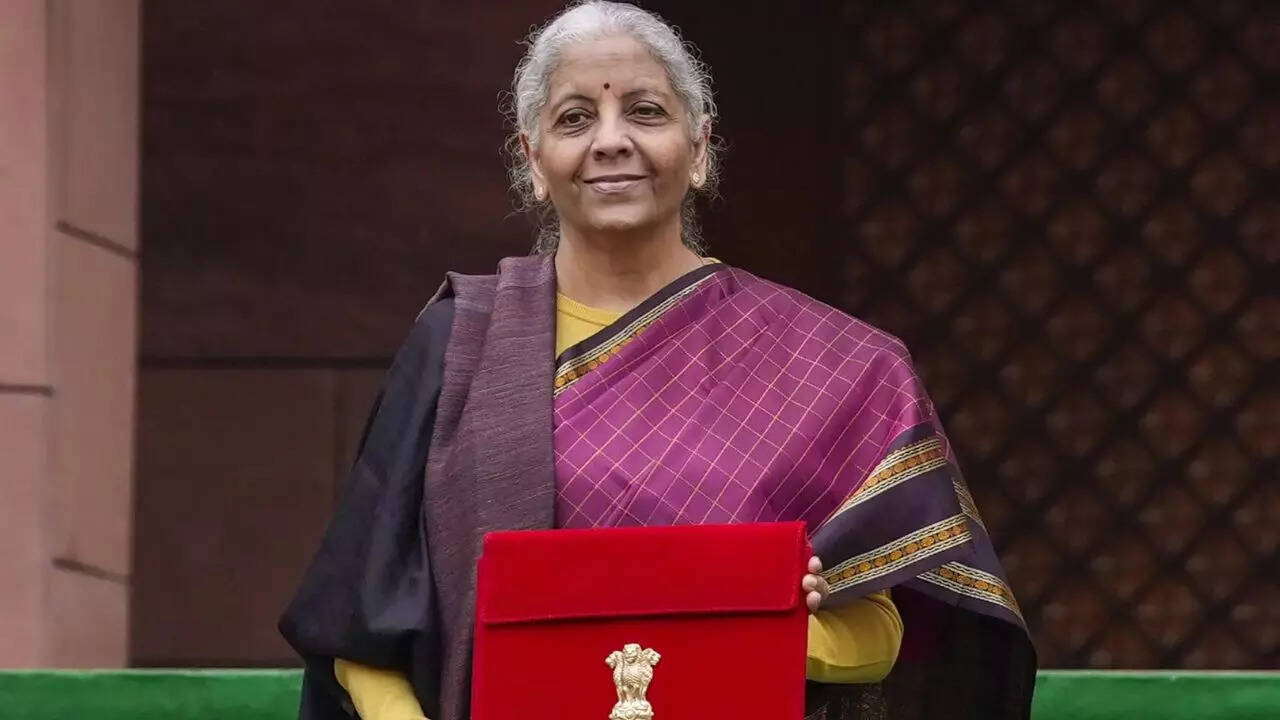
Budget 2026 Live Updates: 10 key things individual taxpayers should know
India Budget 2026 Live: Expectation of Customs Authority for Advance Rulings
FICCI recommends constituting more offices of the Customs Authority for Advance Rulings (AAR)
Impact: Expanding Customs AAR offices and allowing self-declared extensions would enhance trade certainty and reduce compliance burden and lower litigation on customs matters.
The Customs Authority for Advance Rulings (CAAR) is a legal provision under section 28E of the Customs Act, 1962, that enables clarity and certainty to the taxpayers by addressing doubts and concerns regarding the classification of goods, determination of customs valuation, and other related issues. Since the revamp of the CAAR post Finance Act of 2018, the CAAR has played a crucial role in promoting transparency, reducing uncertainty, and fostering compliance with customs regulations by offering clear guidance to importers, exporters, and other stakeholders involved in cross-border trade.
However, at present the offices of the CAAR are established only at locations, New Delhi and Mumbai, with all-India jurisdictional division between them. This is despite a considerable number of applications being made by trade involved in ports in south and east of the country, such as Chennai, Hyderabad, Kolkata, etc.
It is accordingly requested that the Government may consider establishment of at least two more offices of the Authority to cover South and East of India. This measure will go a long way in bringing certainty to the trade and reducing litigations on Customs matters.
Further, in terms of Section 28J(2) of the Customs Act, 1962, an advance Ruling is valid for three years unless there is a change in the underlying law or facts. However, clarification/ guidance is not provided for cases where there is no change of law or facts, and the applicant seek an extension of the validity of the ruling.
It is accordingly requested that a mechanism/process be considered for extension of the validity of the rulings, on self-declaration basis (as is done in case of AEO Tier 1 or SVB Circular 4/2016- Customs dated 9 February 2016) so that the hassle of re-applying for a ruling despite no change in facts or law can be avoided.
Union Budget 2026 Live: Budget in the backdrop of global outlook
“After enduring the impact of the pandemic, rising geopolitical tensions, persistently high inflation, and elevated global debt levels, the world economy is now adjusting to a landscape reshaped by new trade dynamics, particularly the volatility in tariffs. Businesses have responded with notable agility, recalibrating investment plans and strengthening inventory strategies, while governments have intensified efforts to diversify trade relationships. As a result, global economic activity has broadly held up in the first half of 2025. Reflecting this resilience, the IMF’s World Economic Outlook (October 2025) has revised global growth for 2025 upward by 20 basis points to 3.2 per cent from its earlier forecasts, supported by subdued commodity and crude oil prices. The global growth for 2026 is however projected lower at 3.1 per cent.
The global growth continues to face significant downside risk. Rising protectionist measures, especially the expanding use of tariff and non-tariff barriers, continue to dampen investment confidence and disrupt supply chains. Labour market pressures along with higher borrowing costs have amplified fiscal and financial vulnerabilities, adding further strain to economic resilience. Additionally, commodity price volatility stemming from climate shocks and geopolitical tensions presents added challenge for low-income, commodity-importing countries,” says FICCI.
Budget 2026 Live: Smooth implementation of the New Income Tax Act 2025
“Detailed guidelines and FAQs should be provided to minimize confusion during the transition from the Income Tax Act, 1961 to the new Act. This is crucial to avoid litigation and ensure a smooth transition for taxpayers,” says EY in its Budget recommendations.
Union Budget 2026 Live Updates: Detailed guidance on General Anti Avoidance Rule (statutory GAAR)
“With the GAAR panel being operational, we are likely see more cases where statutory GAAR is invoked by the tax department. With this emerges the need for detailed guidance on every facet of statutory GAAR. Most of the mature GAAR jurisdictions provide detailed guidance on how statutory GAAR would apply in different scenarios. This guidance is also regularly updated. It helps the taxpayers to have a better understanding of what to stay away from to avoid tax controversies.
Statutory GAAR in India can be invoked if main purpose of the arrangement is to obtain tax benefit and one of four tainted element test is met. These tests are commercial substance test, misuse or abuse test, arm’s length test and bonfide purpose test. While the Act provides some guidance on how to construe when an arrangement “ lacks commercial substance”, but detailed guidance on other three tainted elements is needed. Similarly, guidance is needed on how the main object of an arrangement is to be ascertained, in cases there are multiple objects. How to address a situation when some of the objectives cannot be quantified? Case studies would surely help.
It is also desirable that clarity be provided on whether judicial anti-avoidance principles (judicial GAAR) continue to apply alongside codified statutory GAAR. One of the key rationales of introduction of statutory GAAR was to codify the doctrine of substance over form, laid down by courts. Hence, parallel application of this doctrine, now when statutory GAAR is operational may not be warranted. In recent past there has been uptick of litigation on the interplay between statutory GAAR and judicial GAAR. It is also important to note that while statutory GAAR has tax thresholds, grandfathering provisions and requirement of referral to GAAR panel, there are no such limitations in case of judicial GAAR. Hence, this issue needs to be suitably addressed.
Also, while the Act lays down a detailed procedure of referral to the GAAR panel for invocation of statutory GAAR, this avenue is not available when Principal Purpose Test (PPT) is invoked to deny tax treaty benefit. Application on PPT on a taxpayers’ case also requires the same degree of care as invocation of statutory GAAR. Hence, it is desirable that GAAR panel route is also prescribed for such cases,” says Richa Sawhney, Tax partner, Grant Thornton Bharat LLP.
Budget 2026 Live: Indirect changes recommended
EY India suggests key reforms in the Indirect Tax landscape to enhance ease of doing business in India.
• Dispute Resolution Scheme: A one-time settlement scheme under Customs Law should be introduced to facilitate the resolution of pending disputes. This initiative would follow the successful ‘Sabka Vishwas (Legacy Dispute Resolution) Scheme, 2019’, which helped monetize revenue blocked in litigation.
• Extension of Customs Advance Rulings Validity: The validity of Advance Rulings should be extended from three to five years by amending Section 28J (2) of the Customs Act, 1962. This extension will enhance tax certainty and provide businesses with a clearer framework for compliance, reducing the risk of disputes.
• Simplification of Customs Tariff Structure: The current customs tariff framework should be simplified to reduce compliance burden on importers. This includes sectorwise customs duty rationalization and aligning tariff rates with global standards ensuring Indian goods remain competitive in international markets.
All Comments ()+^ Back to Top
Refrain from posting comments that are obscene, defamatory or inflammatory, and do not indulge in personal attacks, name calling or inciting hatred against any community. Help us delete comments that do not follow these guidelines by marking them offensive. Let's work together to keep the conversation civil.
HIDE