
- News
- City News
- chennai News
- People waiting at bus stops in Chennai exposed to pollution
Trending
This story is from August 4, 2021
People waiting at bus stops in Chennai exposed to pollution
The city may have a strong bus network compared to other metros, but waiting for a bus may be hazardous. An IIT-M study shows passengers at bus stops at busy intersections are exposed to high levels of PM2.
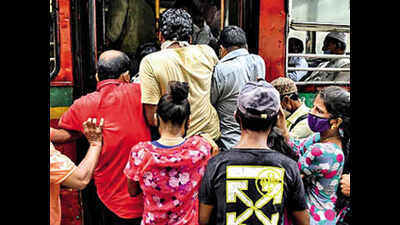
The study measured an average concentration of PM2.5 in six bus stops at 46.3microgram/m3. (File photo)
An IIT-M study shows passengers at bus stops at busy intersections are exposed to high levels of PM2.5 and noise pollution due to vehicles emitting smoke and drivers honking frequently.
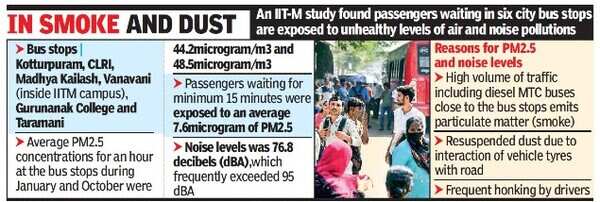
The study measured an average concentration of PM2.5 in six bus stops at 46.3microgram/m3, with those waiting for a minimum of 15 minutes in a bus stop may be exposed to 7.6micrograms.

“In our study, emissions from buses may be considerably high because most MTC buses are very old and often emit a substantial amount of visible smoke from the tailpipe. Idling of buses at stops for boarding and alighting of passengers adds to PM2.5 concentrations. These emitted particles are pushed towards the bus stop by the turbulence caused by vehicles moving at high speed,” he said.
Exposure to particulate matter is known to cause cardiovascular ailments, lung cancer and premature death. “Commuters are also continuously exposed to noise levels exceeding CPCB guidelines,” the author added.
The study was done at bus stops at Kotturpuram, CLRI, Madhya Kailash, Gurunanak College and Taramani, and Vana Vani on the IIT-M campus using low-cost portable optical sensors and smartphone application.
In January, the highest concentration of 68.7micrograms/m3 was recorded at Gurunanak College stop, the lowest of 21.1microgram/m3 was at CLRI. In October, highest of 70.4micrgram/m3 was recorded at Taramani and lowest of 14.5microgram/m3 at Gurunanak College. The concentration varied during the two periods possibly due to meteorological parameters like the wind speed, which if low could lead to accumulation of pollutants in the air. The permissible limit of PM2.5 in the air is 60microgram/m3 for 24 hours and 40micrograms/m3 annually.
The median noise level at all the bus stops except Vana Vani was around 85 dBA (decibel), 30 dBA greater than the permissible limits. In addition, the maximum noise levels at all the bus stops except Vana Vani exceeded 100 dBA.
Proper planning of location and design of bus stops could cut down exposure to pollution, say experts. “Buses have to arrive on time and not make people wait for long. Second, if bus stations are wide and away from the main road, exposure to pollutants will be limited,” said Prof S M Shiva Nagendra, department of civil engineering, IIT-M.
End of Article
FOLLOW US ON SOCIAL MEDIA








Photostories

Hot Picks
TOP TRENDING
Popular Categories
Hot on the Web
Top Trends
Liam PayneNayab Singh SainiIND vs NZ Live ScoreRohit SharmaIndian Team Lowest ScoreUGC NET ResultInfosys Q2 ResultUGC Net June ResultJustin TrudeauFlights Bomb ThreatJharkhand Election ScheduleBrandon McmanusMaharashtra Election 2024US Presidential Election 2024Maharashtra Election ScheduleJharkhand Election ScheduleLive Cricket Score
Trending Topics
Diwali WishesDhanteras 2024Fake PaneerLiam PayneVettaiyan CollectionVicky Vidya Ka Woh Wala Video CollectionLawrence BishnoiJigra OTT ReleaseCow GheeBigg Boss 18Salman KhanShraddha KapoorRenukaswamys WifeSharad Purnima Moonrise TimeSwatantrya Veer SavarkarSharad Purnima 2024Top Load Washing MachinesBest Premium LaptopsIntel LayoffsWordle Answer
Living and entertainment
Latest News
Injury scare for Team India as Rishabh Pant hobbles off the fieldHappy Dhanteras 2023: Images, Quotes, Wishes, Messages, Cards, Greetings, Pictures and GIFsDelhi BJP decides to go local, focus on roads, water, sanitation in election campaignLiam Payne's final meeting with Argentina fans at hotel goes viral; boy says 'You saved my life' - WATCHDA hike calculator: Dearness allowance & relief hiked by 3% - here’s how much extra salary, pension central government staff & pensioners will getKartikay Agarwal: Decoding how he is playing a role in the AI revolution and entrepreneurship renaissanceRaima Sen on playing iconic Suchitra Sen: It would be an honourTrending couple tattoo ideasBigg Boss Tamil 8 Preview: Emotional turmoil as housemates tease Dharsha Gupta over her cookingSalman Khan’s security beefed up after Baba Siddique’s murder: Arbaaz reacts, Vivek Oberoi's old video goes viral, and all that happenedLong-distance Karwa Chauth? Here’s how to celebrate when you are miles away from your partnerKamala avoiding any interviews that won't post-edit her answers: MuskCol CK Nayudu Trophy Cricket: Himachal Pradesh escape with a draw against RajasthanTony Khan hails Shelton Benjamin’s AEW in-ring debut as he sets up clash with Swerve StricklandKartik Maas 2024 Start and End Date: Time, Puja Rituals and Significance7 deadliest reptiles in the world from venomous snakes to turtlesDesi ghee and olive oil mixture: Can it help regrow hair?Bhopal to witness power cuts today; check details here
Copyright © 2024 Bennett, Coleman & Co. Ltd. All rights reserved. For reprint rights: Times Syndication Service