
- News
- City News
- kochi News
- Kerala’s GI Joes
Trending
This story is from May 30, 2020
Kerala’s GI Joes
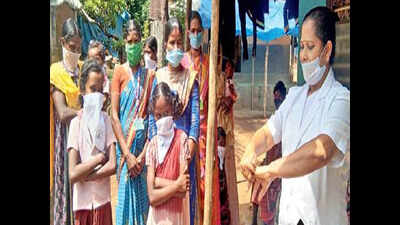
The health department has christened these faceless warriors junior public health nurses (JPHN) and junior health inspectors (JHI).

Anyone who crosses state borders will come under their watch and for the next 14 days, they will be closely monitored so that they don’t violate quarantine norms.
“We are like family to the people under observation. Sometimes, we feel guilty when they call us to take permission to do even minor chores at their houses. But there are exceptions too. Some people feel we are intruding into their freedom,” says P S Simi, a junior public health nurse of Valanchery municipality in Malappuram. Once she had to take police help when a 35-year-old youth who was under quarantine violated lockdown rules.
Simi has been assigned to monitor six wards covering a population of 7,000. “At present, I have five people under home quarantine in my wards. I interact with them daily and even if there is a slight change in their health condition, I have to report to the medical officer. If they do not get milk, grocery or even newspaper, they call me. At one time, I had monitored 26 people under home quarantine,” says Simi.
The healthcare workers are provided information about the people arriving at their areas from local bodies and department of Non-Resident Keralites Affairs. Before they arrive, the healthcare workers have to visit the houses to access the facilities. “We verify whether the guidelines for home quarantine can be followed. We have to also create awareness among the family members,” says Simi.
K A Komala, a healthcare worker at Appappara village, a tribal hamlet in Wayanad, admits monitoring the people is not an easy task. “There are a lot of people cross the borders illegally and we have to keep a tab on them,” says Komala who is in charge of five tribal settlements.
Fortunately, no positive cases have been reported in the settlements till date, she says, adding that is difficult to educate the tribal community on maintaining social distancing and personal hygiene. “We have created Jagratha Samithis for each ward. There are WhatsApp groups as well. If there are any issues we give alerts in the group,” says Komala.
At one time she had 75 people under quarantine under her jurisdiction and now it has come down to six. “The difference here is we do not allow home quarantine since tribal settlements are not safe for it. Whoever coming from outside are moved to Covid care centres,” says Komala who has been a healthcare worker for the past 22 years.
The healthcare workers have to document the details of the people quarantined under their jurisdiction and provide an update on their health condition everyday by 4pm on the Arogya Jagratha portal. “These details are reviewed by district medical officers and then sent to the state headquarters,” says Binju Jacob, a healthcare worker at Kunnamkulam taluk in Thrissur.
“We play a key role in reproductive and child health programmes, communicable disease control programmes and TB eradication and leprosy prevention programmes. We have never faced such a massive threat before. But the awareness level of people is high. They are frightened and hence staying indoors,” said Jacob, who monitors a population of 26,000 in 17 wards.
The big challenge for these healthcare workers is to win the acceptance of people around. Most of them try to win people’s trust with love and care. “The first person who tested positive for coronavirus from Areekode was from my area of jurisdiction. Though a month has passed since his discharge, his family members are in constant touch with me and sends food for me. That is the kind of love we get in return,” says C V Viswajith, another healthcare worker in Malappuram’s Manjeri municipality.
End of Article
FOLLOW US ON SOCIAL MEDIA






Photostories

Hot Picks
TOP TRENDING
Popular Categories
Hot on the Web
Top Trends
IND vs NZ Live ScoreBengaluru Collages Bomb ThreatSteve SmithNEET PG SC HearingMohammad KaifShailaja PaikHaryana Election ResultUGC NET ResultRishabh PantNima Hospital Doctor MurderTaylor SwiftThe RockWomen's T20 World CupTop MBA Colleges of IndiaT20 WC ScheduleWomen T20 World Cup Points TableLive Cricket Score
Trending Topics
Samantha Ruth PrabhuNavratri Colours 2024Navratri Day 2 ColourTMKOC New SonuNaga ChaitanyaDevara CollectionGOAT OTT ReleaseRajinikanthDeepika PadukoneGovindaDevaraGovinda NewsDevara Movie ReviewHealthy RaitasSwatantrya Veer SavarkarColdplay India tour 2025Maa Durga 108 NamesNavratri JewellerySony Bravia 55 inch 4k Ultra HD TVWordle Answer
Living and entertainment
Latest News
Kolkata’s Ganga ghats transform into a hub of rituals with the arrival of DurgaNavratri Will Be Luckiest for These Signs5 corporate employees share their workplace horror storiesISL: Borja’s left foot to Goa’s rescueNeelam Kothari speaks out against ageism says 'aunties' label is uncoolPer capita income to nearly double in 5 years: Finance minister SitharamanManju Pavagada gets engaged in a close affair; pictures go viral on social mediaCommunity Connect: Hungry for connectionInsider Claims Nick Sirianni Plays 'Madden' with Eagles, While AJ Brown Is Celebrated as Jalen Hurts' SaviorKolkata shoppers flood markets ahead of Durga Puja weekend rushWWE Throwback: Shawn Michaels retires with a heartfelt speech after losing the “Career vs Streak” matchMysuru all set for a glittering DasaraSupreme Court dismisses pleas seeking review of sub-classifications in SC reservation judgment'Disappointing, condemnable but not ... ': India on fugitive Zakir Naik's Pakistan visitTechnological advancements have revolutionized cancer treatment, say doctorsPakistan seals off capital, suspends internet ahead of rally by Imran Khan's supporters'Brand of ISPL is growing': League's head of selection Jatin Paranjape"That was legit a thank you" WWE superstar reveals jaw-dropping gesture for AEW fans after historic return
Copyright © 2024 Bennett, Coleman & Co. Ltd. All rights reserved. For reprint rights: Times Syndication Service