
- News
- City News
- kochi News
- Kochi: Crackdown on plastics soon
Trending
This story is from June 5, 2018
Kochi: Crackdown on plastics soon
Overawed by the growing menace of plastic waste, the state government has launched a multi-pronged initiative to raise awareness among people while formulating solutions to address the problem of plastic pollution plaguing the sea and the land.
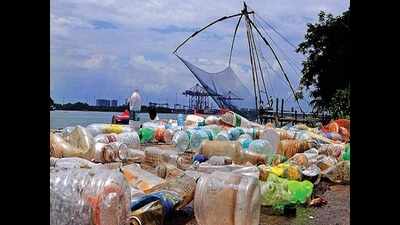
A government order is likely to be issued soon with suggestions to introduce glass bottles
As a first step, to curb the problem of PET (Polyethylene terephthalate) bottles, the pollution control board (PCB) is proposing a ban on plastic mineral water bottles in all star hotels and restaurants.

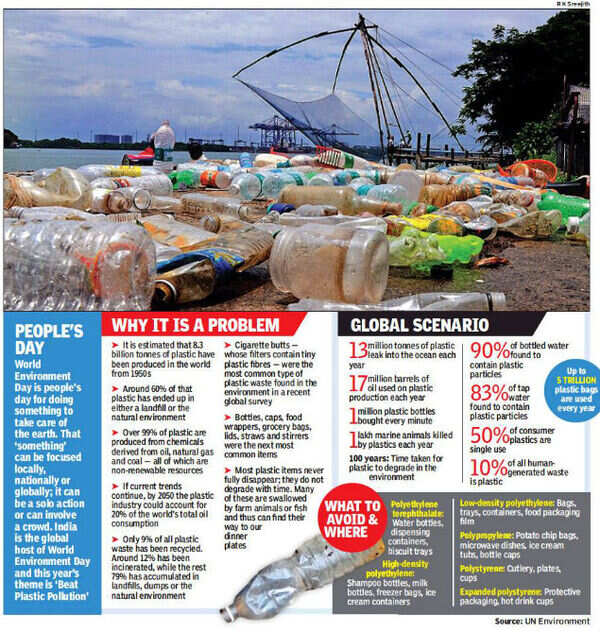
One of the prime concerns before authorities is the lack of initiatives by local bodies to give support to agencies like Kudumbashree which has launched a Haritha Karma Sena to collect and segregate plastics collected from homes.
Now, government has taken up a mission to ensure that green protocol is implemented at all government offices and functions. “Initially, it will begin with small steps like not using plastic kits, avoiding plastic bottles and using steel or paper glasses,” said Suchitwa Mission state director R Ajayakumar Varma.
He said that most government officials have been trained. “Almost 60% of gree n protocol can be met through such measures. We hope that with training, local bodies will come to know how they can reduce and then take the process forward,” he said. Local self-government department along with Clean Kerala and Kudumbashree workers have begun collecting plastic waste from homes and segregating it. “A nominal fee is collected from the public and local bodies that have given land to set up shredding units. There is a change because women are getting income from this,” said N S Niranjana, programme officer, micro-enterprise, Kudumbashree Mission.
But, the main problem is addressing the issue of one-time-use plastic that accounts for 50% of the total waste generated in state. “This cannot be recycled and must be shredded for roads. Local bodies must give a little land for setting up the shredding unit. Many have done so and in those places, the sena is functioning well,” she said.
Many local bodies in Kozhikode, Malappuram, Wayanad, Palakkad, Kannur and Thiruvananthapuram have raced ahead in tackling the issue. “The material recovery facility run by Kudumbashree is functioning well with almost all kinds of plastic being collected and recycled,” said Sajeevan.
Another problem is that most plastic waste is finding its way to rivers through canals and backwaters. Most people don’t acknowledge that it is happening. “We set up a blockade along 200m stretch of a canal in Alappuzha before monsoon. When it rained, the flow was blocked and water overflowed on land. When residents protested, we showed them what they were throwing,” said research assistant, Kerala Institute of Local Administration (Kila) Anoop John. With the help of college students, Kila and IIT, Bombay is conducting surveys and awareness drives to address this issue. “During a sample survey of 1.6km stretch of a canal, we found waste from helmets, TVs, plastic covers, bottles to sanitary napkins,” he said.

About the Author
Sudha NambudiriEnd of Article
FOLLOW US ON SOCIAL MEDIA









Photostories
Hot Picks
TOP TRENDING
Popular Categories
Hot on the Web
Top Trends
Travis KelceIsrael Hezbollah WarRishabh PantElection Exit PollsToday IND vs PAK World Cup MatchShan MasoodAmethi Murder CasePrince WilliamAssembly Election Result 2024 LiveIPL AuctionUGC NET ResultDiddyWomen's T20 World CupTop MBA Colleges of IndiaT20 WC ScheduleWomen T20 World Cup Points TableLive Cricket Score
Trending Topics
Bigg Boss Tamil 8 Contestants ListNavratri Colours 2024Navratri Day 2 ColourTMKOC New SonuBigg Boss 18 House PhotoDevara CollectionGOAT OTT ReleaseRajinikanthDeepika PadukoneGovindaDevaraGovinda NewsDevara Movie ReviewHealthy RaitasSwatantrya Veer SavarkarColdplay India tour 2025Maa Durga 108 NamesNavratri JewellerySony Bravia 55 inch 4k Ultra HD TVWordle Answer
Living and entertainment
Latest News
India’s F&O addiction: Falling, hurting, bleeding but chasing that elusive pot of goldVirgo, Weekly Horoscope, October 06 to October 12, 2024: Financial setbacks may arise mid-week but will improve by the weekendDRDO tests of man-portable air defence shield successful49ers' Christian McCaffrey May Return in Week 7 Against Chiefs, Adam Schefter Shares Latest Injury UpdateAries, Weekly Horoscope, October 06 to October 12, 2024: Face health and emotional challenges at the start of the weekKareena Kapoor, Soha Ali Khan, Kunal Kemmu and others have a blast at Neha Dhupia's son Guriq's birthday bash - See INSIDE photosAmid China's muscle-flexing, Malabar drill to start on October 8Bigg Boss Tamil 8: Sunitha Gogoi to dazzle with dance performance from Vijay’s film 'GOAT'Zodiac Sign Women Who Cherish IndependenceBone health in the elderly: Why seniors should get a bone density testFans shower praises for Indira Krishna's role Paani Bai in Durga writes, "She's Lady Nana Patekar, Yeh toh Komolika ka bhi record todegi"Bengal villagers attack police after child's body found in ditchBigg Boss Tamil 8: Contestant Aishwariya Bhaskaran—Here’s what you need to know about the Aaru actressHarnaaz Sandhu's breathtaking golden gown appearance after incredible weight loss!Colts Risk Repeating Browns' Mistake with Joe Flacco as Anthony Richardson Faces Uncertain ReturnUttar Pradesh: Police station in-charge and SI suspended, two others removed in BahraichPak: Protest in Awaran demands safe return of Diljan Baloch amid intimidation by security forcesBigg Boss Tamil 8: Actress Sachana Namidass to participate in the upcoming season?
Copyright © 2024 Bennett, Coleman & Co. Ltd. All rights reserved. For reprint rights: Times Syndication Service