
- News
- City News
- mumbai News
- Two petitions against Speaker poll rule 'politically induced litigation': Bombay HC
Trending
This story is from March 14, 2022
Two petitions against Speaker poll rule 'politically induced litigation': Bombay HC
The HC said the present petitions “serve only one purpose”—“clog the stream of justice by preventing the Court from considering more deserving cases…’’
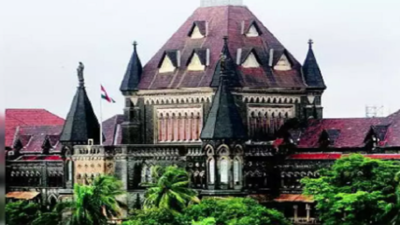
Bombay high court
The HC bench of Chief Justice Dipankar Datta and Justice M S Karnik on March 9 dismissed the two petitions and forfeited a collective security deposit of Rs 12 lakh –including Rs 10 lakh from Mahajan--the two were directed to the shell for hearing the PIL after State’s preliminary objection to their maintainability.

The HC said the present petitions “serve only one purpose”—“clog the stream of justice by preventing the Court from considering more deserving cases…’’
“On a conspectus of the facts and circumstances…, we unhesitatingly hold that neither Vyas nor Mahajan has passed the test of uberrima fides. We, therefore, uphold the contention of “Advocate General Ashutosh) Kumbhakoni that these PIL petitions are not intended to secure public interest. We are of the clear view that political considerations have driven both Vyas and Mahajan to institute these proceedings, which are more in the nature of “politically induced litigation” rather than “public interest litigation”, held the HC.
The HC said, "Although both (senior counsel Mahesh) Jethmalani and (counsel Subhash) Jha have in unison taken exception to the amendments by branding them as arbitrary, illegal and unconstitutional and in violation of Rules 223 to 225 of the Member of Legislative Assembly (MLA) Rules, they have utterly failed in their effort to demonstrate any infraction, much less genuine infraction as observed above."
The HC also said though Mahajan’s counsel Jethmalani contended that the chief minister in terms of the Constitutional scheme cannot make any recommendation to the Governor for fixing the date of election and that the recommendation has to be made by the council of ministers, "there is no pleading" in either PIL that the CM’s recommendation of March 9, 2022 as date of Speaker poll was made as CM and is not based on the collective decision of the council of ministers.
"There is also no reason to infer on facts and in the circumstances that the recommendation of the Chief Minister does not have the support of the council of ministers," held the HC.
The HC in the judgment made a reference to the progress of the proceedings two PIL petitions and said it was so done “ to highlight the obstinacy of Vyas and Mahajan to pursue the causes, despite being put on guard.” It had added, “ We would bear in mind such conduct, which is extremely relevant while deciding these PIL petitions.”
The HC citing guidelines laid down by the Supreme Court earlier said, "Our understanding of the guidelines in such paragraph does not persuade us to hold that calling for an election of the Speaker is within the discretion of the Governor.."
It also said “.Rule 6(1), as amended, if read with Article 168, leaves no manner of doubt that neither is any Constitutional provision offended nor can it be said with any degree of conviction that the death knell of democracy has been sounded with the amendments in Rules 6 and 7.
“Each Legislative Assembly of the States is independent and can amend their Rules of Procedure, framed under Article 208, subject to the known limitations. There is no law that requires the Rules of Procedure of all Legislative assemblies would be the same. There is nothing wrong in the Assembly in this State making amendments in its Rules of Procedure consistent with the provisions of the Constitution. That apart, 10 other States having different procedures is sufficient indication of the nation’s diversity in framing rules that are appropriate for each individual region," said the order.
The PIL had said the poll rule amended last December was “the death of democracy.”
The HC judgment said, “The procedure for election of the Speaker is charted out in Rules 6(2), 6(3) and 6(4). Since Article 178 of the Constitution refers to choosing of a member from amongst members of the Assembly to be the Speaker and the Deputy Speaker, we do not see any reason to hold that the amendments introduced in the various sub-rules of Rule 6 would have the effect of offending the Constitutional provision in Article 178 or even inflicting a death blow to democracy."

About the Author
Swati DeshpandeEnd of Article
FOLLOW US ON SOCIAL MEDIA





Hot Picks
TOP TRENDING
Trending Stories
In City
Entire Website
- Breathtaking cosmic catwalk! SpaceX makes history with first-ever private spacewalk
- 2 Army officers thrashed, their female friend gang-raped in Madhya Pradesh
- Bangladesh announce Test squad for India tour
- Top fastest trains in the world: From China's CR Harmony to Germany's ICE
- Amid Shannon Sharpe Viral Video, Former ESPN Host Michelle Beadle Reacts Claiming It Was Not Her
- Ayushman Bharat insurance scheme expanded to cover elderly above 70
- 'Will be demolished if... ': Himachal minister's assurance amid Shimla mosque row
- Mumbai's Haji Ali and Mahim dargahs cancel Eid shamiana
- Garena Free Fire MAX redeem codes for September 11, 2024: Win free room cards, skins, diamonds, pet skins, and more rewards today
- GK for students: Top 8 Largest Mammals in the World
- SC: Bulldozer justice like bulldozing laws of land
- No ‘Padmar ilish’ in Kolkata this Puja as B’desh stops Hasina’s ‘hilsa diplomacy’
- Why India is now insisting on an immediate ceasefire in Gaza
- India, China to work urgently for disengagement in Ladakh
- Virat & Rohit's successors: India cricketer picks these two 'special players'
- Pakistan stand-off over cops seeking army exit from restive province drags on
- How life froze near Delhi as a tiger walked and decided to stay
- Planning to buy iPhone 16? How much Apple will give for iPhone 12 & others
- Govt to develop Mausam GPT in 5 years to share weather information
- UK court finds Pakistani guilty of killing Tamil restaurant manager

Popular Categories
Hot on the Web
Top Trends
Trending Topics
Alia BhattMalaika Arora Father DeathArbaaz KhanNatasa StankovicMr Bachchan OTT ReleaseNational Parks In IndiaSelena GomezGOAT CollectionVikas Sethi DeathMalayalam ProducersIndia's Best Dancer 4Simi GarewalDilli BabuIndian National ParksLaung BenefitsVikas SethiiPhone 16Microsoft 365 OutageCsir Ugc Net 2024Wordle Answer
Living and entertainment
Latest News
India successfully flight tests surface-to-air missileFintech Moneyview turns unicorn, 6th one this yearDigest this: Unhealthy gut may be linked to Parkinson’s diseaseCSIR UGC NET 2024 result declared: Steps to download scorecards at csirnet.nta.ac.inWho was Illia 'Golem' Yefimchyk, the Belarusian bodybuilder who consumed 2.5 kg of meat and 108 sushi pieces daily before his death at 36?Vijay Varma reveals he was DROPPED from 'Sacred Games' at the last minuteWWE Star Discusses Why Sid Vicious Deserves a Hall of Fame SpotFriendly nations helped Pakistan meet IMF bailout conditions, says PM Shehbaz SharifCatching up with sports stars in DelhiSalman Khan surrounded by bodyguards as he arrives at Malaika Arora's mother's house to offer his condolences - WATCHCMF Buds Pro 2 by Nothing review: Big delivery on a budgetMallika Sherawat makes big screen comeback in Rajkummar Rao's 'Vicky Vidya Ka Woh Wala Video'; director reveals why he cast herArbaaz Khan spotted outside Malaika Arora's house along with police after the tragic news of her father's demise by alleged suicide - WATCH VIDEOHarvey Weinstein charged with additional crimes during hearing on rape chargesMitchell Schwartz's Cryptic Tweet Stirs Debate About Mahomes' ContractSiddhant Chaturvedi reveals he rejected Ranbir Kapoor, Alia Bhatt and Amitabh Bachchan starrer Brahmastra after father’s advice: 'He asked me, ‘Tujhe kaun dekhega?''EcoR unloads 100 million tons of goods in just 160 daysBritain’s one of the largest mobile services providers BT Group raises cybersecurity alarm: “...every 90 seconds hackers are checking…”
Copyright © 2024 Bennett, Coleman & Co. Ltd. All rights reserved. For reprint rights: Times Syndication Service