- News
- entertainment
- bengali
- movies
- How bold were the women in Satyajit Ray's films?
Trending
This story is from May 3, 2019
How bold were the women in Satyajit Ray's films?
A day after the world celebrated Satyajit Ray’s 98th birth anniversary, CT takes a peek at the intriguing world of strong, powerful, progressive and independent risk takers in the master director’s cult films
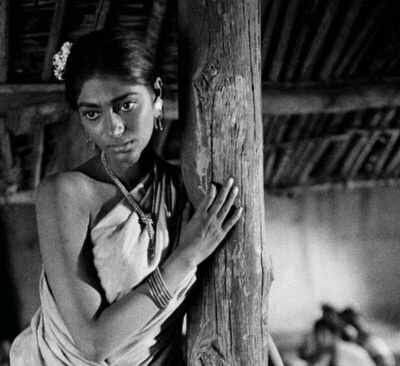

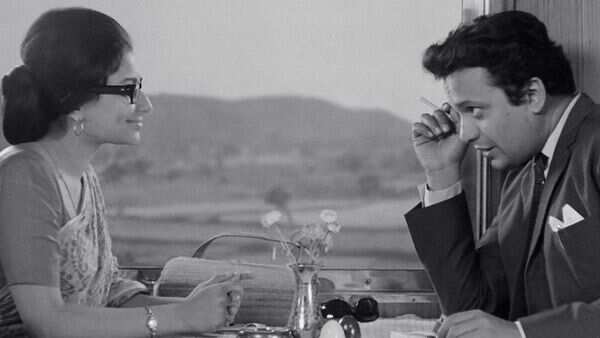
In 1966, Aditi (Sharmila Tagore) entered the marquee in Nayak as the cool no-nonsense non-starry-eyed journalist. The three words — Mone Rekhe Debo (I will remember this) — which she said at the end of the film resonated with strength and confidence while giving a glimpse of her emotional trajectory. Much later in 1971, Ray again cast Sharmila as Tutul in Seemabaddha. She came to the city to meet his sister and brother-in-law and was quick to discover the gnawing emptiness in their posh life. Finally, Tutul did not hesitate to show her disgust with the shallowness and superficiality of urban elite which, eventually, served as an eye-opener for her brother-in-law.

Before that, Ray had cast the same Sharmila as Aparna in Aranyer Din Ratri in 1970. In this classic, she was an intelligent and intellectually rich lady who deliberately baffled people with her complexes and apparent contradictions. In the famous memory game scene, she deliberately receded. That was not because she didn’t have the skill but she wanted to allow Ashim to win the game to satisfy his fragile male ego.
At the other end of the spectrum in the same film was Duli — the Santhal woman played by Simi Garewal. Ray presented her as a simple, rugged woman who was quietly confident enough to handle the advances of men. In fact, her natural charm and no-nonsense attitude made Hari fall in love with her, and also to finally overcome his nagging desire for being attracted and attached to the cosmetically progressive urban woman who had ditched him. CT talks to Ray connoisseurs to profile three female characters who redefined boldness and femininity in the master’s world.
‘Labanya’s dignified silence is a mark of protest’
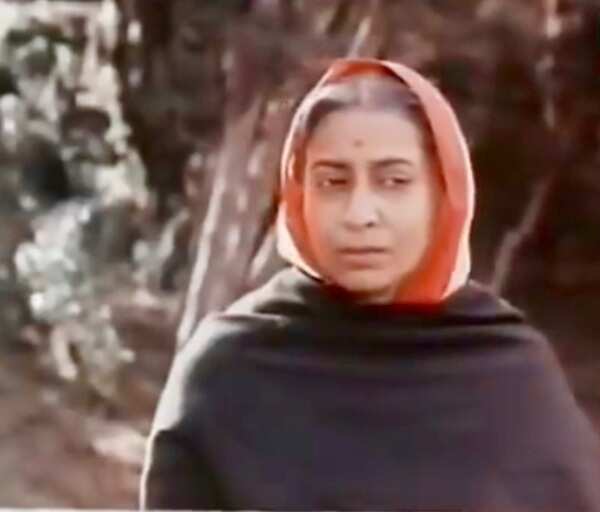
Karuna Bandopadhyay as Labanya in Kanchenjungha stands out as one of the bold women in Ray’s
universe. Labanya, throughout the film, is dressed in a red-bordered sari and a black shawl faintly embroidered with threads of red. She looks very ordinary as compared to other well-dressed characters in the film. This is the mastery of Satyajit Ray. Keeping the character in such a low profile has a strong reason. That way, the viewers must not apprehend beforehand that she will revolt against her dominant, compassionless husband. Labanya belongs to an era of colonial India to post-colonial, independent India. Unlike her husband, she doesn’t carry any fondness for British rulers on her shoulders. As a mother of three children and a grandmother of a girl, perhaps the dominant male society did not offer any scope for her to think beyond the regular household affairs.

Her submissive character gets a different layer when she finds herself in the midst of nature in Darjeeling. The open space in the hills, the call of Mount Kanchenjungha reveal an unexplored determined yet dignified self of Karuna which was suppressed while living a regular mundane city life. The middle-aged lady, who had never thought of revolting against her husband even in her casual day dreams, gets the courage to guide her daughter and insist that she must live her life according to her own terms. Ray’s masterstroke comes while showing the transition in Labanya’s character by using a Tagore’s song — E Parobase Robe Ke. The words of the song and the underlying philosophy remain the most important catalyst for Labanya’s rise from an ordinary woman to a woman of substance through dignified silence.
— Sagnik Chatterjee, director of Feluda 50 Years Of Ray’s Detective
‘Arati encapsulates the entire woman’s movement’

It is a post-Partition story and my mother acted in it before she was married. The character of Arati in Mahanagar, which my mother had essayed, encapsulates the entire woman’s movement. The girl undergoes a complete metamorphosis. When she first steps out of the house to earn a livelihood, it is under compulsion. She still believes that the home is the real place of a woman. She grew up being conditioned that way in the society she lived in. It is because of the economic compulsion that she has to go out to earn a living. But once she starts interacting with the outside world, her character begins to change. She starts to grow as well. But, at the same time, this growth is not accepted at home. There the male chauvinistic attitude prevalent in her household becomes a hindrance.

Slowly, things start changing. Initially, it is her husband who decides everything. Slowly, she starts making the decisions. There is one scene in the film where her mother-in-law asks her if the money has to be given to the domestic help. Earlier these decisions were not left to her. This ability to take decisions regarding the economics starts giving rise to a sense of insecurity — first in her father-in-law and then, in her husband. Meanwhile, she also has to deal with tremendous stress because of these complications. While all that is happening at home, she also had to go through a lot of stress while fighting it out in the outside world. That too contributes to her growth. The constant friction prompts her to leave her job. She writes her resignation letter too but is unable to resign because her husband loses his job. However, she later submits her letter to protest a wrongdoing at the work front. At that moment, the thought that her husband is jobless doesn’t even strike her. She is a completely changed woman now. The ending is also very sensitive when she meets her husband who says he is with her.
Much later, when I was reading the report of the Committee on the Status of Women in India (1974-75) titled Towards Equality, it seemed like revisiting Mahanagar. Insecurity, guilt that women felt for leaving behind their children at home when they went out for work and the anger of society directed towards a working woman — I realised that Ray had already explored all these issues in Mahanagar. Looking back, I feel Ray followed Arati’s journey with such care that it revealed not just the details of the life of a woman in transition but in extension, that of a city as well.
— Mimi Bhattacharya, Associate professor of Dum Dum Motijheel College and daughter of veteran actress Madhabi Mukherjee
‘Bimala was a character who took a lot of chances’
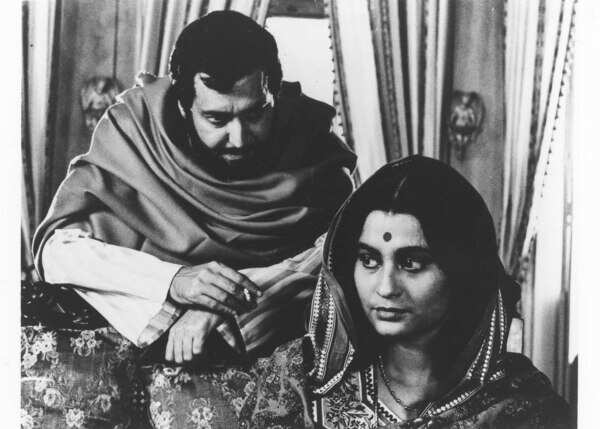
I have a lot of personal memories of watching Maa shoot as Bimala in Ghare Baire. I was in Class IV then and would go to Indrapuri Studio or Manik jethu’s house during the shooting. I remember him sitting in his easy chair and discussing the character with Maa. When I look back, I feel Maa was very suited for the role. She could play the piano well and came from an English medium background. She was a gold medalist in English from Allahabad University. I think, Manik jethu understood that she was extremely suited to play Bimala.

Incidentally, my father — Rudraprasad Sengupta — was much older than Maa. I always felt that after a bad first marriage, he was the one to give Maa the space and protection to flourish. That’s why she later went on to do such good work in theatre. Just like Nikhilesh (Bimala’s husband in Ghare Baire) allowed the space to Bimala so that she could step out, Baba also did the same with maa in real life. When Maa would go out to shoot, Baba would cook for us. All he could rustle up was a pumpkin preparation but he left no stone unturned to support maa in doing her work well.
As far as Bimala as a character is concerned, I feel she is someone who took a lot of chances that her husband allowed her to exercise. She fell in love outside marriage. Later on, she also came out of the situations she landed up in for having taken those chances. I feel this ability to examine and re-examine oneself is very important. I have seen women from my own family — my grandmothers to be precise — who adhered to such a culture. Unfortunately today, we come across many instances where women seem to be going backwards. Only recently, I came across a viral video of a woman who was urging men to rape women who wore short dresses. Forget the likes of Bimala, even women in the stone age didn’t think this way. Another thing about Bimala is that she wasn’t restricted to being just a woman who would stay indoors and cook for the household. With the help of her husband, she transcended societal limitations. That’s why she rose beyond even some women of today who keep themselves restricted by the shallow confines or parameters that patriarchy sets for being feminine.
— Sohini Sengupta, theatre professional and daughter of Swatilekha Sengupta

About the Author
Priyanka DasguptaEnd of Article
FOLLOW US ON SOCIAL MEDIA
Visual Stories








Photostories
entertainment videos
Featured In Movies
Popular Categories
Entertainment NewsBollywood NewsTollywood NewsKollywood NewsMollywood NewsMovie ReviewsLatest Hindi MoviesLatest Tamil MoviesMX PlayerParenting TipsHome RemediesWeight LossBeauty TipsParenting TipsHindi VideosHindi Video SongsBhojpuri Music VideosLatest Telugu MoviesBhojpuri Music VideoHindi TV News
Trending in Entertainment
Latest MoviesBollywood MoviesHollywood MoviesTamil Movies 2024Telugu Movies 2024Malayalam Movies 2024Kannada Movies 2024Marathi Movies 2024Bengali Movies 2024Top Rated Movies 2024Best Hindi MoviesBest English MoviesBest Telugu MoviesBest Tamil MoviesBest Malayalam MoviesBest Kannada MoviesBest Bengali MoviesUpcoming Hindi MoviesBest Movies Of All TimeBest Hindi Movies of All Time
Trending in Etimes
Horoscope TodayNumerology Predictions TodayWalking BenefitsKamala Harris HusbandYung Filly Rape CaseWorld Mental Health DayBelly FatSean Diddy CombsOzempic PersonalityDepression RiskBelly Fat LossHurricane MiltonToxic FriendshipDonald TrumpElon MuskDussehra 2024Durga Ashtami 2024Multitasking TipsCovid XEC Variant Symptoms
Trending in TV
Trending in Lifestyle
Trending in Regional
Movie Reviews
Binny And Family ReviewLove, Sitara ReviewWill & Harper ReviewWolfs ReviewYudhra ReviewJo Tera Hai Woh Mera Hai ReviewKahan Shuru Kahan Khatam ReviewHis Three Daughters ReviewNever Let Go ReviewDancing Village: The Curse Begins ReviewTransformers One ReviewFirst Love ReviewBerlin ReviewThe Buckingham Murders Review
Upcoming Hindi Movies
Upcoming Regional Movies
Latest News
NIA charges 5 with human traffickingDisturbed sleep tops list of complaints received on mental health helplineTD Bank pleads guilty to money laundering violations, agrees to $3 billion penaltyDilip Kumar-Saira Banu wedding anniversary: How the legendary actor surprised all by marrying his belovedSP-Congress alliance for UP bypolls intact: Akhilesh YadavHours after arrest, 1 of 2 Surat rape accused dies in custodyTriple centurion Harry Brook happy to break Dad's club recordHappy Dussehra 2024: Top 50 Wishes, Messages, and Quotes to Share with Your Loved OnesAnees Bazmee reveals Vidya Balan's first reaction after reading 'Bhool Bhulaiyaa 3' scriptBigg Boss 18: Karan Veer Mehra's comment on Arfeen Khan converting his wife's religion sparks anger; Arfeen says, "Agar ye ghar mein nahi hota main iski band baja deta"Hima Das exonerated by NADA Appeal Panel of doping charge arising from whereabout failuresWhen Kamal Haasan and Subhash Ghai remembered Sridevi: 'Her astonishing talent was not mere luck'Best Gaming Laptops Under 60000 That Deliver High PerformanceChallenging but special: TV actresses on playing Maa ShaktiVedanta’s Hindustan Zinc partners with IIT Madras to develop rechargeable zinc-air batteryCCP starts razing old municipal complexiPhone 16 series sales meet Apple's expectations: AnalystA Family Affair in the NFL: Regina Jackson’s New Role as an Agent and Jayden Daniels’ Impressive Start with the Washington Commanders
Other Group Sites -
ETimes is an Entertainment, TV & Lifestyle industrys promotional website and carries advertorials and native advertising.