
- News
- etimes
- animals-pets
- Discovering India’s only snake-free region
Discovering India’s only snake-free region
Discovering India’s only snake-free region
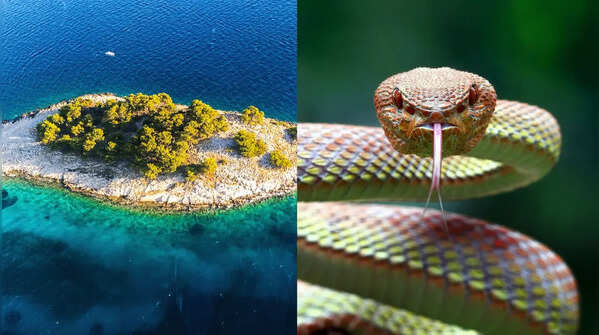
India is a land of mystical and dense terrains that are associated with rich wildlife, jungles, and an incredibly diverse population of snakes and reptiles. From the venomous king cobras of the Western Ghats to the massive pythons of the northeast, snakes are a common part of the country's ecological fabric. However, there is one extraordinary exception to this rule. Tucked away in the Arabian Sea, Lakshadweep holds the unique distinction of being a place in India where you will not find a single snake. Here's all you need to know about this snake free paradise.
The Isolated Paradise
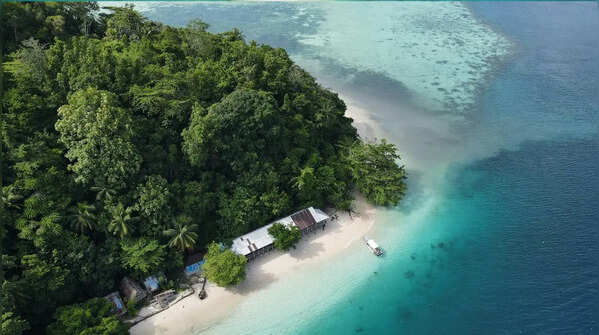
Lakshadweep is India’s smallest Union Territory, consisting of a cluster of 36 stunning coral islands, atolls, and reefs. Located roughly 200 to 440 kilometers off the coast of Kerala, these islands are geographically isolated from the mainland. Because they are coral islands rather than fragments of the continental mainland, they emerged from the ocean completely independent of India's larger landmass. This geographic isolation played a massive role in dictating exactly which animals could successfully colonize the islands over thousands of years.
Why there are no snakes on the Islands
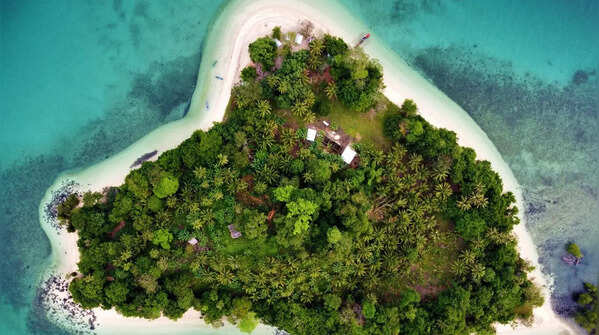
The complete absence of snakes in Lakshadweep boils down to basic evolutionary biology and island biogeography. For a terrestrial animal like a snake to inhabit a distant island, it must either swim across open ocean water, drift on natural debris, or be introduced by human beings. The vast stretch of the deep Arabian Sea acted as a highly effective natural barrier. Unlike sea snakes, which inhabit deep marine waters, land snakes cannot survive long journeys across saltwater oceans. Because the islands lacked the dense undergrowth, heavy soil depth, and specific mammalian prey required by large mainland reptiles, snakes simply never established a breeding population here.
The local ecosystem and wildlife balance
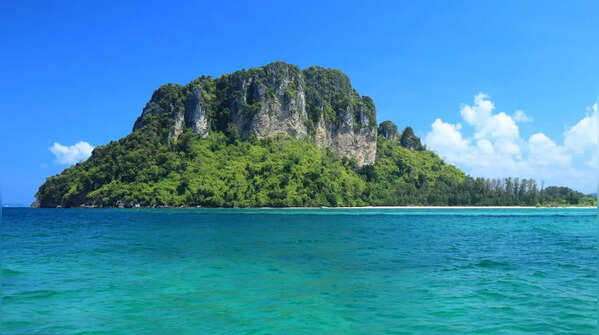
Without snakes acting as apex predators of the undergrowth, the wildlife on Lakshadweep evolved in a very specific direction. The islands are incredibly safe to explore, with a terrestrial ecosystem dominated largely by birds, insects, and small marine life.
The land is famous for its massive coconut groves, which are home to hermit crabs, ghost crabs, and the spectacular coconut crab—the largest terrestrial arthropod in the world. The skies and shorelines have a lot of kinds of birds that migrate and live there like the sooty tern and the noddy. These birds can make their nests on the ground without worrying about snakes and other animals that might steal their eggs.
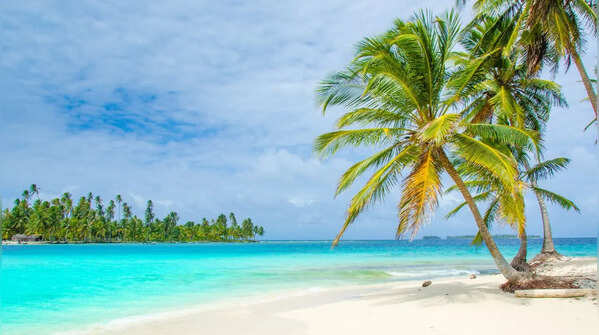
A special thing about Lakshadweep
People who like to travel and love nature like Lakshadweep because there are no snakes. This means they can feel safe and relaxed. Visitors can walk through the coconut trees visit the villages and go to the beach at night without being scared of snakes. The fact that it is totally safe, plus the beautiful beaches and pretty water, makes Lakshadweep a peaceful place to go. It is an interesting place because it is so different from other places, even in a country like India that has so many different kinds of animals and plants. Lakshadweep is a surprise that shows that nature can always do something new and different.
Featured In etimes

