
- News
- etimes
- animals-pets
- From mamba to kingsnake: 8 black snake species that will surprise you for unusual reasons
From mamba to kingsnake: 8 black snake species that will surprise you for unusual reasons
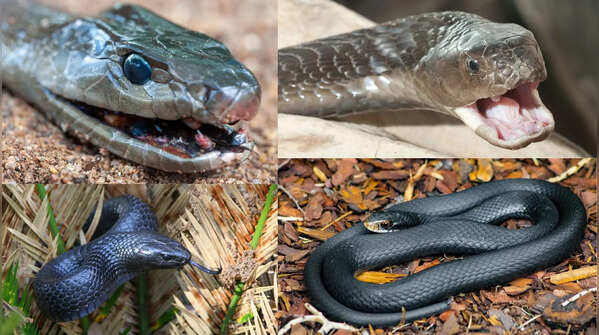
8 black snake species that will surprise you for unusual reasons
“Black snake” sounds simple enough – until you realise how many different species fall under that label. In reality, not all of them are truly black, and the way they behave can be just as varied as where they are found.
Some are fast-moving, some are slow and deliberate, and others rely on very specific defence mechanisms when they feel threatened. The common thread is their appearance – dark, shadow-like, and often striking enough to stand out in their natural surroundings.
Here are eight black snake species from across the world that stand out, not just for their colour, but for what makes each one unique.
Images: Canva (for representative purposes only)
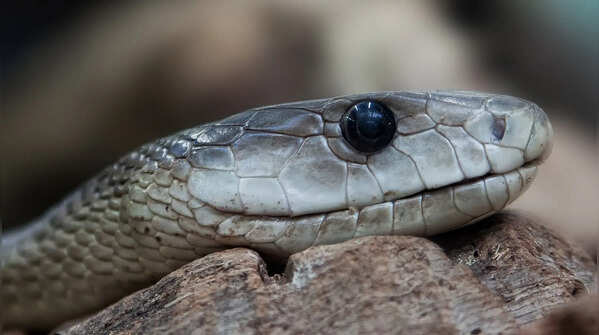
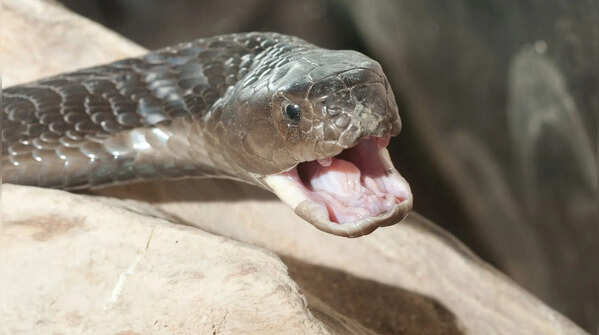
Black mamba
Despite the name, the black mamba is not black on the outside. Its body is usually greyish or olive in tone. The “black” refers to the inside of its mouth, which it displays as a warning when threatened. Found in Africa, it is widely known for its speed and alert, defensive nature.
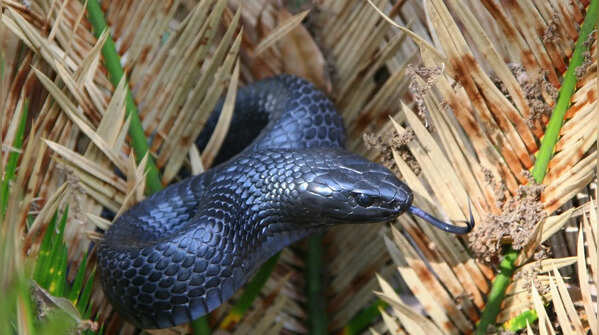
Eastern indigo snake
This species has a smooth, reflective body that can appear deep blue-black under sunlight. Native to the United States, it is one of the longest native snakes in the region and is known for moving steadily through its environment.
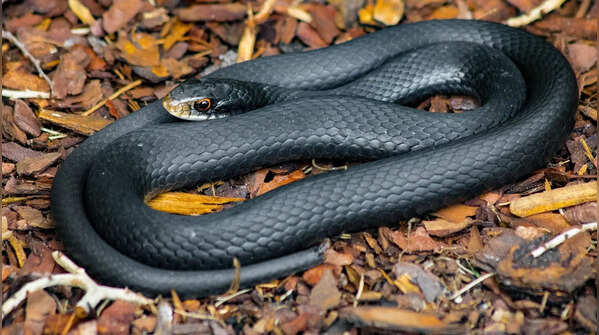
Black racer
True to its name, the black racer is long, slender, and extremely quick. Found across North America, it is often seen actively moving through grasslands, forests, and open areas rather than staying in one place for long.
Spitting cobra (black variants)
Certain spitting cobras in Africa appear almost entirely dark in colour. What sets them apart is a specialised defensive behaviour—they can project venom towards a perceived threat from a distance.
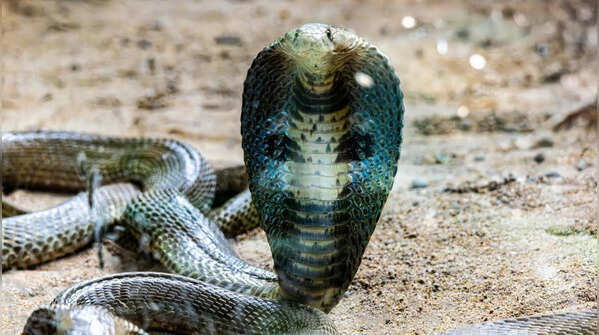
King cobra (melanistic form)
While most king cobras are lighter in colour, rare melanistic individuals appear almost completely black. These are uncommon sightings of one of the world’s longest snake species, known for its distinctive hood and upright defensive posture.
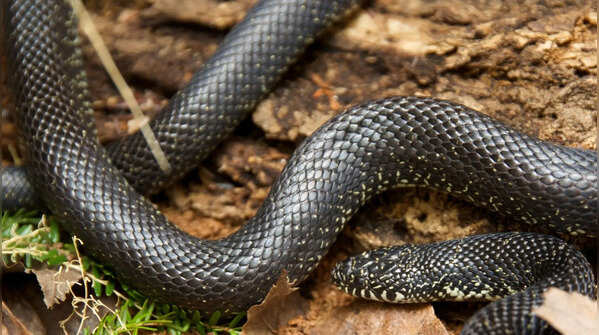
Black kingsnake
The black kingsnake has a smooth, shiny black body and is found in parts of North America. It is often noted for its adaptability and for occupying a wide range of habitats, from forests to grasslands.
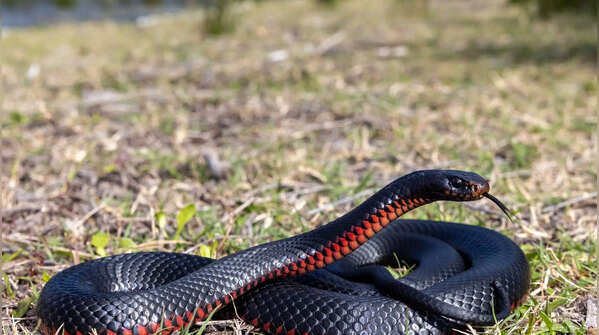
Red-bellied black snake
Native to Australia, this snake is known for its glossy black upper body paired with a vivid red or pink underside. It is frequently seen near water sources and forested areas.
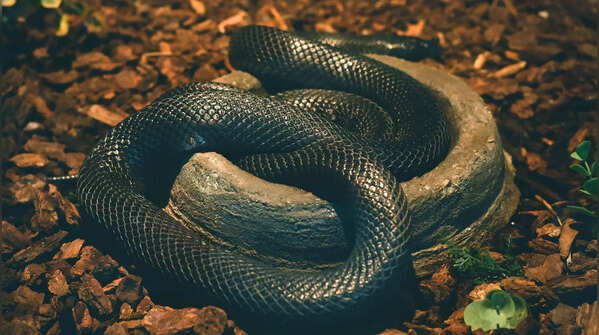
Mexican black kingsnake
Found in parts of Mexico and the southern United States, this species is known for its almost uniform jet-black appearance with a subtle sheen. It is also popular in captivity due to its calm and steady nature.
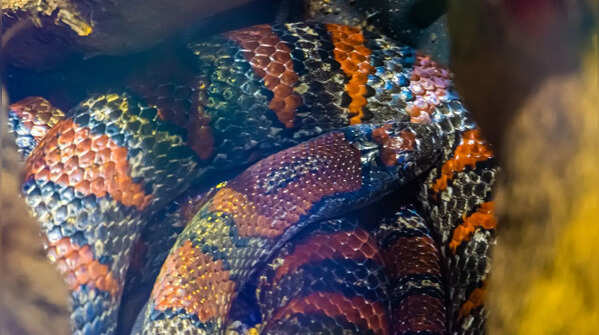
Why “black” snakes aren’t all the same
The term “black snake” is more about appearance than biology. Across regions, it is used to describe multiple unrelated species that simply share a darker pigmentation.
What ties them together is not behaviour or origin, but how they are perceived at first glance – dark, sleek, and often blending into their surroundings in ways that make them easy to overlook until they move.
In the wild, colour is just one part of the picture. The real differences lie in how each species adapts to its environment and survives within it.
Featured In etimes

