
10-minute exercises you can do without leaving your bedroom
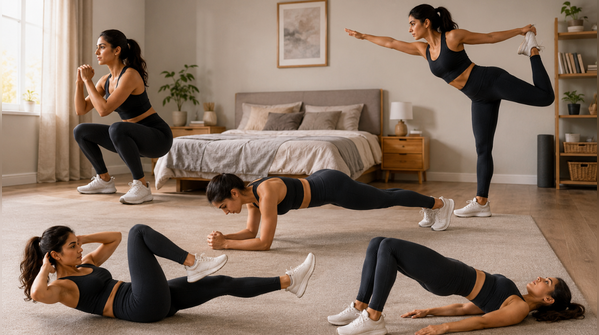
Here's the truth that nobody wants to admit: the biggest barrier to working out isn't motivation. It's friction
Getting to a gym means packing a bag, driving, finding parking, waiting for equipment, and driving back. That's 45 minutes of overhead before you've done a single push-up. When life gets busy, which it always does, that overhead is the first thing to cut. And then you're not working out anymore, you're just sitting on your couch feeling guilty about not working out.
But what if your gym was already waiting for you? What if the only friction between your body and actual fitness was literally zero? That's the bedroom workout advantage, and research actually backs this up. The government updated its exercise recommendations in 2018 and declared that workouts of less than 10 minutes counted toward recommended weekly activity goals. So instead of obsessing over 45-minute sessions, you just need to make sure your weekly exercise time adds up to 150 minutes of moderate aerobic activity or 75 minutes of vigorous activity. That means three ten-minute sessions add up. Bedroom workouts suddenly aren't supplemental—they're legitimate fitness.
The science actually supports short workouts
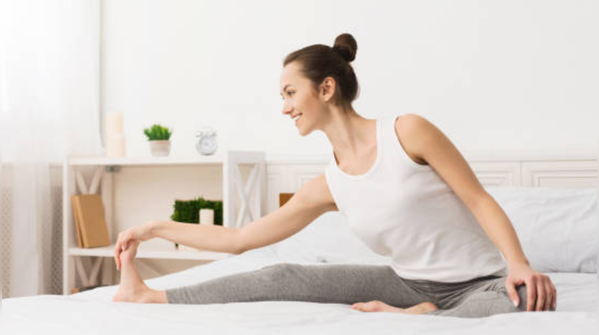
A recent study published in PLOS One examined what happened when people did a 10-minute coordination-focused workout while lying down once a day for two weeks. The researchers were looking at posture and balance, so they tested four specific exercises: abdominal contractions, glute bridges, heel pushes, and playing rock paper scissors with their feet. Yes, really. And it worked. The point wasn't just that the exercises did something—it was that consistent, short workouts actually change your body's foundation in measurable ways.
One study showed that just a 5-minute home-based eccentric exercise program, done daily for four weeks, improved physical fitness, body composition, and mental health in sedentary individuals. The workout involved chair squats, chair reclines, wall push-ups, and heel drops. Nothing fancy. Just consistent movement using exercises you can do in your bedroom without equipment.
The consistency is what matters, not the duration. A research project in Kenya tracked sedentary adults aged over 50 and split them into two groups: one did three daily bouts of 5–10 minutes of moderate-intensity exercise, the other did 30–60 minute bouts a few times weekly. After 24 weeks, the short-duration group saw comparable body composition improvements to the long-duration group. Same results, less friction, more adherence.
What you actually need to do
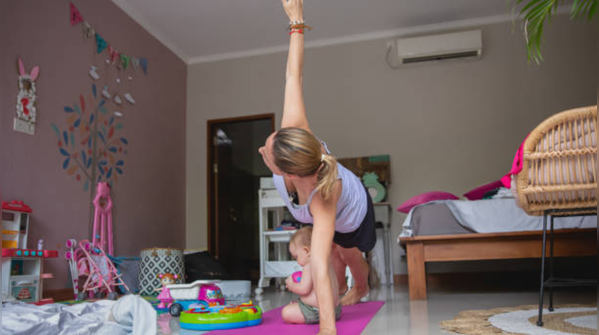
Push-ups, squats, glute bridges, and planks are basically the core four that build real strength in a small space. These aren't secret exercises. They're the fundamentals because they work. Research published in PeerJ confirms that calisthenics training produces comparable muscle and strength gains to weight training for most people. The key is progressive overload—making exercises harder over time through tempo changes, range of motion, and variations.
The structure doesn't need to be complicated. Do a quick two- to three-minute warm-up with jumping jacks and jogging in place. Then run through push-ups, squats, lunges, planks, and glute bridges in circuit format with minimal rest. A full-body circuit hitting all major muscle groups feels much less intimidating when you're doing it in your bedroom than when you're at a gym surrounded by people who look like they were born deadlifting.
Here's the thing about glute bridges that people always underestimate: they're essential for counteracting the effects of sitting. Lie on your back with knees bent, drive your hips up squeezing your glutes. It looks easy. Do it for 20 seconds and suddenly you'll understand why it's an essential exercise. Progress to single-leg bridges for significantly greater challenge.
Mountain climbers combine core work with cardio. Stay in plank position and alternate driving knees to chest while keeping your hips level. Burpees are efficient for cardiovascular conditioning but honestly, most people hate them. Start with a simplified version without the jump and progress to full burpees once you're not cursing yourself.
The bedroom advantage over everything else
The timing aspect is worth mentioning because it actually matters. Morning workouts generally support better sleep at night. Exercise reduces circulating cortisol over time. Chronically elevated cortisol, which is associated with stress and sedentary behavior, disrupts sleep architecture and reduces deep sleep. Regular movement, including bedroom exercises done consistently, is one of the most reliable ways to lower that baseline cortisol level.
But here's the catch: vigorous exercise raises core body temperature and cortisol. Both of these can delay sleep onset if exercise happens too close to bedtime. So morning bedroom workouts are genuinely better for your sleep quality than evening workouts. That also means you're more likely to do them because you're not competing with "I'm tired and want to sleep" later in the day.
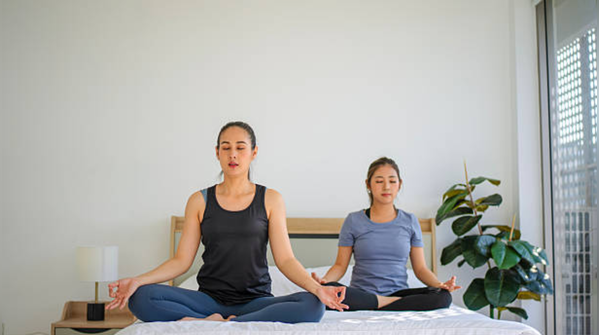
The other advantage is psychological, and it's huge. Jumping into a workout routine doesn't need to feel like a huge commitment. You don't need a fancy gym membership or a ton of equipment to see results. The best place to start is often right in your own bedroom. And there's something about removing all the usual excuses that makes fitness actually stick. No travel time, no waiting for machines, no feeling intimidated by anyone. This is about making fitness fit your life.
Getting started with bedroom fitness strips away the friction. Your bedroom is always available. It requires no travel. It needs zero equipment for an effective routine. And research shows that a consistent moderate bedroom workout is far better for your fitness than sporadic intense gym sessions. The secret is consistency, not intensity.
The real results
The documentation part matters more than most people think. If you did 10 squats per set last week, shoot for 12 this week. That's progressive overload. That's how your body changes. A simple piece of paper or your phone notes app tracking your reps is actually the difference between workouts that do something and workouts that you forget about.
The bottom line: a 10-minute bedroom workout, done consistently, produces measurable results. Not "kind of helps" results. Actual body composition changes, strength gains, and improved cardiovascular health. No excuses, no friction, no equipment required. Your bedroom is already where you are. The only question now is whether you're going to use it.
Featured In etimes

