
- News
- India News
- Interference by Canadian diplomats in India's internal affairs warrant parity in diplomatic presence in Delhi, Ottawa: MEA
Trending
This story is from October 20, 2023
Interference by Canadian diplomats in India's internal affairs warrant parity in diplomatic presence in Delhi, Ottawa: MEA
The Centre on Friday said that continued interference by Canadian diplomats in India's internal affairs "warrant parity in diplomatic presence" in New Delhi and Ottawa. The government also took a stand against any alleged "attempt to portray the implementation of parity" in the diplomatic presence with Canada, as a violation of international norms. The statement by the ministry of external affairs came after Canada temporarily suspended visa and in-person consular services in Bengaluru, Chandigarh and Mumbai. The same will be available only the Canadian High Commission in Delhi.
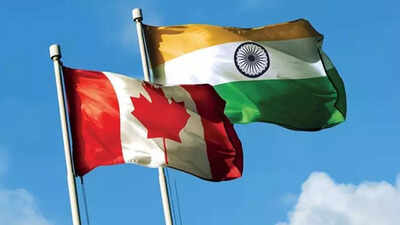
NEW DELHI: The Centre on Friday strongly rejected attempts by Canada to "portray the implementation of parity in diplomatic presence as a violation of international norms" and said that India's actions in implementing this parity are fully consistent with Article 11.1 of the Vienna Convention on Diplomatic Relations. India also once again justified its move to reduce the number of Canadian diplomats and said "The state of our bilateral relations, the much higher number of Canadian diplomats in India, and their continued interference in our internal affairs warrant a parity in mutual diplomatic presence in New Delhi and Ottawa."
India had asked Canada to downsize its diplomatic presence in the country as relations between the two nations plunged to an all-time low following Ottawa's allegations against New Delhi over the killing of a Khalistani terrorist on Canadian soil. Canada today withdrew 41 diplomats and their family members after India made it clear that it will remove diplomatic immunities for all but 21 Canadian diplomats and dependents in Delhi by October 20.
The ministry of external affairs issued a statement to reject Canada's charges of violation of diplomatic norms and also denied any arbitrariness in the process.
"We have seen the statement by the Government of Canada on October 19 regarding Canadian diplomatic presence in India. We have been engaged with the Canadian side on this over the last month in order to work out the details and modalities of its implementation," the MEA statement read.
Canadian foreign affairs minister Melanie Joly called India's request for diplomatic parity "unreasonable" and said, "I can confirm that India has formally conveyed its plan to unilaterally remove diplomatic immunities for all but 21 Canadian diplomats and dependents in Delhi by tomorrow, October 20."
Meanwhile, Canada also announced that it will be pausing all in-person services at the consulates in Chandigarh, Mumbai and Bengaluru and will be directing all Canadians in India to the high commission in New Delhi.
The Canadian Embassy in New Delhi updated its travel advisory hours after Joly's statement, urging its citizens to "exercise a high degree of caution" in and around Bengaluru, Chandigarh and Mumbai.
In its travel advisory for India that was updated on Thursday, Canada said: “In the context of recent developments in Canada and in India, there are calls for protests and some negative sentiment towards Canada in traditional media and on social media ... Demonstrations, including anti-Canada protests, could occur and Canadians may be subjected to intimidation or harassment. In Delhi and the National Capital Region, you should keep a low profile with strangers, and not share your personal information with them."
"Avoid crowded areas, including public transportation. You should always travel with someone and inform a friend or a family member of your travel plans, “Consular services in person are temporarily unavailable in and around Bengaluru, Chandigarh and Mumbai. Consular services in person at the High Commission of Canada in New Delhi will remain available,” the advisory also states.
According to the travel industry, Canada and the UK were among the countries in India that had taken visa processing to pre-Covid levels and even beyond while the US still has very long interview wait period for visitor visa and many key Schengen countries have severe appointment capping here.
Relations between India and Canada have plunged since Prime Minister Justin Trudeau last month publicly linked Indian intelligence to the killing of Canadian citizen Hardeep Singh Nijjar, allegations New Delhi has called "absurd".
Nijjar, who was a designated terrorist in India, was gunned down outside a Gurdwara, in a parking area in Canada's Surrey, British Columbia on June 18.
India had asked Canada to downsize its diplomatic presence in the country as relations between the two nations plunged to an all-time low following Ottawa's allegations against New Delhi over the killing of a Khalistani terrorist on Canadian soil.
The ministry of external affairs issued a statement to reject Canada's charges of violation of diplomatic norms and also denied any arbitrariness in the process.
"We have seen the statement by the Government of Canada on October 19 regarding Canadian diplomatic presence in India. We have been engaged with the Canadian side on this over the last month in order to work out the details and modalities of its implementation," the MEA statement read.
"Our actions in implementing this parity are fully consistent with Article 11.1 of the Vienna Convention on Diplomatic Relations, which states the following: 'In the absence of specific agreement as to the size of the mission, the receiving State may require that the size of a mission be kept within limits considered by it to be reasonable and normal, having regard to circumstances and conditions in the receiving State and to the needs of the particular mission. We reject any attempt to portray the implementation of parity as a violation of international norms," the statement said.
Canadian foreign affairs minister Melanie Joly called India's request for diplomatic parity "unreasonable" and said, "I can confirm that India has formally conveyed its plan to unilaterally remove diplomatic immunities for all but 21 Canadian diplomats and dependents in Delhi by tomorrow, October 20."
Meanwhile, Canada also announced that it will be pausing all in-person services at the consulates in Chandigarh, Mumbai and Bengaluru and will be directing all Canadians in India to the high commission in New Delhi.
The Canadian Embassy in New Delhi updated its travel advisory hours after Joly's statement, urging its citizens to "exercise a high degree of caution" in and around Bengaluru, Chandigarh and Mumbai.
In its travel advisory for India that was updated on Thursday, Canada said: “In the context of recent developments in Canada and in India, there are calls for protests and some negative sentiment towards Canada in traditional media and on social media ... Demonstrations, including anti-Canada protests, could occur and Canadians may be subjected to intimidation or harassment. In Delhi and the National Capital Region, you should keep a low profile with strangers, and not share your personal information with them."
"Avoid crowded areas, including public transportation. You should always travel with someone and inform a friend or a family member of your travel plans, “Consular services in person are temporarily unavailable in and around Bengaluru, Chandigarh and Mumbai. Consular services in person at the High Commission of Canada in New Delhi will remain available,” the advisory also states.
According to the travel industry, Canada and the UK were among the countries in India that had taken visa processing to pre-Covid levels and even beyond while the US still has very long interview wait period for visitor visa and many key Schengen countries have severe appointment capping here.
Relations between India and Canada have plunged since Prime Minister Justin Trudeau last month publicly linked Indian intelligence to the killing of Canadian citizen Hardeep Singh Nijjar, allegations New Delhi has called "absurd".
Nijjar, who was a designated terrorist in India, was gunned down outside a Gurdwara, in a parking area in Canada's Surrey, British Columbia on June 18.
End of Article
FOLLOW US ON SOCIAL MEDIA





Hot Picks
TOP TRENDING
Trending Stories
In India
Entire Website
- Diljit Dosanjh’s Dil-Luminati India Tour: Check dates, venue, how to book concert tickets online
- Hamster Kombat Daily Cipher Codes and Combo Cards for September 13, 2024: Unlock up to 1 million coins
- Narayana Murthy faces backlash for parenting remarks on social media; users say, "after working 72 hours a week, there’s barely time left to have babies…”
- Shreyas Iyer comes out to bat wearing sunglasses, falls for a duck in Duleep Trophy
- iPhone 16 will be available for Rs 54,900 on Apple website; here's how you can grab the deal
- iPhone 16 to go on pre-order today: Pre-booking details, time, sale date and more
- Vande Metro launch date, schedule: PM Modi to flag off Bhuj-Ahmedabad Vande Metro train; check timings, stoppages of new Indian Railways train
- Why around 40,000 TCS employees have received tax demand notices for Rs 50,000 to over Rs 1 lakh
- Bill meant to usurp Waqf land, JPC told
- Delhi to UP: IMD releases forecast and issues warnings across several states
- 'Osama's 'dead son' is alive, leading al-Qaida in Afghanistan and has terrifying plans'
- 'Vow to fight anti-national forces': Kejriwal after walking out of jail
- Actor dies in his sleep. Why sudden heart attacks are killing Indians
- J&K: Encounter underway in Kishtwar; 4 Army soldiers injured
- 'My father was on the flight': EAM opens up about '84 Air India hijack
- 'I enjoy my battles with Kohli because...': Starc
- Drone bombs and rockets: Is Manipur slipping out of control?
- Jhumka Gira Re ...: American woman's Instagram post on India goes viral
- Sebi chief counters Cong charges, says narrative based on illegally obtained IT returns
- US Presidential Election Top 10: Why America has gone to the cats

Popular Categories
Hot on the Web
Top Trends
Aadhaar Card UpdateTech LayoffsArvind Kejriwal BailVande MetroShannon SharpeAdani HinderburgUPSC Mains Admit CardKristina JoksimovicTCS Employee Tax NoticesWay Chatgpt can be your Study PartnerAir Taxi IndiaAyushman Bharat SchemeKolkata Doctor Rape CaseDonald TrumpShreyas IyerDiljit DosanjhLive Cricket Score
Trending Topics
Alia BhattMalaika Arora Father DeathArbaaz KhanNatasa StankovicMr Bachchan OTT ReleaseNational Parks In IndiaSelena GomezGOAT CollectionVikas Sethi DeathMalayalam ProducersIndia's Best Dancer 4Simi GarewalDilli BabuIndian National ParksLaung BenefitsVikas SethiApple iPhone 16SpaceXAadhar Card Update By Sept 14Wordle Answer
Living and entertainment
Latest News
7. Hindi becomes officialSalman Khan surrounded by bodyguards as he arrives at Malaika Arora's mother's house to offer his condolences - WATCHJulie Chen to miss Big Brother live eviction for first time, taps Jerry O'Connell to hostRaveena Tandon apologizes to fans for not photo snub in London: "It was not my intention to offend"Bonedi baris hope for a peaceful start to PujoNIA raids pro-Khalistan preacher Amritpal Singh's relative's house in AmritsarA vision unfolds: How Levitation is crafting tomorrow’s enterprise solutionsPreschools turn nursing homes, retirement age raised: China's demographic crisis explodesTovino Thomas praises Prithviraj Sukumaran as director: "One of the brilliant directors I have ever worked with"Tragedy strikes at fundraiser: Mother of two dies after marshmallow-eating competitionMan shot near Delhi's Greater Kailash-I gym, gang war suspected8 animals that reproduce without mating'Cops stood as mute spectators': Protesting doctors write to President over RG Kar impasseFatal crash in Australia's Netherby claims life of ToddlerNASA to establish New Lunar Time Standard with Coordinated Lunar Time (LTC) initiativeDivya Bansal explores themes of human resilience, love and positive transformation in debut poetry bookWWE Superstar Cody Rhodes and his Wife Brandi Rhodes Share Special Messages on Their 11th AnniversaryTop 5 least private zodiac signs
Copyright © 2024 Bennett, Coleman & Co. Ltd. All rights reserved. For reprint rights: Times Syndication Service