
Lab-grown diamonds vs lab-grown gold: What’s the difference, and which is better?
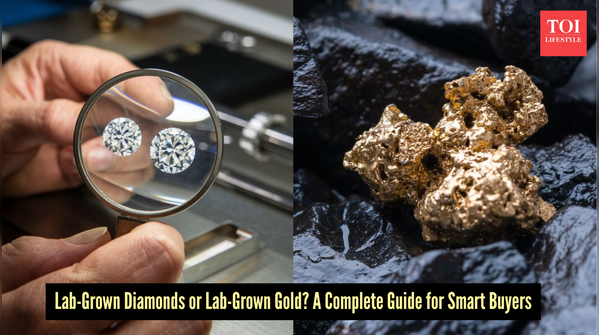
A Complete Guide for Smart Buyers
Diamonds and gold occupy different corners of luxury, yet both are now being reshaped by science. Consumer habits are not always identical. Lab grown diamonds have moved from curiosity to commercial scale, while lab grown gold remains an idea still searching for an economic model. That difference matters. One is already influencing retail shelves, exports, and consumer psychology. The other is testing whether chemistry, physics, and jewelry tradition can be reconciled without destroying value for serious buyers.
Market Momentum
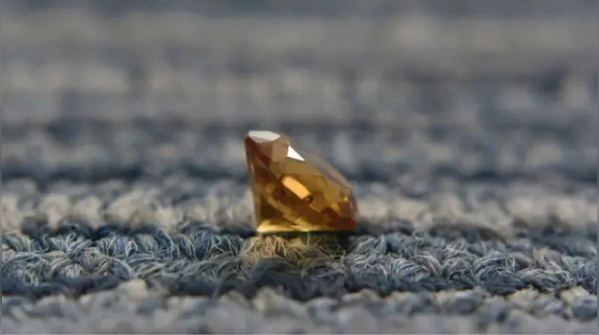
The diamond story is the easier one to measure. The global lab grown diamond market was valued at USD 29.46 billion in 2025 and is projected to rise from USD 33.54 billion in 2026 to USD 91.85 billion by 2034, a pace that reflects both affordability and industrial maturity. India has become a serious production base, making more than three million lab grown diamonds in 2023 and accounting for over 15 percent of global output. That scale gives the category depth, supply discipline, and a growing export edge.
(Image Credits: Pinterest)
Value Logic
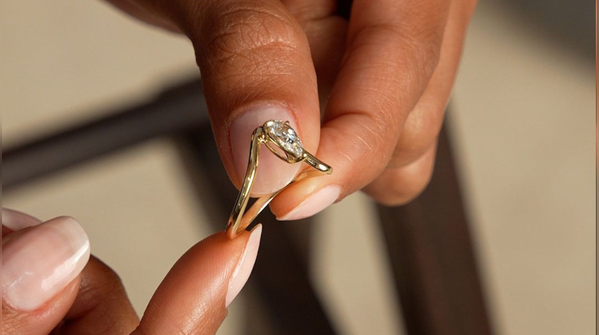
Lab grown diamonds succeed because they solve a practical problem. They deliver visual beauty, structural similarity, and consistent quality at a price that can sit below mined stones. For younger buyers, the appeal is not only cost but also traceability and the sense that luxury no longer needs to depend on extraction. Critics still argue that scarcity gives natural diamonds emotional and resale power, yet the market clearly shows that many customers now value transparency and design over geological romance. Diamonds therefore became a consumer story as much as a gemstone story.
(Image Credits: Pinterest)

Gold Reality
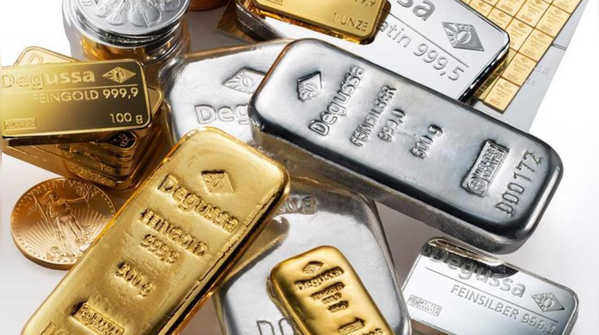
Gold is harder to disrupt because its role is broader than ornamentation. In India it is wealth, ritual, inheritance, and a sacred offering during Lakshmi puja. That cultural load changes the economics. People do not only buy gold for sparkle, they buy trust, liquidity, and a form of social insurance. A lab grown substitute would have to match not just purity and appearance, but also the emotional and financial authority that gold has accumulated over centuries. That is a much taller order than replacing a diamond in a pendant or ring.
(Image Credits: Pinterest)
Technology Gap
Lab grown gold is often presented as a sustainable alternative, yet it is not currently the cheaper one. Producing true gold in laboratory conditions requires highly advanced technology and strict control, which keeps costs. Two routes are discussed most often. The first is atomic level creation, where gold atoms are constructed or isolated through particle level processes, a path still too expensive for scale. The second is recovery and refinement, where recycled material is purified to very high levels in controlled settings. That second route is more realistic, but it is closer to sophisticated refining than to a mainstream lab grown metal industry.
(Image Credits: Pinterest)

Future Test
The comparison, then, is not simply between two precious materials. It is between a mature industrial disruption and a scientific possibility that has not yet found its market. Lab grown diamonds already compete on price, scale, and consumer acceptance. Lab grown gold must still prove that it can be produced economically, certified credibly, and embraced. Until that happens, diamonds will remain the successful laboratory product, while gold will stay the more difficult symbol to reinvent.
(Image Credits: Pinterest)(Authored by: Mr. Vinod Hayagriv, MD & Director, Company: C. Krishniah Chetty Group-CKC Jewellers)
Featured In lifestyle

MORE FROM ETIMES
life & style