
Art quote of the day by Pablo Picasso: “The world today doesn’t make sense, so why should I paint pictures that do?”
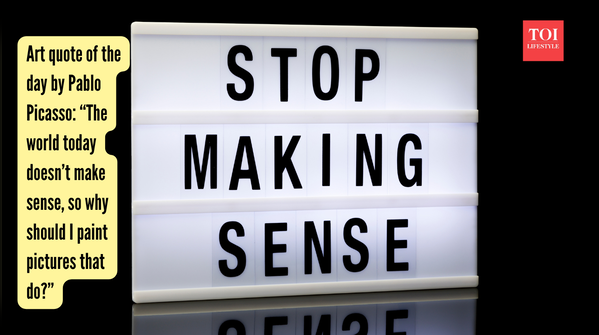
Art quote of the day by Pablo Picasso “The world today doesn’t make sense, so why should I paint pictures that do”
Today, we want to understand the sense behind everything, we expect things to be black and white without having any grey in between.
But with so many things running simultaneously, it is difficult to separate the ‘milk from water’, and situations render in confusions and misunderstandings.
Amid all the hush and gush, we tend to forget that the real beauty of things and situations lie in how much disheveled they remain.
In such times, many individuals search for meaning, stability, and truth. And art is one such form that remains timeless as ever. It is also one of the strongest ways through which people express emotions that are difficult to explain in simple words. Great artists throughout history have used their work not just to create beauty, but also to reflect the reality around them, even though unexplained.
One such artist was Pablo Picasso, one of the most influential painters of the twentieth century. Picasso changed the way people understood art. Instead of painting perfect and realistic images, he often created fragmented and abstract works that depicted human emotions, confusion, and social unrest.
Art quote of the day
“The world today doesn’t make sense, so why should I paint pictures that do?”
- Pablo Picasso
What does the quote mean ?
This is one of the most thought-provoking quotes by Pablo Picasso. He explains that art should reflect reality honestly, even if it is chaotic, broken, or confusing.
Picasso lived during a period of major global unrest. He saw wars, political violence, social change, and human suffering. Because of this, he believed that traditional art, which focused mainly on beauty and perfection, could no longer truly represent modern life.
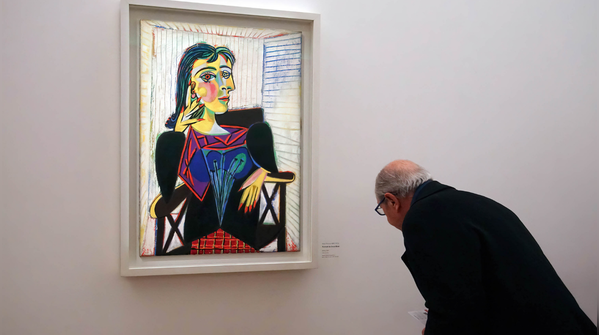
So, he created artworks that looked fragmented and unusual. His style, especially Cubism, used breaking objects into different shapes and perspectives to show how complex human experience truly is.
Picasso believed that art should express the truth
This also means that when the world itself feels disordered, artists should not pretend that everything is simple or perfect. Picasso believed that art should express truth rather than only pleasing appearances. His paintings often challenged viewers because they did not follow normal artistic rules. Yet this was exactly his purpose: to make people think deeply about the world around them.
Featured In lifestyle

