
- News
- We know more about 25K INA soldiers than 2.5 million Indian Army troops of WWII
This story is from November 30, 2015
We know more about 25K INA soldiers than 2.5 million Indian Army troops of WWII
Pandit Jawaharlal Nehru, as the first Prime Minister of India, acted like a world leader.
Pandit Jawaharlal Nehru, as the first Prime Minister of India, acted like a world leader.
Pandit Jawaharlal Nehru, as the first Prime Minister of India, acted like a world leader.
Today, he may be mocked by his detractors for this and strongly criticised for his aggressive forward policy that, in a way, led to a military conflict with China in 1962, but Nehru was only playing a role history had scripted for him. India, at the end of the Second World War, was the most powerful country in Asia.
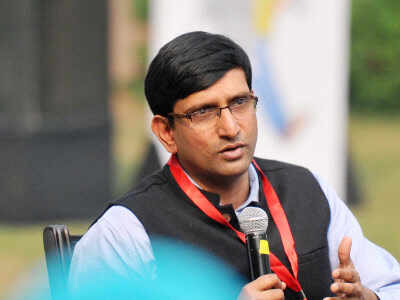
Historian Srinath Raghavan and journalist-author Raghu Karnad tried to find an answer to this question on the concluding day of Times LitFest 2015. At a session moderated by senior journalist Indrani Bagchi, Karnad and Raghavan touched upon the various reasons why military history is missing from India’s mainstream history.
“This was primarily because of two reasons. Much of the history written in Independent India has been on the colonial period with a focus on the Congress-led Freedom Movement. Secondly, the professional Indian historians were also Left-leaning. They saw the armed forces as orthodox institutions that sided with the British while their focus was on the forces working against the Raj. That’s why we know what the 25,000 INA soldiers did, but really nothing about the 2.5 million people of the Indian Army,” Raghavan said. He is writing a book on India and the Second World War.
India had experienced a rare kind of cosmopolitanism with people from different nationalities coming here. There were British, Americans, Chinese, west and east Africans, Poles, even German and Japanese PoWs. Indians themselves were in every theatre of the war across the globe and came in contact with different cultures. “In 1941, India invaded Iraq and then Iran. This was not because of London’s machinations, but because New Delhi was worried that Axis presence in these countries would jeopardise India’s security. India controlled and governed many of the Gulf states. Also, wherever the ISIS operates today, all those lands were under the occupation of the Indian Army during the war,” Raghavan said.
Karnad added to that, “Indian industrial production increased. For instance cotton. Yet people couldn’t afford clothes. India fed and equipped her troops, yet there was a food shortage in the country and a devastating famine in Bengal. These were the paradoxes of the war that we must study today.” So what else troubles India’s military history apart from amnesia? “There aren’t too many sources available in India. You would be surprised to know that India and Pakistan had jointly set up a panel to properly document their inherited military legacy well into the 1960s. Despite that, it’s difficult to access sources today.
Archival work has not been proper. Yet this is a subject that could have filled up libraries,” Raghavan said. Both speakers also agreed that unless awareness about India’s wars became part of our culture and academia, there is little chance that things would improve. “India today seems to be willing to be a stakeholder of the new world order. The truth is, India always was. She just needs to acknowledge her own role in past conflicts,” Raghavan said.
Today, he may be mocked by his detractors for this and strongly criticised for his aggressive forward policy that, in a way, led to a military conflict with China in 1962, but Nehru was only playing a role history had scripted for him. India, at the end of the Second World War, was the most powerful country in Asia.
And that status had come due to her stellar role in the war and her efforts at building world peace after the conflict—something that’s been almost forgotten today. So why did India forget her role in the war?
Historian Srinath Raghavan and journalist-author Raghu Karnad tried to find an answer to this question on the concluding day of Times LitFest 2015. At a session moderated by senior journalist Indrani Bagchi, Karnad and Raghavan touched upon the various reasons why military history is missing from India’s mainstream history.
“This was primarily because of two reasons. Much of the history written in Independent India has been on the colonial period with a focus on the Congress-led Freedom Movement. Secondly, the professional Indian historians were also Left-leaning. They saw the armed forces as orthodox institutions that sided with the British while their focus was on the forces working against the Raj. That’s why we know what the 25,000 INA soldiers did, but really nothing about the 2.5 million people of the Indian Army,” Raghavan said. He is writing a book on India and the Second World War.
Karnad has recently authored the book, Farthest Field, which is a story of his family’s role in the Second World War. “Until I started researching for my book, I had no idea that the Second World War and the Indian Freedom Movement overlapped so much. Yet the war peaked in 1942 when the Freedom Movement also peaked. When I first discovered about Bobby Mugaseth, my grandmother’s brother, he was on the verge of vanishing from my family’s memory. It was then that I found out that he and two other boys of my family had volunteered for the war. And that was when it struck me that so many people were involved in the war just as so many people were involved in the freedom struggle,” Karnad said.
India had experienced a rare kind of cosmopolitanism with people from different nationalities coming here. There were British, Americans, Chinese, west and east Africans, Poles, even German and Japanese PoWs. Indians themselves were in every theatre of the war across the globe and came in contact with different cultures. “In 1941, India invaded Iraq and then Iran. This was not because of London’s machinations, but because New Delhi was worried that Axis presence in these countries would jeopardise India’s security. India controlled and governed many of the Gulf states. Also, wherever the ISIS operates today, all those lands were under the occupation of the Indian Army during the war,” Raghavan said.
Karnad added to that, “Indian industrial production increased. For instance cotton. Yet people couldn’t afford clothes. India fed and equipped her troops, yet there was a food shortage in the country and a devastating famine in Bengal. These were the paradoxes of the war that we must study today.” So what else troubles India’s military history apart from amnesia? “There aren’t too many sources available in India. You would be surprised to know that India and Pakistan had jointly set up a panel to properly document their inherited military legacy well into the 1960s. Despite that, it’s difficult to access sources today.
Archival work has not been proper. Yet this is a subject that could have filled up libraries,” Raghavan said. Both speakers also agreed that unless awareness about India’s wars became part of our culture and academia, there is little chance that things would improve. “India today seems to be willing to be a stakeholder of the new world order. The truth is, India always was. She just needs to acknowledge her own role in past conflicts,” Raghavan said.
End of Article
FOLLOW US ON SOCIAL MEDIA
Hot Picks
TOP TRENDING
Trending Stories
In Section
Entire Website
- 'We were treated like slaves, made to work for 15 hours a day': Tricked into Ukraine war, 3 from Karnataka return home
- 'My father was on the flight': Jaishankar opens up about 1984 Air India hijack
- Airtel CEO Gopal Vittal sends letter to Reliance Jio, Vodafone-Idea, Tata Tele and BSNL CEOs; here's what he said
- Prince Harry to celebrate 40th birthday away from Meghan Markle
- Haitian immigrant pet-eating row: Ohio woman accused of eating cat is US citizen, video is not from Springfield
- Kejriwal out of jail; 'CBI arrest only to frustrate ED case bail': SC judge
- Donald Trump reveals what Laura Loomer is to his campaign: 'I don't control her'
- Hamster Kombat Daily Cipher Codes and Combo Cards for September 14, 2024: Unlock up to 1 million coins
- Laura Loomer's photo with Donald Trump viral. People ask where's Melania, where's wedding ring
- Garena Free Fire MAX redeem codes for September 13: Win in-game goodies and rewards
- 'Came to meet as your didi': Mamata on 'last attempt' to resolve doctors crisis
- 'Water reached tomb of Shahjahan': After heavy rain, leakage at Taj Mahal
- Did doctors make a mistake in making Mamata wait for two hours?
- ACT Hockey: India hold nerves to beat Pakistan 2-1 in a thriller
- FIR filed over fireworks outside Arvind Kejriwal's residence
- 'My father smeared Tiger's blood on my lips': Yograj
- How Yechury went from Indira’s tormentor to Rahul’s mentor
- Noida woman loses Rs 27 lakh in SIM card 'hacking': Big mistake she made
- 'Madhabi Buch investing in Chinese firms': Cong ups ante against Sebi chief
- Congress demands action against Noida DM over 'Pappu' post on Rahul Gandhi

Popular Categories
Hot on the Web
Top Trends
Trending Topics
Korean TeaSector 36 ReviewGreen Apple BenefitsPriyanka Chopra TattooKottukkaali OTT ReleaseNational Parks In IndiaGhaziabad Juice SellerGOAT CollectionVikas Sethi DeathMalayalam ProducersIndia's Best Dancer 4Simi GarewalDilli BabuIndian National ParksLaung BenefitsVikas SethiApple iPhone 16Donald TrumpAadhar Card Update By Sept 14Wordle Answer
Living and entertainment
Latest News
Kaun Banega Crorepati 16: Can you guess the answer for this Rs 3,20,000 question on Navy, which contestant Naman Jain incorrectly answered?Hindus take to Bangladesh streets to stop attacks and demand justiceEdible oil import duty hiked by 20%'Calling all Swifties for Trump': Donald's new campaign merch imitates Eras Tour shirtsWWE Hall of Famer Watches 15 Hours Of Wrestling Each WeekDallas Cowboys Set to Defend AT&T Stadium in Week 2 Clash with New Orleans SaintsTovino on training for Kalaripayattu in ‘ARM’: I practiced every single day, even if I had a hectic day on set8 animals that reproduce without matingDelhi Police Files FIR for Firecracker Celebration Outside CM Kejriwal's ResidenceThrowback: When Alia Bhatt responded to insecurity questions about Ranbir Kapoor, shut down gossipIndia's T20I captain Suryakumar Yadav turns 34: A glimpse into his stellar T20 career'Forgive me, I don't belong ...' : Tamil Nadu hotelier's apology to FM Nirmala Sitharaman over GST remark triggers political rowRakul Preet Singh reveals Bollywood stylists charge from Rs 15000 to Rs 1 lakh for one event, one outfit: 'Living in Mumbai requires a lot of PR'September 14, 2024: Flying creatures and how their wings workThrashed for 'molesting' kid on train, rail staffer diesKejriwal walks out of jail, says morale is up by 100 timesDhruv Kapila's health setback shatters Indian pair's Vietnam Open semifinal hopesFormer Titans Cheerleader Danielle Sekelsky Begins WWE NXT Training
Copyright © 2024 Bennett, Coleman & Co. Ltd. All rights reserved. For reprint rights: Times Syndication Service