
- News
- Relationships News
- Success quote of the day by Ralph Waldo Emerson: "The only person you are destined to become is..."
Success quote of the day by Ralph Waldo Emerson: "The only person you are destined to become is..."
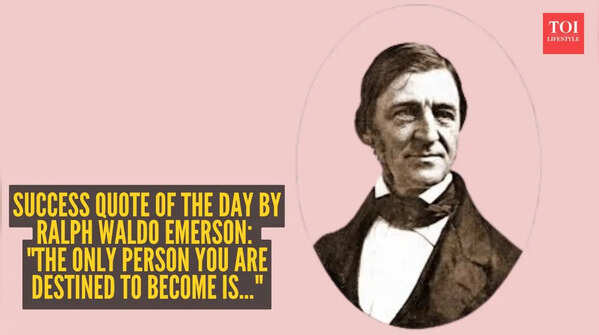
Ralph Waldo Emerson's inspiring quote
"The only person you are destined to become is the person you decide to be." - Ralph Waldo Emerson
We like stories that make destiny sound inevitable: the chosen one, the prodigy, the “born-for-this” hero. Emerson’s line cuts through that fantasy. His quote doesn’t suppose fate is written in stars or DNA. Instead, it hands you the pen. That shift, from passive to active; turns inspiration into responsibility, and possibility into practice.

What Emerson really means
At first glance, the quote is simple: destiny isn’t something outside you waiting to happen. The “person you are destined to become” becomes real only when you choose who you will be. Emerson places agency at the center of character and life’s outcome. It’s not denial of circumstance; it’s a call to act within it.

Why this matters today
In a world shaped by algorithms, labels, and quick comparisons, the idea of deciding who you are can feel both empowering and overwhelming. Social media often hands us templates for identity, be it career paths, lifestyle brands, or even relationship roles. But Emerson says that our identity is not only what you inherit or what others tell you. It’s the values you practice, and the small habits you repeat daily.

Three simple ways to live this quote
1. Start small: Decide what kind of person you want to be, and then work on it.
2. Build identity through action. For example: If you want to be generous, give your time or help others regularly.
3. Learn from your mistakes. When plans fail, ask: what decision will I make now? That question keeps you designing your future instead of replaying your past.

A quick thought experiment
Imagine two versions of yourself five years from now. One drifted into choices shaped by urgency and convenience; the other made deliberately. Which life feels more authentic? The exercise is less about a fixed future and more about aligning daily decisions with a chosen self.

Emerson and emotional intelligence
Emerson’s insight aligns with modern psychology. Research on self-concept and behaviour shows that our sense of who we are predicts the actions we take. People who adopt a “growth mindset” are likelier to persist and improve. Deciding to be a certain kind of person changes how you interpret setbacks, how you relate to others, and what opportunities you create.

Practical prompt to try today
Write one sentence: “I decide to be someone who _.” Put it on your phone wallpaper or a sticky note. Then pick one tiny action, like 5 minutes of reading, replying to that overdue message, or walking instead of scrolling, as per your goal. Repeat it three times this week and notice how choices begin to shape feeling.
Remember
Emerson didn’t promise ease. Deciding who you will be invites responsibility, hard choices, and occasional discomfort. But it also frees you from waiting for approval, luck, or fate. The person you become isn’t found; it’s chosen, day by day.
Featured In Relationships

