
- News
- Sports News
- Seema Punia slams ministry and AFI for TOP scheme snub
Trending
This story is from March 6, 2018
Seema Punia slams ministry and AFI for TOP scheme snub
Seema Punia has been ignored by the officials because she allegedly failed a dope test for stimulant ‘pseudoephedrine’ during the World junior athletics championships in 2001 in Santiago de Chile.
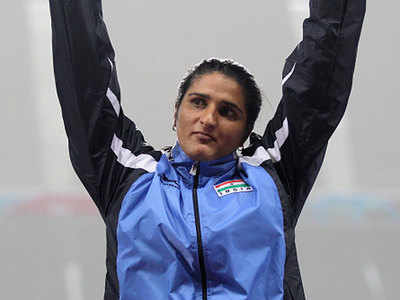
Seema Punia (Getty Images)
Key Highlights
- Seema complained she has been overlooked for the Rajiv Gandhi Khel Ratna and Arjuna awards despite winning medals for the country
- Monday's gold provided Seema the much-needed arsenal to hit back at the ministry and Athletics Federation of India
PATIALA: Seema Antil Punia clinched the discus throw gold at the Federation Cup senior national athletics on Monday to qualify for the Gold Coast Commonwealth Games. And, moment after her triumph, the Incheon Asian Games gold medallist launched a tirade against the sports ministry for not considering her name for the Target Olympic Podium (TOP) scheme or the Rs 50,000 monthly allowance to prepare for multi-sport events.
She also complained she has been overlooked for the Rajiv Gandhi Khel Ratna and Arjuna awards despite winning medals for the country. Seema has been ignored by the officials because she allegedly failed a dope test for stimulant ‘pseudoephedrine’ during the World junior athletics championships in 2001 in Santiago de Chile.
It was then reported that Seema had been “warned”, not “banned” but stood disqualified. The reports, citing the IAAF rules, had suggested that there was no suspension for testing positive for stimulants.
Monday’s gold provided Seema the much-needed arsenal to hit back at the ministry and Athletics Federation of India (AFI) for the ‘snub’ meted out to her over the years. She has taken the ‘Right to Information’ route to prove her point. Her only question to both the ministry and federation is – ‘Tell me when was I banned for doping and in which year?’
“In 2017, my performance went down because I was recovering from a knee injury. AFI didn’t recommend me for the TOP scheme. The ministry too didn’t include my name in the list of athletes getting monthly allowances. But what about the performance in all those years when I won CWG and Asian Games medals?” she added.
Seema may have a point, but it could be argued that there’s no proof to show her offence in the record books of the National Anti-Doping Agency because the WADA-accredited National Dope Testing Laboratory (NDTL) came into existence in 2008.
She also complained she has been overlooked for the Rajiv Gandhi Khel Ratna and Arjuna awards despite winning medals for the country.
It was then reported that Seema had been “warned”, not “banned” but stood disqualified. The reports, citing the IAAF rules, had suggested that there was no suspension for testing positive for stimulants.
Monday’s gold provided Seema the much-needed arsenal to hit back at the ministry and Athletics Federation of India (AFI) for the ‘snub’ meted out to her over the years. She has taken the ‘Right to Information’ route to prove her point. Her only question to both the ministry and federation is – ‘Tell me when was I banned for doping and in which year?’
“I have always been rejected for financial assistance and government awards owing to my alleged doping past. My application for Arjuna was rejected several times. But, I want to know from the authorities when was I banned? There is no evidence. I am already fighting a court case on this issue,” said Seema.
“In 2017, my performance went down because I was recovering from a knee injury. AFI didn’t recommend me for the TOP scheme. The ministry too didn’t include my name in the list of athletes getting monthly allowances. But what about the performance in all those years when I won CWG and Asian Games medals?” she added.
Seema may have a point, but it could be argued that there’s no proof to show her offence in the record books of the National Anti-Doping Agency because the WADA-accredited National Dope Testing Laboratory (NDTL) came into existence in 2008.
End of Article
FOLLOW US ON SOCIAL MEDIA




Top Sports News
TOP TRENDING
Trending Stories
In Sports
Entire Website
- Afghanistan vs New Zealand breaks 91-year record with Test cancellation; full list of matches abandoned without a ball bowled
- Drew Mcintyre vs CM Punk Hell In A Cell Match To End in A Shocking Twist: Former World Champion to interfere?
- 5 Most Legendary Wrestling Families in the History of Wrestling
- WWE Hall of Famer reveals what NXT star Giulia needs to improve
- Rumor Has It: Former WWE stars Set to Join AEW
- "The girl has all the qualifications," - Tommy Dreamer gives verdict on NXT star Giulia's debut
- WWE NXT Champion offers his services to "The Original Tribal Chief" Roman Reigns
- WWE NXT News: Two new matches announced for next week's episode
- "I would certainly not turn down the opportunity" - TNA star reveals desire for NXT crossover
- Virat Kohli close to breaking another record set by Sachin Tendulkar
- 'Fail to understand the great urgency to ...': What SC said while granting bail to Arvind Kejriwal
- 'Despite their efforts ... ': AAP says Kejriwal bail order strong message against BJP
- Why you should not be fooled by ‘20-year SIP crorepati’ dream
- 'Can't attend office': SC's bail conditions for Delhi CM Kejriwal
- 'Cops stood as mute spectators': Doctors write to President over RG Kar impasse
- India's Test wins ready to outnumber defeats: Where the trend changed
- Five things to keep in mind before betting on Bajaj Housing Finance
- Refund on iPhone 15 & 14: Apple's policy says conditions applied
- Haryana: It’s Bhupinder Singh Hooda way or the highway in Congress
- Shreyas Iyer bats wearing sunglasses, falls for duck

Popular Categories
Hot on the Web
Top Trends
Trending Topics
Alia BhattMalaika Arora Father DeathArbaaz KhanNatasa StankovicMr Bachchan OTT ReleaseNational Parks In IndiaSelena GomezGOAT CollectionVikas Sethi DeathMalayalam ProducersIndia's Best Dancer 4Simi GarewalDilli BabuIndian National ParksLaung BenefitsVikas SethiApple iPhone 16SpaceXAadhar Card Update By Sept 14Wordle Answer
Living and entertainment
Latest News
7. Hindi becomes officialSalman Khan surrounded by bodyguards as he arrives at Malaika Arora's mother's house to offer his condolences - WATCHJulie Chen to miss Big Brother live eviction for first time, taps Jerry O'Connell to hostBonedi baris hope for a peaceful start to PujoNIA raids pro-Khalistan preacher Amritpal Singh's relative's house in AmritsarA vision unfolds: How Levitation is crafting tomorrow’s enterprise solutionsTovino Thomas praises Prithviraj Sukumaran as director: "One of the brilliant directors I have ever worked with"Tragedy strikes at fundraiser: Mother of two dies after marshmallow-eating competitionMan shot near Delhi's Greater Kailash-I gym, gang war suspected8 animals that reproduce without matingHow a balanced pH helps maintain your skin’s youthful appearance'Cops stood as mute spectators': Protesting doctors write to President over RG Kar impasseStree 2 box office collection: Shraddha Kapoor and Rajkummar Rao starrer clocks Rs 539 croreISL-11 opener: Familiar foes back in businessFatal crash in Australia's Netherby claims life of ToddlerBiden to host fourth quad summit with PM Modi, Albanese, and Kishida in Delaware on September 21: White HouseSanthy Balachandran turns screenwriter for Kalyani Priyadarshan and Naslen starrerDivya Bansal explores themes of human resilience, love and positive transformation in debut poetry book
Copyright © 2024 Bennett, Coleman & Co. Ltd. All rights reserved. For reprint rights: Times Syndication Service