
- News
- 27-yr-old diabetic from Kurla is city’s 8th swine flu victim
This story is from March 12, 2015
27-yr-old diabetic from Kurla is city’s 8th swine flu victim
A 27-year-old diabetic woman from Kurla became the eighth Mumbaikar to fall prey to influenza H1N1 on Wednesday.

On Wednesday, state health minister Deepak Sawant attuned the state’s swine flu treatment protocol to the Centre’s, meaning every flu patient exhibiting high grade fever, cold, runny nose and in some cases diarrhoea be treated with Tamiflu from Day 2.
Sawant added in Pune that people falling in the high-risk category and showing influenza-like symptoms should be administered Tamiflu from Day 1.
The Kurla resident did not have a history of diabetes and was diagnosed with the condition during swine flu treatment. Doctors believe her impaired sugar levels could have had a significant impact on the outcome of her treatment. She went from stable to critical condition in less than 24 hours.
On Saturday, the woman was shifted from a local hospital to civic-run Sion Hospital, where doctors corroborated that she was started on Tamiflu immediately. "She was stable and was being treated in the isolation ward for swine flu patients. She even had her breakfast on Tuesday morning. She complained of breathlessness around 10.30am and was soon shifted to the ICU and put on ventilator," said Dr Swati Chavan, associate professor from Sion Hospital’s medicine department. She was being given insulin to stabilize the blood sugar levels.
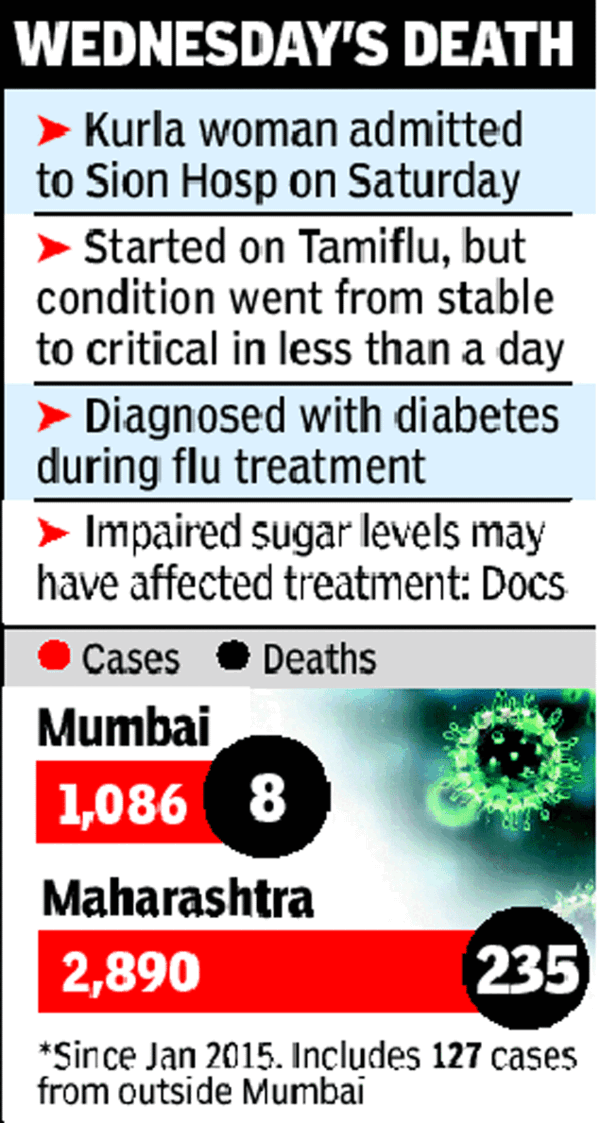
State numbers show that around 144 victims out of 215 evaluated till March 9 had co-morbid conditions. "Diabetes, hypertension and respiratory diseases have been some of the leading underlying ailments among the deceased this year. Deaths have been from all age brackets," said a state official.
Infectious disease consultant Dr Om Srivastava said due to co-morbid condition, the inflammatory response of the ailment can change. "Such patients probably need more aggressive treatment," he said.

About the Author
Sumitra DebroyEnd of Article
FOLLOW US ON SOCIAL MEDIA
Photostories
Hot Picks
TOP TRENDING
Popular Categories
Hot on the Web
Top Trends
Trending Topics
Kaun Banega Crorepati 16Dhanteras 2024RajinikanthThe Great Indian Kapil Show 2Salim KhanVicky Vidya Ka Woh Wala Video CollectionSomy AliNick JonasAvinash MishraBigg Boss 18PapayaKiccha Sudeep's Mother Death NewsPataudi PalaceDhadkanJuhi ChawlaAnushka SharmaTop Load Washing MachinesBest Premium LaptopsIntel LayoffsWordle Answer
Living and entertainment
Latest News
Protests in Bhagalpur over desecration of religious siteGive protection to interfaith couple, Uttarakhand HC tells policeInstilling fear of law among criminals is UP government's priority: Yogi AdityanathInspiration for creativity and art through eye of the tigerSalman Khans's sister Arpita Sharma and Aayush Sharma sell their Bandra house for Rs 22 crores: ReportWho is Naim Qassem? Hezbollah leader who allegedly fled to Tehran amid fear of assassinationRanji Trophy: Uttar Pradesh struggle despite Aryan Juyal-Rinku Singh show, trails Haryana by 186 runsThis Delhi college student says he feels 'difficulty in breathing because of rising pollution'When Janhvi Kapoor recalled about the ‘hectic itineraries’ made by her dad that gave her mother late Sridevi ‘anxiety’Perplexity AI seeks $8 billion valuation in new round, WSJ saysBringing social security to Mumbai's waste workers through government schemes'Not your punching ball': France protest in solidarity with mass rape victim Gisèle PelicotThree reforms India badly needs to fix its higher education mess'Audacity of terrorists won't be able to ... ': Rahul Gandhi condemns Ganderbal terror attackOptical illusion personality test: Are you diplomatic or brutally honest?P Diddy faces 7 new lawsuits, and this time it’s more serious than everRani Mukerji, Sonam Kapoor, Padmini Kolhapure and others make heads turn at Anil Kapoor-Sunita Kapoor's Karwa Chauth celebration - See photos'Vicky Vidya Ka Woh Wala Video' box office collection day 10: The Rajkummar Rao starrer sees a slight jump over the second weekend, crosses Rs 30 crore
Copyright © 2024 Bennett, Coleman & Co. Ltd. All rights reserved. For reprint rights: Times Syndication Service