Plain of Jars
Plain of Jars
You're Reading


Synopsis
The province of Phonsavan is littered with thousands of stone jars, which is now known as the Plain of Jars. These mysterious artefacts are believed to be from the Iron Age i.e. 500 BC to 200 AD. The jars have primarily been carve … Read more
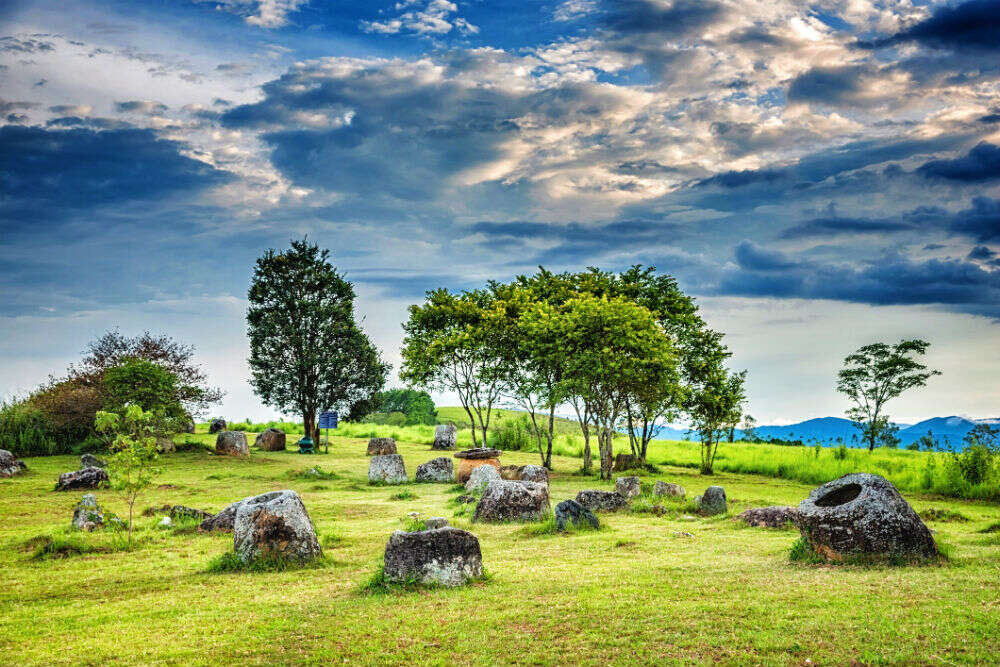 The province of Phonsavan is littered with thousands of stone jars, which is now known as the Plain of Jars. These mysterious artefacts are believed to be from the Iron Age i.e. 500 BC to 200 AD. The jars have primarily been carved out of sandstones or granites in various sizes. No particular theory has been claimed behind the presence of these jars in the area. The jars are arranged in clusters, reaching up to seven hundred in the biggest cluster. Approximately 90 jar sites are located across hundreds of square kilometres but only seven are accessible to visitors. During the Vietnam War in 1965, the area was heavily bombarded and it still poses threat to citizens with thousands of unexploded bombs buried around the region. The lush green plains and hills dotted with stone jars create picturesque backdrops. Whether the jars were used for cremation or collection of rainwater, visiting the Jar site will arouse your curiosity about the ancient practises, leaving its mystery to be unravelled in the coming centuries.
closecomments

Be the first one to review.
We have sent you a verification email. To verify, just follow the link in the message
end of article
Next story
Nam Song River
Visual Stories
10 pretty Indian villages to visit this year-end

8 castles in Germany straight out of a fairy-tale

8 tiger reserves every wildlife enthusiast should visit in India

10 animals that are easily spotted in Ranthambore National Park

How to prepare for a night safari in India?

9 rare animals to spot in the Western Ghats and where to find them


Trending Stories
10 birds with hilariously perverted names and where travellers can find them
Travellers beware: 5 dirtiest things in a hotel room you didn't know about
This is where the Ganges ends in India and meets the Bay of Bengal — why this place is special
What is a red-eye flight? Don’t commit these 5 mistakes after taking one
From Kerala rains to Rajasthan heatwave: IMD issues major weather warning for travellers as monsoon nears India




Comments (0)