
- News
- World News
- US News
- Trump Tariffs Highlights: Trump says US 'talking' to China on tariffs, adding 'Beijing have reached out a number of times'
THE TIMES OF INDIA | Apr 18, 2025, 07:44:14 IST
Comments
Share
Trump Tariffs Highlights: Trump says US 'talking' to China on tariffs, adding 'Beijing have reached out a number of times'
Trump Tariffs Live Updates: China has warned it is "not afraid" of a trade war with the United States, calling instead for dialogue grounded in "equality, respect, and mutual benefit." The remarks from foreign ministry spokesperson Lin Jian came after US President Donald Trump asserted it was Beijing's responsibility to rejoin negotiations. The escalating tensions follow China’s retaliatory moves, which led to a tariff burden of up to 245% on its exports to the US—up from the earlier 145%, according to a White House fact sheet.
Trump has pushed ahead with his "Fair and Reciprocal Plan" to address trade imbalances and non-reciprocal agreements. A 10% baseline tariff now applies across the board, while individualised higher tariffs target nations with significant trade surpluses against the US, including China. Although 75 countries have initiated discussions with Washington to resolve disputes and avoid tariffs, China has not been among them, the White House noted.
The trade standoff has triggered global market instability. Equity markets in Asia, Europe, and the US have witnessed sharp declines amid fears of rising inflation and slowed economic growth. The Trump administration has maintained that the tariff moves are necessary to protect American industry and national security. President Trump has also reiterated his stance on applying matching tariffs to other trading partners, including India, insisting on fair treatment in global trade. While other nations are negotiating, the deadlock with China threatens to deepen an already tense economic standoff.
Trump has pushed ahead with his "Fair and Reciprocal Plan" to address trade imbalances and non-reciprocal agreements. A 10% baseline tariff now applies across the board, while individualised higher tariffs target nations with significant trade surpluses against the US, including China. Although 75 countries have initiated discussions with Washington to resolve disputes and avoid tariffs, China has not been among them, the White House noted.
The trade standoff has triggered global market instability. Equity markets in Asia, Europe, and the US have witnessed sharp declines amid fears of rising inflation and slowed economic growth. The Trump administration has maintained that the tariff moves are necessary to protect American industry and national security. President Trump has also reiterated his stance on applying matching tariffs to other trading partners, including India, insisting on fair treatment in global trade. While other nations are negotiating, the deadlock with China threatens to deepen an already tense economic standoff.
16:36 (IST) Apr 16
California will sue to stop Trump from imposing sweeping tariffs
California governor Gavin Newsom said Wednesday that his state will file a lawsuit challenging President Donald Trump's authority to impose sweeping tariffs that have set off a global trade war.
The suit will argue that Trump's use of the International Emergency Economic Powers Act to impose tariffs on Mexico, Canada and China or a 10% tariff on all imports is unlawful. The act enables a president to freeze and block transactions in response to foreign threats.
The lawsuit, which will be filed in the U.S. District Court for the Northern District of California, will also argue that enacting such tariffs requires approval from Congress, Newsom's office said in a news release.
Trump has offered many justifications for increasing tariffs, including that they are designed to spur U.S. manufacturing and stop the flow of illicit fentanyl into the country. California's move follows rapidly changing tariff plans by the Trump administration.
Newsom says the tariffs in effect have resulted in inflated costs and billions of dollars in damage in California, which has the largest economy among U.S. states and is a massive exporter.
“President Trump’s unlawful tariffs are wreaking chaos on California families, businesses, and our economy — driving up prices and threatening jobs,” he said in a statement. “We’re standing up for American families who can’t afford to let the chaos continue.”
Newsom will discuss the lawsuit alongside California Attorney General Rob Bonta later Wednesday in the farm-rich Central Valley. California is a farming powerhouse, with many of the nuts, fruits and vegetables the state grows destined for other countries.
The state will ask the court to immediately block the tariffs.
The announcement comes days after Newsom asked countries to exempt California exports from retaliatory tariffs. No deals have yet been announced.
The suit will argue that Trump's use of the International Emergency Economic Powers Act to impose tariffs on Mexico, Canada and China or a 10% tariff on all imports is unlawful. The act enables a president to freeze and block transactions in response to foreign threats.
The lawsuit, which will be filed in the U.S. District Court for the Northern District of California, will also argue that enacting such tariffs requires approval from Congress, Newsom's office said in a news release.
Trump has offered many justifications for increasing tariffs, including that they are designed to spur U.S. manufacturing and stop the flow of illicit fentanyl into the country. California's move follows rapidly changing tariff plans by the Trump administration.
Newsom says the tariffs in effect have resulted in inflated costs and billions of dollars in damage in California, which has the largest economy among U.S. states and is a massive exporter.
“President Trump’s unlawful tariffs are wreaking chaos on California families, businesses, and our economy — driving up prices and threatening jobs,” he said in a statement. “We’re standing up for American families who can’t afford to let the chaos continue.”
Newsom will discuss the lawsuit alongside California Attorney General Rob Bonta later Wednesday in the farm-rich Central Valley. California is a farming powerhouse, with many of the nuts, fruits and vegetables the state grows destined for other countries.
The state will ask the court to immediately block the tariffs.
The announcement comes days after Newsom asked countries to exempt California exports from retaliatory tariffs. No deals have yet been announced.
16:35 (IST) Apr 16
Singapore 'cannot rule out' recession this year due to US tariffs: Minister
Singapore "cannot rule out" a recession this year because of the global uncertainty caused by US President Donald Trump's tariffs, its trade minister said Wednesday.
"Given potential downside risks, we cannot rule out the possibility of a recession this year," Deputy Prime Minister and Trade Minister Gan Kim Yong said at a news conference.
"Given potential downside risks, we cannot rule out the possibility of a recession this year," Deputy Prime Minister and Trade Minister Gan Kim Yong said at a news conference.
16:16 (IST) Apr 16
Trump says will meet Japan tariff envoy on Wednesday
US President Donald Trump said he will attend a meeting on Wednesday to negotiate trade tariffs with an envoy from Japan, the biggest investor into the United States.
"Japan is coming in today to negotiate Tariffs, the cost of military support, and 'TRADE FAIRNESS.' I will attend the meeting, along with Treasury & Commerce Secretaries. Hopefully something can be worked out which is good (GREAT!) for Japan and the USA!" he posted on his Truth Social platform.
"Japan is coming in today to negotiate Tariffs, the cost of military support, and 'TRADE FAIRNESS.' I will attend the meeting, along with Treasury & Commerce Secretaries. Hopefully something can be worked out which is good (GREAT!) for Japan and the USA!" he posted on his Truth Social platform.
16:05 (IST) Apr 16
US tariffs to weaken credit conditions, raise default risks: Moody's
Moody's Ratings on Wednesday said US tariffs will weaken credit conditions and raise defaults risks especially for low-rated and speculative grade corporates. It said that an unpredictable US trade policy will lead to a deterioration in global credit conditions and macroeconomic impact will slow growth with a growing possibility of recession.
"Non-financial corporate sectors are most at risk from tariffs. Low-rated, speculative-grade companies will be affected by their reliance on debt markets. Risks for most banks and sovereigns are indirect through economic weakness," Moody's Ratings said in a report on US tariffs.
On April 9, the US administration authorised a 90-day pause on the implementation of most reciprocal tariffs, reverting to a universal rate of 10 per cent on almost all targeted countries, while raising tariffs on most goods from China to 145 per cent. On April 16, US further hiked tariffs on exports from China to 245 per cent.
"The tariffs have shocked financial markets and are raising the risk of a global economic recession. Continued uncertainty will impede business planning, stall investment and hit consumer confidence," Moody's Ratings said
"Non-financial corporate sectors are most at risk from tariffs. Low-rated, speculative-grade companies will be affected by their reliance on debt markets. Risks for most banks and sovereigns are indirect through economic weakness," Moody's Ratings said in a report on US tariffs.
On April 9, the US administration authorised a 90-day pause on the implementation of most reciprocal tariffs, reverting to a universal rate of 10 per cent on almost all targeted countries, while raising tariffs on most goods from China to 145 per cent. On April 16, US further hiked tariffs on exports from China to 245 per cent.
"The tariffs have shocked financial markets and are raising the risk of a global economic recession. Continued uncertainty will impede business planning, stall investment and hit consumer confidence," Moody's Ratings said
15:46 (IST) Apr 16
Prioritise poor amid 'Trump tariff game', uphold 'self respect': Mayawati to Centre
Expressing concern over the global economic turmoil triggered by the tariffs announced by US President Donald Trump on goods imported to America, Bahujan Samaj Party supremo Mayawati on Wednesday said the Centre must prioritise the welfare of the poor amid the "Trump tariff game" without "letting its self-respect get affected". Mayawati made the remarks during a meeting with senior party officials and district presidents from Uttar Pradesh and neighbouring Uttarakhand, where she reviewed the organisational structure of the Bahujan Samaj Party (BSP) in both the states.
According to a statement issued by the BSP, taking cognisance of the situation arising out of the "Trump tariff game", Mayawati said that being a developing country with the largest population in the world, the crores of poor and backward Bahujans in India have special problems of inflation, poverty and unemployment, etc., which the government must take special care of while formulating its policies.
On April 2, Trump imposed reciprocal tariffs on many countries, including 26 per cent on India, which he later paused for 90 days, with the exception of China.
"Facing such sudden economic challenges, India should not let its self-respect get affected in any way. It would be best in the national interest to take a decision by prioritising the welfare of the people," the statement quoted Mayawati as saying.
"At a time when India is facing global economic challenges from all sides, the BJP, its state governments, and leaders should abandon the narrow politics of vote banks and cooperate with the Centre shoulder to shoulder.
"Only then will the opposition be forced to rise above party politics and cooperate with the Centre in the larger interest of the country," she added.
According to a statement issued by the BSP, taking cognisance of the situation arising out of the "Trump tariff game", Mayawati said that being a developing country with the largest population in the world, the crores of poor and backward Bahujans in India have special problems of inflation, poverty and unemployment, etc., which the government must take special care of while formulating its policies.
On April 2, Trump imposed reciprocal tariffs on many countries, including 26 per cent on India, which he later paused for 90 days, with the exception of China.
"Facing such sudden economic challenges, India should not let its self-respect get affected in any way. It would be best in the national interest to take a decision by prioritising the welfare of the people," the statement quoted Mayawati as saying.
"At a time when India is facing global economic challenges from all sides, the BJP, its state governments, and leaders should abandon the narrow politics of vote banks and cooperate with the Centre shoulder to shoulder.
"Only then will the opposition be forced to rise above party politics and cooperate with the Centre in the larger interest of the country," she added.
15:22 (IST) Apr 16
'Ask US side for specific tax rate figures': China reacts to 245% Trump tariff
Reacting to the White House's statement claiming China now faces up to 245 per cent tariffs on imports to the US, Chinese foreign ministry spokesperson Lin Jian said they should ask the US side for the "specific tax rate figures."
While addressing a press briefing on Wednesday, Lin said that China has repeatedly stated its solemn position on the tariff issue. He said that the tariff war was initiated by the US and that Beijing has taken countermeasures to protect its legitimate rights and interests and international fairness and justice, terming it completely "reasonable and legal."
He noted that tariff and trade wars have no winner. However, he said that China does not want to fight these wars but is not scared of them. He expressed China's commitment to joining hands and removing barriers.
Earlier in a statement shared on X, Lin Jian stated, "In a world full of uncertainties, China remains committed to joining hands, not throwing punches; removing barriers, not erecting walls; promoting connectivity, not pursuing decoupling."
While sharing the statement on X, Lin wrote, "China is the world's market and a source of opportunities for every country."
While addressing a press briefing on Wednesday, Lin said that China has repeatedly stated its solemn position on the tariff issue. He said that the tariff war was initiated by the US and that Beijing has taken countermeasures to protect its legitimate rights and interests and international fairness and justice, terming it completely "reasonable and legal."
He noted that tariff and trade wars have no winner. However, he said that China does not want to fight these wars but is not scared of them. He expressed China's commitment to joining hands and removing barriers.
Earlier in a statement shared on X, Lin Jian stated, "In a world full of uncertainties, China remains committed to joining hands, not throwing punches; removing barriers, not erecting walls; promoting connectivity, not pursuing decoupling."
While sharing the statement on X, Lin wrote, "China is the world's market and a source of opportunities for every country."





15:18 (IST) Apr 16
China tells US to end ‘threats and blackmail’ over trade war
Beijing has warned Washington to “stop threatening and blackmailing” after US President Donald Trump said it was up to China to come to the table to end their escalating trade conflict.
Chinese foreign ministry spokesperson Lin Jian said on Wednesday that if the US genuinely wanted to resolve the issue through dialogue, “it should stop exerting extreme pressure, stop threatening and blackmailing, and talk to China on the basis of equality, respect and mutual benefit.”
Trump has ramped up tariffs on Chinese imports this year, adding an extra 145% on top of duties already in place from earlier administrations. In response, China has retaliated with 125% tariffs on US goods.
Chinese foreign ministry spokesperson Lin Jian said on Wednesday that if the US genuinely wanted to resolve the issue through dialogue, “it should stop exerting extreme pressure, stop threatening and blackmailing, and talk to China on the basis of equality, respect and mutual benefit.”
Trump has ramped up tariffs on Chinese imports this year, adding an extra 145% on top of duties already in place from earlier administrations. In response, China has retaliated with 125% tariffs on US goods.
15:16 (IST) Apr 16
China's economy grew 5.4% in the first quarter as exporters rushed to beat Trump's tariffs
China's economy expanded at a 5.4% annual pace in January-March, the government said Wednesday, supported by strong exports ahead of U.S. President Donald Trump’s rapid increases in tariffs on Chinese products.
With the trade war clouding the outlook, analysts are forecasting that the world’s second largest economy will slow significantly in coming months, however, as tariffs as high as 145% on U.S. imports from China take effect. Beijing has hit back at the U.S. with 125% tariffs on American exports, while also stressing its determination to keep its own markets open to trade and investment.
Chinese leader Xi Jinping's visits is visiting several other Asian countries this week as he makes a case for free trade, presenting China as a source of “stability and certainty” in uncertain times.
Xi was visiting Vietnam, Malaysia, and Cambodia, while the U.S. announced that a senior State Department official, Sean O’Neill, would be traveling this week to Vietnam's capital Hanoi and to Ho Chi Minh City, to Cambodia's Siem Reap and to Tokyo.
China also has been highlighting its focus on trade with countries other than the United States at various trade fairs that are showcasing its vast market and competitiveness as a manufacturing giant.
At China’s Canton trade fair, in the southern city of Guangzhou, exporters were emphatic about the need to look beyond selling to Americans.
“We need to diversify our market. When the West is dark, the East is bright. The global market is huge,” said Wallace Huang, the export business director of Guangdong Weking Group, which makes rice cookers. “In recent years, our exports to the U.S. have slowly been declining.”
With the trade war clouding the outlook, analysts are forecasting that the world’s second largest economy will slow significantly in coming months, however, as tariffs as high as 145% on U.S. imports from China take effect. Beijing has hit back at the U.S. with 125% tariffs on American exports, while also stressing its determination to keep its own markets open to trade and investment.
Chinese leader Xi Jinping's visits is visiting several other Asian countries this week as he makes a case for free trade, presenting China as a source of “stability and certainty” in uncertain times.
Xi was visiting Vietnam, Malaysia, and Cambodia, while the U.S. announced that a senior State Department official, Sean O’Neill, would be traveling this week to Vietnam's capital Hanoi and to Ho Chi Minh City, to Cambodia's Siem Reap and to Tokyo.
China also has been highlighting its focus on trade with countries other than the United States at various trade fairs that are showcasing its vast market and competitiveness as a manufacturing giant.
At China’s Canton trade fair, in the southern city of Guangzhou, exporters were emphatic about the need to look beyond selling to Americans.
“We need to diversify our market. When the West is dark, the East is bright. The global market is huge,” said Wallace Huang, the export business director of Guangdong Weking Group, which makes rice cookers. “In recent years, our exports to the U.S. have slowly been declining.”
14:22 (IST) Apr 16
Trump says ball in China's court on tariffs
US President Donald Trump believes it is up to China, not the United States, to come to the negotiating table on trade, the White House said Tuesday, after the US president accused Beijing of reneging on a major Boeing deal.
"The ball is in China's court. China needs to make a deal with us. We don't have to make a deal with them," said a statement from Trump read out by Press Secretary Karoline Leavitt at a briefing.
"There's no difference between China and any other country except they are much larger," she added.
Leavitt's comments came after Trump accused China of going back on a major deal with US aviation giant Boeing -- following a Bloomberg news report that Beijing ordered airlines not to take further deliveries of the company's jets.
The report also said that Beijing requested Chinese carriers to pause purchases of aircraft-related equipment and parts from US firms.
"They just reneged on the big Boeing deal, saying that they will 'not take possession' of fully committed to aircraft," said Trump in a Truth Social post, referring to China.
He did not provide further details on the Boeing agreement he was referring to.
"The ball is in China's court. China needs to make a deal with us. We don't have to make a deal with them," said a statement from Trump read out by Press Secretary Karoline Leavitt at a briefing.
"There's no difference between China and any other country except they are much larger," she added.
Leavitt's comments came after Trump accused China of going back on a major deal with US aviation giant Boeing -- following a Bloomberg news report that Beijing ordered airlines not to take further deliveries of the company's jets.
The report also said that Beijing requested Chinese carriers to pause purchases of aircraft-related equipment and parts from US firms.
"They just reneged on the big Boeing deal, saying that they will 'not take possession' of fully committed to aircraft," said Trump in a Truth Social post, referring to China.
He did not provide further details on the Boeing agreement he was referring to.
14:01 (IST) Apr 16
'Inflation is down. Promises made, promises kept': Trump on US tariffs
US President Donald Trump took to Truth Social to defend his sweeping new tariffs, claiming they are benefiting the American economy despite widespread concern over rising prices and market turmoil.
In his post, Trump declared, “The United States is taking in RECORD NUMBERS in Tariffs, with the cost of almost all products going down, including gasoline, groceries and just about everything else. Likewise, INFLATION is down. Promises Made, Promises Kept!”
In his post, Trump declared, “The United States is taking in RECORD NUMBERS in Tariffs, with the cost of almost all products going down, including gasoline, groceries and just about everything else. Likewise, INFLATION is down. Promises Made, Promises Kept!”
13:42 (IST) Apr 16
China responds to US tariff claims, justifies Beijing’s retaliatory actions
Chinese foreign ministry spokesperson Lin Jian has responded to the White House’s claim that China now faces tariffs of up to 245% on imports to the United States. Speaking at a press briefing, Lin said, “You can ask the US side for the specific tax rate figures.”
He reiterated China’s position, stating the tariff war was initiated by the United States. Lin stressed that Beijing’s retaliatory actions are “completely reasonable and legal,” aimed at safeguarding the country’s rights and upholding fairness in international trade.
He reiterated China’s position, stating the tariff war was initiated by the United States. Lin stressed that Beijing’s retaliatory actions are “completely reasonable and legal,” aimed at safeguarding the country’s rights and upholding fairness in international trade.
13:13 (IST) Apr 16
China says 'not afraid to fight' trade war with US
China warned Wednesday it was "not afraid" to fight a trade war with the United States and reiterated calls for dialogue, after US President Donald Trump said it was up to Beijing to come to the negotiating table.
"If the US really wants to resolve the issue through dialogue and negotiation, it should stop exerting extreme pressure, stop threatening and blackmailing, and talk to China on the basis of equality, respect and mutual benefit," foreign ministry spokesman Lin Jian said.
"If the US really wants to resolve the issue through dialogue and negotiation, it should stop exerting extreme pressure, stop threatening and blackmailing, and talk to China on the basis of equality, respect and mutual benefit," foreign ministry spokesman Lin Jian said.
13:07 (IST) Apr 16
China now faces up to a 245% tariff on imports to the United States as a result of its retaliatory actions
12:42 (IST) Apr 16
Trump considers a pause on his auto tariffs
US President Donald Trump has hinted at the possibility of temporarily exempting the auto industry from previously imposed tariffs, aiming to give car manufacturers time to realign their supply chains. At the same time, his administration is moving forward with plans for additional tariffs, launching investigations into key imports such as computer chips, semiconductor manufacturing equipment, and pharmaceuticals.
12:05 (IST) Apr 16
Honda to shift US-bound civic hybrid production from Japan to America
Honda has announced it will relocate production of its five-door Civic hybrid model, sold in the US, from Japan to America. According to the BBC, a company spokesperson confirmed that manufacturing at the Yorii plant near Tokyo is expected to end by June or July.
The move comes in response to a 25% tariff imposed by the US on foreign-made vehicles, which has affected automakers like Honda that export cars to America.
11:32 (IST) Apr 16
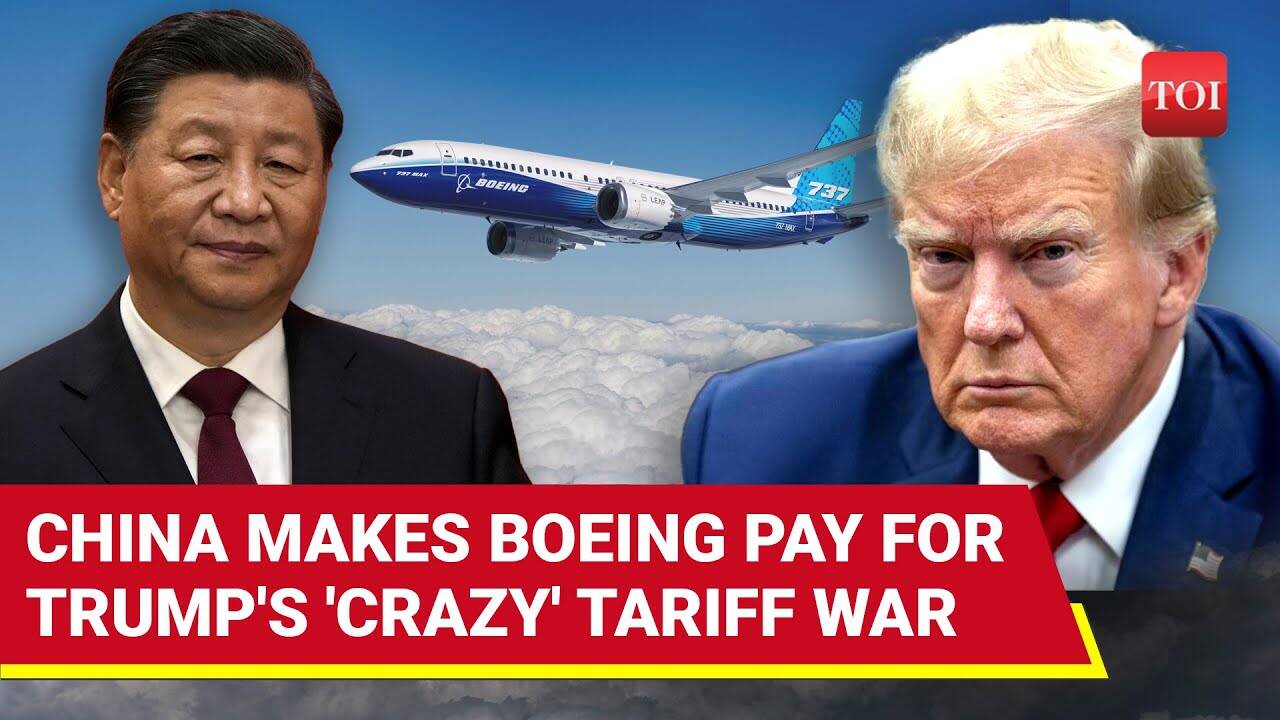
'Ball in China's court': Trump 'scrambles' as Beijing strikes again; 'Halts' Boeing jet delivery
 03:41
03:4111:12 (IST) Apr 16
Nvidia says US export curbs on H20 AI chips to China could cost $5.5 billion
Nvidia has warned that new US export restrictions on its H20 AI chips to China could result in a $5.5 billion (£4.15bn) hit to its business. In a regulatory filing on Tuesday, the company revealed that US authorities informed them on 9 April that a licence would now be required to export the chips to China.
The Biden administration has been tightening rules on AI chip exports to China, citing national security concerns. The latest move comes just a day after Nvidia announced it would begin manufacturing some AI chips within the US.
Nvidia shares fell more than 6% in after-hours trading following the disclosure.
The Biden administration has been tightening rules on AI chip exports to China, citing national security concerns. The latest move comes just a day after Nvidia announced it would begin manufacturing some AI chips within the US.
Nvidia shares fell more than 6% in after-hours trading following the disclosure.
10:44 (IST) Apr 16
Japan sends minister to Washington as tariff talks with US begin
Ryosei Akazawa, Japan’s minister responsible for negotiating with the US on trade, is heading to Washington in a bid to persuade the Trump administration to ease steep tariffs on Japanese goods.
This diplomatic push follows an agreement last week between US President Donald Trump and Japanese Prime Minister Shigeru Ishiba to begin talks. However, Ishiba has made it clear that Tokyo will not be rushed into a deal or make major concessions.
Speaking to reporters on Tuesday, chief cabinet secretary Yoshimasa Hayashi said Japan will “urge the US side to review its tariff measures,” and emphasised that the Japanese government is adopting a “whole of government approach” to secure results quickly.
Currently, Japan is facing 24% “reciprocal” tariffs from the United States, though these have been paused for 90 days to allow room for negotiations. Despite the temporary reprieve, the country’s influential car industry, including major exporters like Toyota, Honda, and Nissan, is already bearing the brunt of a 25% tariff on vehicle exports to the American market.
10:21 (IST) Apr 16
'Insist on shaking hands rather than shaking fists': China calls for unity as tariff war with US deepens
China has reaffirmed its stance against rising trade tensions with the United States, urging international cooperation in response to the sweeping tariffs imposed by the Trump administration.
“In the face of external uncertainties, China will insist on shaking hands rather than shaking fists, tearing down walls instead of building barriers, connecting instead of decoupling,” said spokesperson Lin Jian during a press briefing.
At the same time, President Xi Jinping is on a diplomatic tour across Southeast Asia, including stops in Vietnam, Malaysia, and Cambodia. The trip, described as a “charm offensive,” is aimed at reinforcing trade and diplomatic ties with key regional partners as Beijing looks to offset pressure from the United States.
Beijing currently faces 145% tariffs on its exports to the US, while American goods entering China are subject to 125% tariffs.
“In the face of external uncertainties, China will insist on shaking hands rather than shaking fists, tearing down walls instead of building barriers, connecting instead of decoupling,” said spokesperson Lin Jian during a press briefing.
At the same time, President Xi Jinping is on a diplomatic tour across Southeast Asia, including stops in Vietnam, Malaysia, and Cambodia. The trip, described as a “charm offensive,” is aimed at reinforcing trade and diplomatic ties with key regional partners as Beijing looks to offset pressure from the United States.
Beijing currently faces 145% tariffs on its exports to the US, while American goods entering China are subject to 125% tariffs.
10:05 (IST) Apr 16
China appoints new top international trade negotiator amid tariff tensions with US
China has appointed Li Chenggang, its former permanent representative to the World Trade Organization (WTO), as the country’s new top trade negotiator. He takes over from vice commerce minister Wang Shouwen, who had held the position of international trade negotiation representative since 2022.
Li’s appointment comes amid a broader leadership reshuffle and as China faces rising tariff pressures from the United States. The change signals Beijing’s continued focus on navigating the intensifying trade conflict while reinforcing its stated commitment to multilateral trade.
China has repeatedly stressed that it opposes the use of unilateral tariffs and has vowed to maintain a rules-based international trade system through its engagement with global institutions like the WTO.
Li’s appointment comes amid a broader leadership reshuffle and as China faces rising tariff pressures from the United States. The change signals Beijing’s continued focus on navigating the intensifying trade conflict while reinforcing its stated commitment to multilateral trade.
China has repeatedly stressed that it opposes the use of unilateral tariffs and has vowed to maintain a rules-based international trade system through its engagement with global institutions like the WTO.
09:47 (IST) Apr 16
Chinese official blasts US tariffs as trade 'bullying', says 'China’s economy will continue to grow'
A top Chinese official strongly criticised the United States over its sweeping new tariffs, accusing Washington of violating global trade rules and undermining economic stability, reported BBC.
Speaking after the release of China’s latest GDP data, Sheng Laiyun, deputy commissioner of the China Statistics Bureau, said Beijing “firmly opposes America’s tariff barriers and trade bullying,” warning that such actions violate World Trade Organization (WTO) principles and have a “serious impact on the global economic order.”
While acknowledging that the new tariffs will place “certain pressure” on China’s foreign trade and broader economy, Sheng struck a confident tone about the country’s resilience. “China’s economy will continue to grow in the long-term,” he said, emphasising the strength of domestic consumption and industrial output.
Sheng also hinted that China is preparing to respond with fresh measures to stabilise growth. “Beijing has a rich policy toolkit,” he said, suggesting further stimulus and support for industries that might be hit by rising trade tensions.
Speaking after the release of China’s latest GDP data, Sheng Laiyun, deputy commissioner of the China Statistics Bureau, said Beijing “firmly opposes America’s tariff barriers and trade bullying,” warning that such actions violate World Trade Organization (WTO) principles and have a “serious impact on the global economic order.”
While acknowledging that the new tariffs will place “certain pressure” on China’s foreign trade and broader economy, Sheng struck a confident tone about the country’s resilience. “China’s economy will continue to grow in the long-term,” he said, emphasising the strength of domestic consumption and industrial output.
Sheng also hinted that China is preparing to respond with fresh measures to stabilise growth. “Beijing has a rich policy toolkit,” he said, suggesting further stimulus and support for industries that might be hit by rising trade tensions.
09:09 (IST) Apr 16
'Inflation is down. Promises made, promises kept': Trump on US tariffs
US President Donald Trump took to Truth Social to defend his sweeping new tariffs, claiming they are benefiting the American economy despite widespread concern over rising prices and market turmoil.
In his post, Trump declared: “The United States is taking in RECORD NUMBERS in Tariffs, with the cost of almost all products going down, including gasoline, groceries, and just about everything else. Likewise, INFLATION is down. Promises Made, Promises Kept!”
In his post, Trump declared: “The United States is taking in RECORD NUMBERS in Tariffs, with the cost of almost all products going down, including gasoline, groceries, and just about everything else. Likewise, INFLATION is down. Promises Made, Promises Kept!”
08:49 (IST) Apr 16
Hong Kong halts parcel shipments to US amid soaring tariffs
Hong Kong’s postal service has announced it will stop shipping small parcels to the United States in response to Washington’s decision to impose hefty tariffs on low-value goods from the city.
The US government plans to scrap the “de minimis” exemption — a rule that currently allows imports under $800 to enter tax-free — and will instead introduce a steep 120% tariff on small-value items from Hong Kong starting May 2. This move comes as part of Washington’s broader trade crackdown, treating Hong Kong as part of mainland China in customs law.
Hongkong Post said it will no longer accept sea-bound parcels from Wednesday, citing shipping delays. Airmail services will stop accepting small goods parcels by April 27. The postal service said it won’t act as a tariff collector for the US and warned the public that sending goods there would now incur “exorbitant and unreasonable fees” due to what it called “bullying acts” by Washington.
Only mail containing documents will still be accepted for US delivery.
This latest development deepens the tensions between Hong Kong and the United States. Though Hong Kong is a free port and has different trade policies than mainland China, the US began treating it as part of China after Beijing introduced a sweeping national security law in 2020. That law, criticised by many Western nations, led the US to withdraw Hong Kong’s special trade status and subject it to the same 145% tariffs imposed on Chinese goods.
The US government plans to scrap the “de minimis” exemption — a rule that currently allows imports under $800 to enter tax-free — and will instead introduce a steep 120% tariff on small-value items from Hong Kong starting May 2. This move comes as part of Washington’s broader trade crackdown, treating Hong Kong as part of mainland China in customs law.
Hongkong Post said it will no longer accept sea-bound parcels from Wednesday, citing shipping delays. Airmail services will stop accepting small goods parcels by April 27. The postal service said it won’t act as a tariff collector for the US and warned the public that sending goods there would now incur “exorbitant and unreasonable fees” due to what it called “bullying acts” by Washington.
Only mail containing documents will still be accepted for US delivery.
This latest development deepens the tensions between Hong Kong and the United States. Though Hong Kong is a free port and has different trade policies than mainland China, the US began treating it as part of China after Beijing introduced a sweeping national security law in 2020. That law, criticised by many Western nations, led the US to withdraw Hong Kong’s special trade status and subject it to the same 145% tariffs imposed on Chinese goods.
07:55 (IST) Apr 16
China says economy grew 5.4% in first quarter, beating forecasts
06:42 (IST) Apr 16
Tariffs of 10% Now Seem Low but Can Still Batter Economy
hen Donald Trump championed the idea of a 10% blanket tariff during the campaign, many people, whether for or against, were taken aback by how radical the idea was.
Alarms sounded about higher inflation, lost jobs, slower growth or recession. The prospect seemed so outlandish that most economists and Wall Street analysts who gamed out the possibilities tended to treat a 10% tariff simply as a bargaining tool.
Now, after a rapid-fire series of announcements from the White House that promised, imposed, reversed, delayed, decreased and increased tariffs, the 10% solution is looking like the most temperate choice rather than the most revolutionary, especially now that a red-hot trade war between China and the United States is blazing.
Yet 10% tariffs have not lost their sting.
At that level, universal tariffs still hit more than 10 times as many imports as the ones targeted during Trump's first term, and are significantly higher and broader than anything the United States has tried in more than 90 years.
The tariff rate is "quite extreme," said Carsten Brzeski, chief eurozone economist at ING, a Dutch bank. "It still brings us back to levels last seen during the 1930s."
In addition to measures targeting China, Trump powered up a long list of punishing taxes -- including a flat 10% tariff on most imports -- on April 9.
"For the U.S. customer, it means everything is going to become more expensive," Brzeski said.
Alarms sounded about higher inflation, lost jobs, slower growth or recession. The prospect seemed so outlandish that most economists and Wall Street analysts who gamed out the possibilities tended to treat a 10% tariff simply as a bargaining tool.
Now, after a rapid-fire series of announcements from the White House that promised, imposed, reversed, delayed, decreased and increased tariffs, the 10% solution is looking like the most temperate choice rather than the most revolutionary, especially now that a red-hot trade war between China and the United States is blazing.
Yet 10% tariffs have not lost their sting.
At that level, universal tariffs still hit more than 10 times as many imports as the ones targeted during Trump's first term, and are significantly higher and broader than anything the United States has tried in more than 90 years.
The tariff rate is "quite extreme," said Carsten Brzeski, chief eurozone economist at ING, a Dutch bank. "It still brings us back to levels last seen during the 1930s."
In addition to measures targeting China, Trump powered up a long list of punishing taxes -- including a flat 10% tariff on most imports -- on April 9.
"For the U.S. customer, it means everything is going to become more expensive," Brzeski said.
06:41 (IST) Apr 16
Wall Street drifts through a rare quiet day following weeks of tariff turmoil
U.S. stocks drifted Tuesday through a rare quiet day for financial markets.
The S&P 500 slipped 0.2%. The Dow Jones Industrial Average fell 155 points, or 0.4%, and the Nasdaq composite edged down by less than 0.1%.
The modest moves offered some respite following the huge swings that have battered Wall Street recently, not just day to day but also hour to hour. The day before, the S&P 500 went from a gain of 1.8% to a slight loss and back to a gain as it struggled to keep up with shifts in President Donald Trump’s trade war, which economists warn could cause a global recession unless it’s scaled back.
Perhaps more importantly, the U.S. bond market also showed more signs of calm after its sudden and sharp moves last week raised worries that investors worldwide may no longer see U.S. government bonds as a no-brainer go-to when times are scary.
The yield on the 10-year Treasury eased to 4.33% from 4.38% late Monday. It had pulled back to there from 4.48% at the end of last week after surging from just 4.01% a week earlier. A drop in yields is what usually happens when investors are scared, and this week’s moves offer a return to form for what historically had been seen as one of the safest investments possible.
The S&P 500 slipped 0.2%. The Dow Jones Industrial Average fell 155 points, or 0.4%, and the Nasdaq composite edged down by less than 0.1%.
The modest moves offered some respite following the huge swings that have battered Wall Street recently, not just day to day but also hour to hour. The day before, the S&P 500 went from a gain of 1.8% to a slight loss and back to a gain as it struggled to keep up with shifts in President Donald Trump’s trade war, which economists warn could cause a global recession unless it’s scaled back.
Perhaps more importantly, the U.S. bond market also showed more signs of calm after its sudden and sharp moves last week raised worries that investors worldwide may no longer see U.S. government bonds as a no-brainer go-to when times are scary.
The yield on the 10-year Treasury eased to 4.33% from 4.38% late Monday. It had pulled back to there from 4.48% at the end of last week after surging from just 4.01% a week earlier. A drop in yields is what usually happens when investors are scared, and this week’s moves offer a return to form for what historically had been seen as one of the safest investments possible.
06:41 (IST) Apr 16
Donald Trump believes it is up to China, not the United States, to come to the negotiating table on trade, the White House said Tuesday, after the US president accused Beijing of reneging on a major Boeing deal.
"The ball is in China's court. China needs to make a deal with us. We don't have to make a deal with them," said a statement from Trump read out by Press Secretary Karoline Leavitt at a briefing.
"There's no difference between China and any other country except they are much larger," she added.
Leavitt's comments came after Trump accused China of going back on a major deal with US aviation giant Boeing -- following a Bloomberg news report that Beijing ordered airlines not to take further deliveries of the company's jets.
The report also said that Beijing requested Chinese carriers to pause purchases of aircraft-related equipment and parts from US firms.
"They just reneged on the big Boeing deal, saying that they will 'not take possession' of fully committed to aircraft," said Trump in a Truth Social post, referring to China.
He did not provide further details on the Boeing agreement he was referring to.
"The ball is in China's court. China needs to make a deal with us. We don't have to make a deal with them," said a statement from Trump read out by Press Secretary Karoline Leavitt at a briefing.
"There's no difference between China and any other country except they are much larger," she added.
Leavitt's comments came after Trump accused China of going back on a major deal with US aviation giant Boeing -- following a Bloomberg news report that Beijing ordered airlines not to take further deliveries of the company's jets.
The report also said that Beijing requested Chinese carriers to pause purchases of aircraft-related equipment and parts from US firms.
"They just reneged on the big Boeing deal, saying that they will 'not take possession' of fully committed to aircraft," said Trump in a Truth Social post, referring to China.
He did not provide further details on the Boeing agreement he was referring to.
06:40 (IST) Apr 16
As Trump considers auto tariffs pause, parts exemptions could be key for US industry
President Donald Trump hinted that he might temporarily relieve the auto industry from “permanent” tariffs he previously imposed on the business. The president didn't specify how long the potential pause would be or what it would entail, but the auto sector is awaiting how rules might change on 25% tariffs based on U.S. parts, if duties remain on assembled vehicles.
Experts have said short pauses aren't likely to give carmakers enough of an opportunity to adjust their vast global supply chains, though parts exemptions would certainly bolster the industry amid Trump's trade war whiplash.
Trump told reporters Monday that automakers “need a little bit of time because they’re going to make them here, but they need a little bit of time. So I’m talking about things like that,” referring to relocating production from Canada, Mexico and elsewhere. The news drove global auto stocks up Tuesday.
Matt Blunt, president of the American Automotive Policy Council, which represents domestic auto companies Ford, General Motors and Stellantis, said in a statement: “There is increasing awareness that broad tariffs on parts could undermine our shared goal of building a thriving and growing American auto industry, and that many of these supply chain transitions will take time.”
Trump first announced 25% automotive tariffs late March; the tariffs for completed vehicles took effect on April 3, while the parts tariffs were set to start 30 days later.
“The one-month delay is intended to give the U.S. government time to work out rules to exempt the value of automotive parts that contains U.S.-made materials, which will not be subject to the tariffs,” according to insights from law firm Foley & Lardner, noting a “carveout” for parts certified under regional trade pact, the U.S.-Mexico-Canada Agreement. The Department of Commerce is expected to determine "a system to calculate non-U.S. content” by May 3.
Experts have said short pauses aren't likely to give carmakers enough of an opportunity to adjust their vast global supply chains, though parts exemptions would certainly bolster the industry amid Trump's trade war whiplash.
Trump told reporters Monday that automakers “need a little bit of time because they’re going to make them here, but they need a little bit of time. So I’m talking about things like that,” referring to relocating production from Canada, Mexico and elsewhere. The news drove global auto stocks up Tuesday.
Matt Blunt, president of the American Automotive Policy Council, which represents domestic auto companies Ford, General Motors and Stellantis, said in a statement: “There is increasing awareness that broad tariffs on parts could undermine our shared goal of building a thriving and growing American auto industry, and that many of these supply chain transitions will take time.”
Trump first announced 25% automotive tariffs late March; the tariffs for completed vehicles took effect on April 3, while the parts tariffs were set to start 30 days later.
“The one-month delay is intended to give the U.S. government time to work out rules to exempt the value of automotive parts that contains U.S.-made materials, which will not be subject to the tariffs,” according to insights from law firm Foley & Lardner, noting a “carveout” for parts certified under regional trade pact, the U.S.-Mexico-Canada Agreement. The Department of Commerce is expected to determine "a system to calculate non-U.S. content” by May 3.
06:39 (IST) Apr 16
Trump slams Biden over China trade deal, vows to 'protect our farmers'
"Our farmers are GREAT, but because of their GREATNESS, they are always put on the Front Line with our adversaries, such as China, whenever there is a Trade negotiation or, in this case, a Trade War. The same thing happened in my First Term. China was brutal to our Farmers, I these Patriots to just hold on, and a great trade deal was made. I rewarded our farmers with a payment of $28 Billion Dollars, all through the China deal. It was a great transaction for the USA, until Crooked Joe Biden came in and didn’t enforce it. China largely reneged on the deal (although they behaved during the Trump Administration), only buying a portion of what they agreed to buy. They had ZERO respect for the Crooked Biden Administration, and who can blame them for that? Interestingly, they just reneged on the big Boeing deal, saying that they will “not take possession” of fully committed to aircraft. The USA will PROTECT OUR FARMERS!!!" he said.
06:39 (IST) Apr 16
Trump considers a pause on his auto tariffs
President Donald Trump has hinted at the possibility of temporarily exempting the auto industry from previously imposed tariffs, aiming to give car manufacturers time to realign their supply chains. At the same time, his administration is moving forward with plans for additional tariffs, launching investigations into key imports such as computer chips, semiconductor manufacturing equipment, and pharmaceuticals.
China warned it is "not afraid" of a trade war with the US, urging dialogue based on "equality and mutual benefit." This comes after US President Donald Trump’s administration imposed steep tariffs on Chinese goods, with China now facing up to 245% tariffs. The White House blamed China's retaliation for the continued sanctions.
Trump's "Fair and Reciprocal Plan" aims to counter trade deficits and non-reciprocal deals, applying a 10% base tariff and higher country-specific ones. While talks are ongoing with over 75 countries, China remains excluded. Global markets have reacted negatively, fearing inflation and risks to economic growth.
Trump's "Fair and Reciprocal Plan" aims to counter trade deficits and non-reciprocal deals, applying a 10% base tariff and higher country-specific ones. While talks are ongoing with over 75 countries, China remains excluded. Global markets have reacted negatively, fearing inflation and risks to economic growth.
Trending

Explore Every Corner
Across The Globe
SRH vs RR HighlightsIran War NewsNBA Trade RumorIPL Orange CapNorway ChessVaibhav SooryavanshiMLB Trade RumorsFortnite DownDennis RodmanWWE ClashCow Slaughter Ban8th Pay CommissionCNG Price Hike PuneRahul GandhiBengaluru BMTC BusKarnataka CM NewsBank Holiday TodayChris GayleAssam UCC bilDonald TrumpCET ResultsAir India FlightKEA KCET Result 2026New BJP chiefsKakoli GhoshKavya MaranDK ShivakumarFuel price hikeGrocery price hikeKim Kardashian Ex Boyfriend Hospitalized

Hot on the Web
Priya KapurRanveer SinghEid-ul-Adha WishesBlast ReviewRanveer Singh ControversyMika SinghImtiaz AliWhen is BakridKunal KohliEid Mubarak WishesBakrid WishesDrishyam 3 Box Office CollectionPooja BhattDhurandhar Television PremiereSai PallaviPam BondiChand Mera Dil Box Office CollectionKattalan ReviewAishwarya Rai BachchanSalman KhanKaruppu Box Office CollectionVirat KohliAshoke PanditZubeen GargKangana RanautAR RahmanBaby NamesDhurandhar 2 Box Office CollectionPati Patni Aur Woh Do Box Office CollectionHoroscope TodayHarpy Eagle Vs Philippine EagleVenomous Vs Non Venomous SnakesUS Powerball LotteryHighest Anaconda PopulationWorld Highest Paid AthletesINS KolkataNyt ConnectionsTwisha Sharma Death CaseRanveer Singh BannedChina New Humanoid RobotS 400Captions For Instagram Posts
Trending Topics
RR VS SRH IPL MatchCM SiddaramaiahAnik Dutta SuicideTrinamool CongressPatna Boat AccidentED Team AttackedMamata BanerjeeTwisha SharmaDipankar BhattacharyaAir India FlightEbola CasesStock Market Holiday TodayBank holiday todayNEET UG Paper Leak CaseVaibhav SooryavanshiDelhi temperatureAbhishek BanerjeeTwisha SharmaKolkata Messi statueEbola bengaluruTrump warns OmanUS Iran warJPMorganDonald TrumpDonald Trump Cabinet MeetingStrait Of HormuzMohammed OdehDelhi Illegal Animal SacrificeKasauli Forest FireIPL Purple CapLLM Chinese FirewallGlassworm BotnetBill WintersJensen HuangMark CubanElon MuskHack Of The DayGoogle EmployeeGarena Free Fire MAX Redeem CodesPeroxide CodesGenshin Impact Codes
Popular Categories
HeadlinesSports NewsBusiness NewsIndia NewsWorld NewsInternational SportsHealthIndian TV ShowsTechnologyTravelEtimesAstrologyDeorhiAutoTechnology NewsGold Rate TodayWeather TodaySilver Price TodayDelhi Weather TodayPetrol Price TodayDiesel Price TodayCNG Price TodayLPG Price TodayPetrol Price MumbaiDelhi AQIIs Bank Open TodayMumbai AQI TodayIs Bank Open TomorrowPublic Holidays in MayBank Holidays in May
Trending Videos
Jill Biden BREAKS SILENCE On Joe’s 2024 Presidential Debate Collapse; Admits She Feared 'THE WORST'Mamata Banerjee Targets TMC Rebels With ‘Girgiti’ Poem Amid BJP Defection ClaimsKarnataka Leadership Change Buzz Grows As Siddaramaiah May Step Down For ShivakumarMassive Anti-Terror Operation Continues In Rajouri As Security Forces Target Suspected HideoutsMadhya Pradesh CM Mohan Yadav Launches UCC Suggestion Portal, Seeks Public Feedback Till June 15Irattayar - Official TrailerCharukesi - Official TeaserCharukesi - Official TrailerOp True Promise Resumes? Iran Launches Wave Of Drones Against U.S.-Linked Ships Near HormuzIran Fires At American Ship In Hormuz; 3 Explosions Rock Bandar Abbas, U.S Fighters In Action'US Navy Failed To Shield Ships': Americans On Retreat As Iran's IRGC Hits 4 Oil Tankers Near HormuzU.S. Military Under IRGC Fire; Iran Bombs American Base In Kuwait To Avenge Strikes Near HormuzCONFIRMED: IRGC Attacks U.S. Ship Attempting To Cross Hormuz; Direct Clash With Trump Navy EruptsChinese Air Force, Navy Chase Away NATO Aircraft & Warship In South China Sea In Dramatic EscalationSuvendu Adhikari Alleges Nearly 3 Million Fake Beneficiaries, Triggers Political ClashStone Pelting On Vande Bharat Express Near Ujjain | Windows Damaged, Probe LaunchedKarnataka Caste Census Report Sparks Fresh CM Transition Buzz In CongressTrump Defends ‘Incredible’ Tulsi Gabbard After Resignation Triggers Brutal Political Backlash
Latest News
Hazaribag man drowns while fishing in lake"Behen Darr Gayi!": Fans relive ‘Bhagam Bhag’ era after watching Akshay Kumar's 'Bhooth Bangla' trailerMBOSE HSLC result 2026 to release tomorrow: Check details hereIran war risk: JPMorgan CEO Jamie Dimon warns of oil shocks, sticky inflation and higher interest ratesMake your clutch last longer with these easy driving tips“Three-against-one situation”: El Rubius opens up on being “targeted” in MrBeast’s viral $1M challengeBihar BTSC lab assistant notification released for 1091 posts at btsc.bihar.gov.in; apply hereIPL craze costs techie Rs 1.46 lakh in fake RCB vs CSK ticket scamRaising “robot-proof” kids: Why creativity and curiosity matter more than everInside ‘Satguru Sharan’: Exploring Saif Ali Khan and Kareena Kapoor Khan’s Rs 100 crore Bandra homeHow selling Alaska in 1867 was a costly mistake for Russia'Hera Pheri 3 is coming': Paresh Rawal dismisses delay reports and reveals he will 'start shooting soon'US-Iran War: A daring rescue Hollywood blockbuster is on its way. Till then, pick your favourite from these 10 films on bringing someone home against all oddsKolkata team unveils fan mural at Rash Behari Avenue, celebrating city’s first loveHow US spread a lie to rescue a pilot of a jet shot down in IranNetflix unveils ‘VOID’, an AI model that can change a movie plotAI data centers are causing 'stress' not just to tech companies, but also private insurers"Trans women are.....": Clavicular’s viral moment with trans women sparks fresh conversation on internet culture
Copyright © 2026 Bennett, Coleman & Co. Ltd. All rights reserved. For reprint rights: Times Syndication Service