
- News
- City News
- bengaluru News
- Vande Bharat trial run on Bengaluru–Mangaluru route in June; know route and stops
Vande Bharat trial run on Bengaluru–Mangaluru route in June; know route and stops
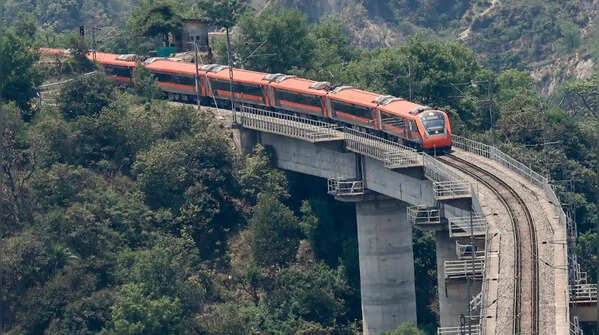
Vande Bharat set for coastal Karnataka
Vande Bharat Express service between Bengaluru and Mangaluru is edging closer to reality. South Western Railway is likely to conduct trial runs on the route this week. The tests are expected to mark a major step toward introducing the semi-high-speed train on one of Karnataka's most important rail corridors.
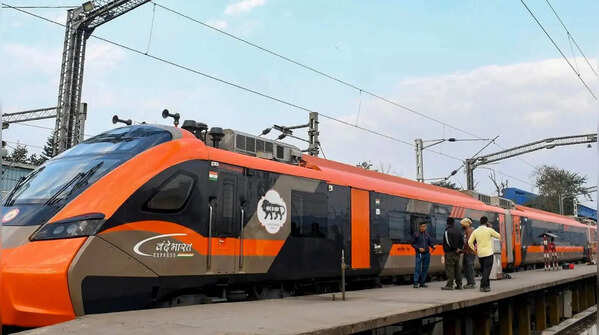
Trial run planned between Yeshwantpur and Mangaluru
The proposed trial will be conducted between Yeshwantpur and Mangaluru Central stations. Railway officials in Bengaluru and Mysuru divisions have already been informed about the exercise. The route will help assess the train's performance across varied terrain, including the challenging Western Ghats section.
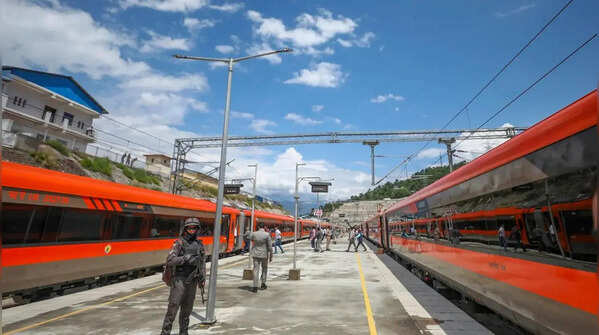
Specially modified train to lead the test
An eight-coach Vande Bharat trainset equipped with an Auto Emergency Brake (AEB) system will be used for the trials. The safety feature has been added specifically to meet operational requirements on the ghat section. Railway authorities see the retrofit as a key milestone for the project.
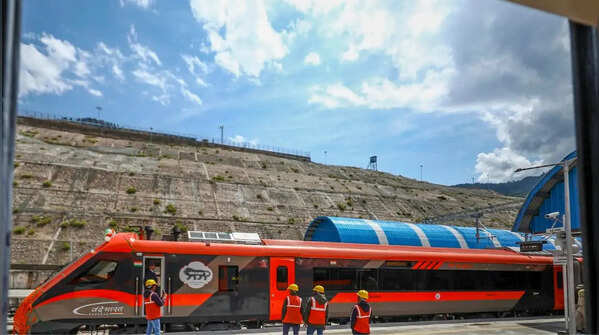
Western Ghats remain the biggest challenge
The Sakleshpur–Subrahmanya Road stretch passes through the rugged Western Ghats, making it one of the most demanding railway sections in the region. The terrain includes steep gradients, dense forests and difficult access points. These conditions had delayed approval for Vande Bharat operations on the route.
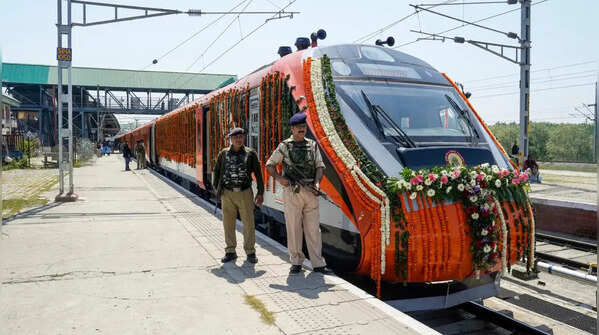
Why the auto emergency brake matters
Railway safety norms require trains operating on the 55-km ghat section to be equipped with an Auto Emergency Brake system. The mechanism automatically applies brakes if the train exceeds the prescribed speed limit. This feature is designed to enhance safety on curves and steep gradients.
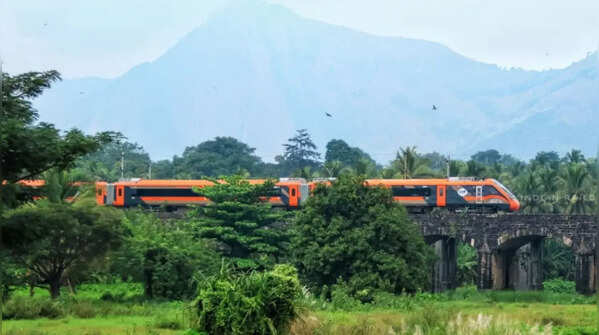
A slower but safer journey through the Ghats
The AEB system restricts train speed to 30 kmph in the sensitive ghat stretch. While this may reduce overall speed, railway officials consider it essential for safe operations. The measure is expected to ensure smoother movement through one of Karnataka's most complex rail segments.
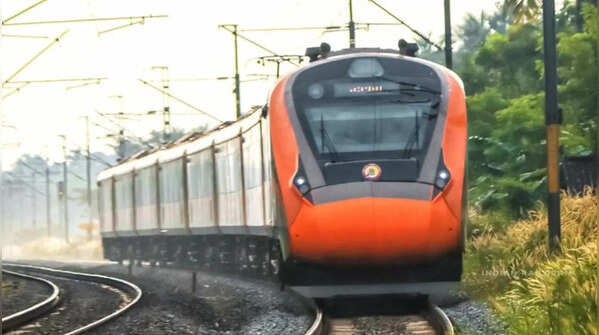
An 8.5-hour test run ahead
The single-direction trial run is expected to take approximately 8.5 hours. During the journey, the train will halt at likely stations such as Hassan, Sakleshpur and Subrahmanya Road. These stops will help officials evaluate operational feasibility and scheduling requirements.
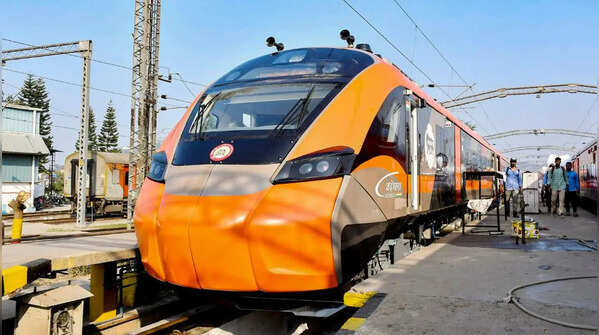
Railways to study every operational detail
The trial is not only about speed and performance. Officials will closely monitor crew changes, station stoppages, origination and termination procedures, and turnaround timings. The observations will form the basis of a detailed report for future operations. (All representative images)
Featured In City

