
- News
- City News
- nagpur News
- Navratri preparations light up city homes, markets
Trending
This story is from September 28, 2019
Navratri preparations light up city homes, markets
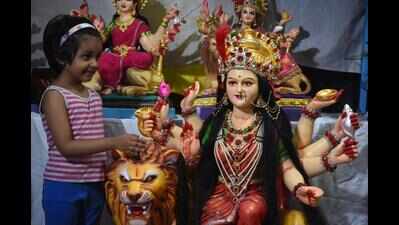
A girl appreciates the idol of Goddess Durga at Chitar Oli in Mahal on Thursday. The 9-day Navratri festival will start on September 29
There are four seasonal navratris. However, it is the post-monsoon autumn festival called Sharada Navratri that sees the biggest celebration, in honour of the divine feminine Devi (Durga).
Navratri is celebrated every autumn, with different communities from various parts of India observing it for different reasons, and in different manner. However, what is common is the beautifully decorated household with toran (garland of flowers and leaves), the fragrance of delicious feasts and bhog for the goddess, women dressed in colourful saris, and rangolis in the front yard to herald the festivities.
The festival is celebrated in the bright half of the Hindu calendar month Ashwin, which typically falls in the months of September and October. It is believed that Goddess Durga battled and emerged victorious over the buffalo demon to help restore dharma. Different communities have different customs to welcome Goddess Durga in their homes.
The Bengali community in the city starts its Durga Pujo celebrations from the sixth day of Navratri. The Bengalis gather in community halls and mandals for the celebrations.
“We offer a grand feast on the day of Shashti. The pujo includes worshipping the power and avatar of Goddess Durga. We indulge in traditional dances and folk music in the traditional Bengali way,” said Amruta Guha.
The Gujaratis celebrate the festival with garba nights, dancing around the idol with various cultural programmes, maha-aarti and huge celebrations at the Durga pandals. “We are installing a 6ft idol at our Durga mandal. A beautiful 50ft high temple replica is being made for the idol. We have planned various events and garba nights for nine days,” said Praveen Mudliyar, organizer at the Salba Shakti Samaj Ground.
The tenth day of the festival is observed as Dussehra, when the idols are either immersed in a water body, such as river, lake or ocean, or some idols are burned with fireworks to mark the destruction of evil.
The festival also signals the beginning of preparations for one of the most important and widely celebrated festivals, Diwali, the festival of lights. This is celebrated 20 days after Vijaya Dashami or Dussehra.
End of Article
FOLLOW US ON SOCIAL MEDIA








Photostories

Hot Picks
TOP TRENDING
Popular Categories
Hot on the Web
Top Trends
CBSE Date Sheet 2025PM Modi Mann ki BaatLawrence Bishnoi BrotherPatrick MahomesIsrael Hezbollah Warillegal Indian ImmigrantsTaylor SwiftKamala HarrisDelhi Air PollutionMohammed ShamiVande Bharat SleeperUS Election 2024Actor Vijay RallyJaipur Chennai Indigo FlightMaharashtra Election ScheduleJharkhand Election ScheduleLive Cricket Score
Trending Topics
Happy Dhanteras WishesDiwali WishesDhanteras 2024Happy Diwali WishesVettaiyan CollectionDhanteras 2024 Puja TimeDiljit Dosanjh ConcertDiwali Pooja TimingSatya NadellaVicky Vidya Ka Woh Wala Video CollectionSalman KhanJigra CollectionSurbhi JyotiSalman KhanActor Bala Wedding NewsDiwali Bank HolidaysGoogle DoodleWordle Answer
Living and entertainment
Latest News
'Only 2 tons in last 5 years!': Aakash Chopra says Virat Kohli's form a concern but ...How Each Zodiac Sign Achieves Balance in LoveDavid Warner turns 38: A look at the Australian legend's stellar careerHow Each Zodiac Sign Celebrates FriendshipHyderabad teen beaten by principal & father for malpractice, dies by suicideRail minister Ashwini Vaishnaw too busy with bullet train, Mumbai passengers ignored: Sanjay Raut on Bandra stampedeNFL player and Taylor Swift's beau Travis Kelce joins Adam Sandler's ‘Happy Gilmore 2’ - ReportWhy Trump is holding a rally at Madison Square Garden despite New York being a long shot'I am surprised that...': Mohammad Amir blasts PCB for Fakhar Zaman omission'Indian players are best players of spin is merely a perception': AB de VilliersBandra stampede: Western Railways impose temporary restrictions on platform tickets saleTTD local temple and two more hotels receive fresh bomb threat via emailsEPL: Late Bowen penalty gives West Ham dramatic win over Manchester United5 killed, 12 injured in two seperate accidents in Madhya PradeshExploring the meanings behind Lamar Jackson’s tattoos as the quarterback shares rare glimpse of his full body tattooBaker Mayfield Net Worth 2024, current salary, and moreBTS' J- Hope pays heartfelt tribute to Shin Hae Chul at 10th memorial concert: 'Wonderful Senior Who Inspired' - WATCH VIDEOHow air pollution can trigger heart issues in young adults
Copyright © 2024 Bennett, Coleman & Co. Ltd. All rights reserved. For reprint rights: Times Syndication Service