
- News
- City News
- noida News
- A burn, a years long scar & a right to education cut short
Trending
This story is from August 13, 2023
A burn, a years long scar & a right to education cut short
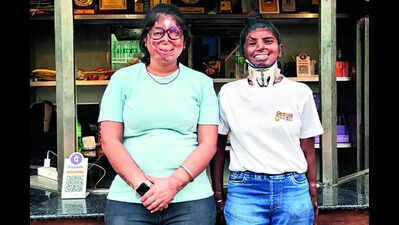
Seema survived an acid attack but lost a lot in the process — mostly her right to be that 15-year-old seeking education.

“Two years after the attack, I wanted to continue my studies. When I went back to school for re-admission, the principal told me I should stop coming to the campus because other children panicked about my appearance,” she said.
Rupa, now 23, from Muzaffarnagar survived an acid attack by a schoolmate obsessed with her when she was only 13. Three years later, when she tried to return to school, she faced layers of discrimination from her peers and teachers. Demotivated and depressed, she dropped out.
“I could not cope with the discrimination. My classmates refused to sit by my side. Teachers changed their behaviour towards me. I would often lock myself in a room and cry. I couldn’t accept my own body. Even my family would restrict me from going out. They started treating me like a burden,” Rupa said.
Another 20-year-old acid attack survivor, who did not want to be named, said two years after she was attacked, she wanted to resume studies. “But my school refused to take me back. The principal said other students might quit because of me. I visited four more schools before I finally got admitted to one. But I discontinued studies because I did not enjoy going there.”
Like Seema and Rupa, most acid attack survivors undergo immense daily trauma— some are blinded, scarred beyond recognition, robbed of their identity and often are unable to step out of the house to complete school or seek employment.
As per law, no educational institute can refuse admission to an acid attack victim, but the ground reality is grim. And after years of remaining holed up in their homes, when survivors try to find an alternative life, most face formidable challenges in finding work without degrees, English proficiency or computer skills.
Seema, who moved to the city a year ago and works at a cafe now, said, “In my village, people still ostracise me. They pass hurtful comments. So, I came to Noida looking for work. But here, the challenge is different. While people are more open-minded, communication and fluency in English came as an obstacle.”
Opportunity came knocking as Seema came in touch with an NGO where she started learning her ABCs. “I knew I had to learn basic English to get a job. Now, I have enrolled myself with an NGO that runs a social pathshala to learn spoken English,” she said.
But for many, determination is all they have. Seema’s colleague at the Noida café, Anshu (25) came to the city from Bijnor some months ago. In 2014, when Anshu was just 15 years old, her 55-year-old neighbour wanted to marry her. She spurred his proposal. Angry, he threw acid at her.
“Within 8 months, my relatives, friends, and peers had isolated me. I realised education could help me move forward. But when I returned to school with my father, the principal said he had struck my name off the list of students.”
Anshu, however, is determined to fight back. She works at the same cafe as Seema and aspires to become a motivational speaker. “Communication skill is key to fulfilling my dreams,” said Anshu, but she is yet to find an opportunity to return to her studies.
In cases where survivors get support from peers, schools or family, frequent medical treatments are a barrier. In 2013, Dolly from Lucknow survived an acid attack by a schoolmate. “I returned to school in 2016. But I have surgeries every six months to recover my facial structure, after which I must not go out in the sun for 2 months. The frequent gap in education causes immense learning loss. So, I decided to quit school after Class 6,” said Dolly (23).
Before the attack, she had planned to finish higher studies and become a doctor.
As per the Union home ministry, 386 acid attack cases on women were recorded between 2018 and 2022. The low number has been partly attributed to the pandemic-induced lockdowns and lack of reporting.
Gautam Budh Nagar probation officer Atul Kumar Soni with the women and child development department said the government provides concessional relief in medical aid and education to acid attack survivors. “In the past six years, three cases have been registered in GB Nagar. We have provided them monetary aid and medical support,” said Soni, adding that a strict ban on the sale of acid in the open market might reduce the number of cases.
In Ghaziabad, district officer of inclusive education Rakesh Kumar said, “Acid attack survivors are given priority at schools. Schools cannot deny them the right to education.”
However, government efforts to address the underlying issues of ostracisation that survivors combat on the ground and bring them into mainstream education remain debatable. “Due to social stigma, acid attack survivors are forced to fight for their basic rights, including education. People fail to understand the fault lies not with them but with whoever committed the crime. The mentality of society cannot change in a day,” said Alok Dixit, the director of Chhanv Foundation, an NGO working on acid attack survivors’ rehabilitation.
It is acid attack survivors like Kafi — a 15-year-old girl from Chandigarh who topped her school in the CBSE class 10 examination in 2023 — who can set an example for others, to keep striving against all odds. Kafi, the daughter of a peon, was 3 when one of her neighbours threw acid on her face. Subsequently, she underwent treatment for six years but lost vision in both eyes. Since then, she has been studying through Braille script.

About the Author
Ayantika PalEnd of Article
FOLLOW US ON SOCIAL MEDIA










Photostories
Hot Picks
TOP TRENDING
Popular Categories
Hot on the Web
Top Trends
Haryana Election ResultNew UPI Transaction LimitHurricane MiltonRBI Monetary Policy MeetingWorld First Top 10 TrillionairesStock Market TodayKerala Lottery ResultElection Results 2024Biblical TreeJammu Kashmir Election ResultIsrael Hezbollah WarHardik SinghManagement Colleges of IndiaTop Medical Colleges of IndiaTop Engineering Colleges of IndiaTop Pharmacy Colleges of IndiaLive Cricket Score
Trending Topics
Navratri 2024 AshtamiBigg Boss Tamil 8 Contestants ListTP Madhavan DeathNavratri Colours 2024Sanjay Leela BhansaliDurga Puja 2024Bigg Boss 18 House PhotoDevara CollectionBigg Boss 18Deepika PadukoneShailesh LodhaDevaraColdplayNational Film Awards 2024Swatantrya Veer SavarkarColdplay India tour 2025Watch NFL Live StreamDress To ImpressCall Of Duty Black Ops 6Wordle Answer
Living and entertainment
Latest News
Hurricane Milton: Why Tampa area is so vulnerable to stormsBeard Trimmer with Titanium Blades: Style Your Beard to Perfection with Unmatched SharpnessA daughter lost without her father, old alliances: How NC came back with a bang in J&KEthel Kennedy, widow of Senator Robert F Kennedy Sr suffers stroke in sleep, hospitalisedSum 41’s Deryck Whibley accuses former manager of sexual abuse in new memoirHyundai aims to raise up to $3.3 billion in record India IPOPrabhas starrer 'Kalki 2898 AD' gears up for its release in JapanMan declares income of Rs 9.6k, pays tax on Rs 43.5L after US earnings addedPatanjali Foods gets CCI nod for Rs 1,100-crore buyout of parent's home & personal care businessWho is Aniruddhacharya Maharaj? Know more about Pookie Baba’s life journey and net worthWill Allu Arjun be able to beat Prabhas in North America with Pushpa 2?Nagarjuna takes legal action against Konda Surekha; Records statement in Rs 100 crore defamation caseKarnataka Cong MLA booked for rape, kidnapping and criminal intimidationStunning images from space shows Hurricane Milton swirling over Earth2nd Youth Test: Harvansh shuns Canadian dream to shine for IndiaAlia Bhatt reveals daughter Raha loves dancing to 'Naatu Naatu' songOsama bin Laden's son ordered to leave France over 'apology for terrorism' postBig blow for New Zealand! Kane Williamson set to miss start of Test series against India
Copyright © 2024 Bennett, Coleman & Co. Ltd. All rights reserved. For reprint rights: Times Syndication Service