
- News
- City News
- vijayawada News
- AP’s disaster management planning, resilience got a boost post Hudhud
Trending
AP’s disaster management planning, resilience got a boost post Hudhud
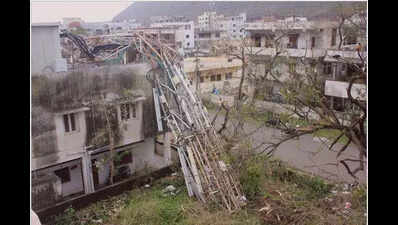
Following the super cyclone, which saw wind speeds exceeding 180 kmph, the state developed a comprehensive cyclone preparedness and response plan by integrating mitigation strategies, preparedness efforts, risk reduction, and response measures. As a result, disaster alert dissemination, pre-cyclone drills, evacuation protocols, and establishment of emergency operation centres have significantly improved.
Local bodies and govt entities also initiated several measures. For example, Greater Visakhapatnam Municipal Corporation (GVMC) set up a city operations centre with a budget of approximately Rs 150 crore. The centre integrates data from surveillance cameras, pollution sensors, GPS systems, and other devices across the city to make informed decisions. It primarily provides disaster solutions, alerting citizens in advance of impending disasters, while also enabling the administration to deliver efficient services during emergencies. During non-crisis periods, the centre functions as a smart e-governance hub. GVMC has also adopted solar street lighting along the beach road.
Similarly, Andhra Pradesh Eastern Power Distribution Company Limited, which bore the brunt of the cyclone's impact, transitioned to underground cabling in the coastal areas of Vizag city. The structures, which were developed along the beachfront in Visakhapatnam after Hudhud, were designed keeping the cyclone's bad experiences in mind.
Recounting how cyclone Hudhud revolutionised disaster management planning in AP, state disaster management authority (APSDMA) managing director Ronanki Kurmanath said the administration has become far more effective and proactive today. "Preparedness meetings with collectors from all coastal districts have now been made mandatory ahead of any weather system. Vulnerable areas are identified, and detailed assessments are made to determine who might be affected. By leveraging advanced prediction models from national and international weather agencies, authorities can create precise forecasts and plan accordingly for impending weather systems," Kurmanath told TOI.
The state emergency operations centre (SEOC) has become a central hub for disaster management in Andhra Pradesh in recent years. Right from information management, resource management and decision making to coordination, communication, and recovery support, the centre plays a crucial role in coordinating disaster response activities, ensuring effective communication, and facilitating timely decision-making.
"AP has improved its disaster preparedness, planning, mitigation, and risk reduction efforts before, during, and after such events in the last 10 years. Advanced technologies have enabled more accurate predictions, faster communication, and efficient coordination, with the ubiquity of mobile phones allowing for timely dissemination of alert messages. The state emergency operations centre, which brings together personnel from the police, fire services, and weather scientists, acts as a command hub, closely coordinating with districts and developing dynamic strategies throughout the disaster planning and management process," Kurmanath explained.
FIRST BIG STORM TO HIT EAST COAST
Cyclone Hudhud had its genesis as a low-pressure system over Tenasserim coast and adjacent North Andaman Sea on Oct 6, 2014
It evolved into a depression on Oct 7, escalated into a severe cyclonic storm by Oct 9, and further intensified to a very severe level by Oct 10
It crossed Visakhapatnam coast on Oct 12 with a wind speed of 180 kmph
Vizag city was heavily damaged, while Vizianagaram, Srikakulam, and East Godavari districts were also hit
About 9.2 million people in over 7,285 villages in the coastal districts were affected
61 people lost their lives, about 1.12 lakh houses were partially or fully damaged in the coastal areas of Visakhapatnam district alone
3.3 lakh acres of cropped area were affected
Over 7.52 lakh households living on agriculture, horticulture, livestock, fisheries, and handlooms were severely affected
Atchuthapuram mandal in Visakhapatnam district received the highest cumulative rainfall of 527 mm
1.35 lakh people were evacuated from low-lying areas
End of Article
FOLLOW US ON SOCIAL MEDIA











Hot Picks
TOP TRENDING
Popular Categories
Hot on the Web
Top Trends
CBSE Date Sheet 2025Shantanu NaiduLawrence BishnoiSL vs WI Live ScoreIsrael Hezbollah WarReal Madrid vs Barcelona LiveTaylor SwiftWTC Points TableJoe Rogan Podcast TrumpMohammed ShamiVande Bharat SleeperUS Election 2024India vs Australia SquadJaipur Chennai Indigo FlightMaharashtra Election ScheduleJharkhand Election ScheduleLive Cricket Score
Trending Topics
Diwali WishesDhanteras 2024Vettaiyan CollectionVettaiyan OTT ReleaseDiljit Dosanjh ConcertDiwali Pooja TimingSatya NadellaVicky Vidya Ka Woh Wala Video CollectionSalman KhanJigra CollectionSurbhi JyotiSalman KhanPataudi PalaceActor Bala Wedding NewsKapil SharmaDiwali Bank HolidaysGoogle DoodleWordle Answer
Living and entertainment
Latest News
'Adithattu’ OTT release: Shine Tom Chacko starrer to begin streaming two years after theatrical debutSonali Kulkarni remembers how Sanjay Dutt comforted her during Mission Kashmir's ‘bedroom scene’: 'My lips were quivering, hands were trembling''We got a war going on': Trump says Harris, Beyoncé were partying when 'Israel was under attack'India's Home Dominance: Full list of 18 series wins and 42 matches victories‘The Judge from Hell’: Park Shin Hye uncovers the truth and faces her ultimate enemy in the upcoming episodeHappy Dev Diwali 2023: Best Wishes, Images, Status, Quotes, Messages, Facebook and WhatsApp Greetings to Share on Dev DeepawaliTop 5 Zodiac Signs That Attract Wealth and ProsperityIndia to be more important than ever: German AdmiralTalk it out: Adolescence is a roller-coaster ride but don’t shut yourself offOptical illusion: Think you have sharp eyes? See if you can find the hidden '20'ED mounts raids over Coldplay, Diljit concerts ticket sales scamVivo Y300 Plus vs Nothing Phone (2a): How the two smartphones under Rs 25,000 compareCBDT extends ITR filing deadline for corporates till November 15How to make your bread in an air fryerWoman was charred to death in a fire accident in PeddapuramHow Each Zodiac Sign Acts When They Are in LoveBengal: Intoxicated pink patrol cop faces backlash for inappropriate behaviour on duty; viral video on the internet sparks outrageTrump says Kamala Harris is 'same' as Biden, shares video of similar remarks
Copyright © 2024 Bennett, Coleman & Co. Ltd. All rights reserved. For reprint rights: Times Syndication Service