
- News
- etimes
- animals-pets
- 10 rare animals found in the Amazon River basin
10 rare animals found in the Amazon River basin

The rarest of rare animals found in the Amazon River basin
On Earth, there are a handful of places that can truly be called “one of a kind.” The Amazon rainforest is one of those truly magical places. The Amazon River basin is like a real-life treasure chest for wildlife with a sprawling web of rivers, forests, and wetlands across nine countries. Scientists estimate that the Amazon is home to nearly 10% of all known species in the world, many of which are found nowhere else. Dive in deep enough, and you stumble on animals so strange they border on mythical.
According to the World Wildlife Fund, from pink freshwater dolphins and electric fish capable of delivering powerful shocks to tiny monkeys small enough to fit in a human hand, the Amazon basin continues to fascinate researchers, conservationists, and wildlife lovers alike. Even now, scientists are finding new species in the Amazon almost every year, with over 2,000 discoveries between 1999 and 2015 alone. Still, the future is shaky.
The Amazon River itself, which is the second-longest river in the world after the Nile, acts as the heart of this extraordinary ecosystem. It's flooded forests, wetlands, and tributaries support thousands of rare and highly specialised animals that have evolved over millions of years. However, deforestation, mining, agriculture, and climate change are all shrinking habitats and threatening local communities. Saving the Amazon isn’t just about preserving rare animals; it's vital for keeping the planet’s climate in check and protecting Indigenous people who call it home.
Here are 10 of the rarest, most intriguing animals you’ll find in the Amazon, and why their survival matters.

Pink river dolphin
The pink river dolphin (also known as the boto) is pretty much the stuff of legends. It’s born grey, but as they age, their skin turns pink. Per National Geographic, scientists believe the colour change may be linked to scar tissue, blood vessel visibility, and behaviour. Unlike ocean dolphins, these freshwater mammals live in rivers and flooded forests. Folklore says they can turn into humans at night. But, despite their popularity and the sense of wonder they evoke, pink river dolphins are in danger from river pollution, dam constructions, and harmful fishing practices.

Amazonian manatee
Another remarkable aquatic mammal is the Amazonian Manatee, one of the rarest manatee species in the world. Think of the Amazonian manatee as the gentle giant of these waters. Sometimes, it’s called the “sea cow” of the Amazon: it only lives in freshwater, spends its days slow-moving, and feeds mainly on aquatic plants. Sadly, illegal hunting and rapid habitat loss are slashing numbers across the basin.

Giant otter
The giant otters are another extraordinary Amazon predator — no less than six feet long. They’re social, vocal, and notorious for hunting fish and small reptiles, and locals call them “river wolves.” They communicate through complex vocal sounds and are powerful hunters feeding on fish, crabs, and small reptiles. Their dense fur once made them major targets for hunters during the fur trade era, pushing populations close to collapse in several regions.

Pygmy marmoset
The pygmy marmoset, the smallest monkey in the world, could sit in your palm. It’s hard to believe, but adult pygmy marmosets are actually tiny enough to sit comfortably on a human finger and weigh little more than an apple. These miniature primates survive mostly on tree sap, insects, and fruits, darting through branches so fast that predators hardly stand a chance.
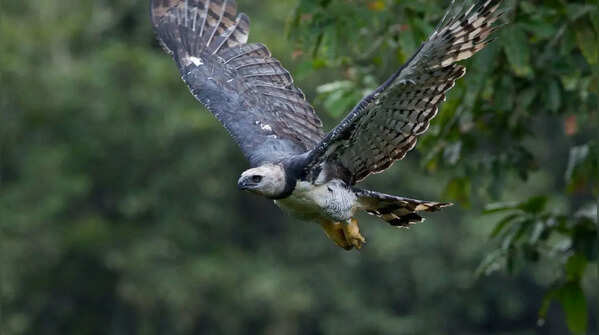
Harpy eagle
The harpy eagle is a powerhouse in the treetops, one of the world’s most powerful birds of prey. With massive talons larger than a grizzly bear’s claws, they hunt monkeys, sloths, and other tree-dwelling animals. Indigenous people see them as symbols of strength, but deforestation is shrinking their habitat. However, deforestation has reduced nesting habitats in many parts of the rainforest.

Hoatzin
Another strange bird found in the Amazon basin, the hoatzin (known as the “stink bird”) defies biology — unlike most birds, it digests leaves by fermenting them inside its gut, like a cow (it’s called cattle digestion). That results in a strong smell, explaining the nickname. Young hoatzins even have clawed wings, which is a rare evolutionary trait that helps them climb before they can fly.

Hyacinth macaw
The Hyacinth Macaw is perhaps the Amazon’s most visually striking bird with brilliant cobalt-blue feathers and bright yellow facial markings. This macaw is the world’s largest flying parrot species. However, wildlife trade and habitat loss are big threats to them. Thanks to extensive conservation efforts, numbers have stabilized and are recovering in some regions.

Electric eel
Electric eels are one of the most featured creatures of the Amazon basin. They lurk below the murky waters, and despite their name, they’re not true eels. They’re actually more closely related to catfish than true eels. They can zap prey or scare off predators, and even knock down large animals, with 800-volt shocks. That’s enough to stun anything nearby!

Candiru fish
The candiru fish is one of the most notorious fish found in the Amazon basin, and is infamous as the “vampire fish”: tiny and parasitic, and quite vicious. The candiru is believed to enter the gill chambers of larger fish and feed on blood. Tales of attacks on humans are mostly myth, but their strange life cycle keeps scientists fascinated.

Green anaconda
Finally, the green anaconda of the Amazon is almost legendary, one of the largest snakes on Earth. The female green anaconda can get over 20 feet long and weigh more than 200 kilograms. These massive snakes spend much of their lives in swamps, slow rivers, and flooded forests where their olive-green bodies remain nearly invisible underwater. Though often portrayed as man-eating monsters in popular culture, scientists say attacks on humans are extremely rare.
Featured In etimes

