
- News
- etimes
- animals-pets
- 10 surprising facts about slugs: From blue blood to 27,000 teeth
10 surprising facts about slugs: From blue blood to 27,000 teeth
10 surprising facts about slugs: From blue blood to 27,000 teeth
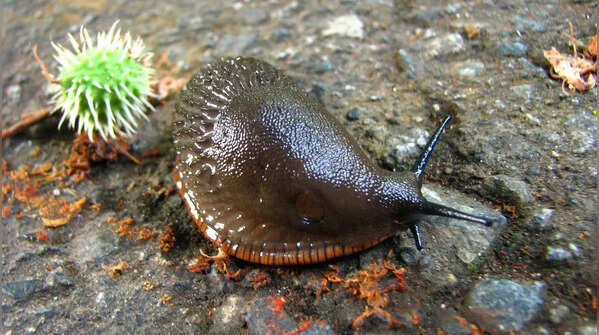
Slugs are commonly seen as slow-moving, slimy creatures that live in gardens, but the biology of slugs is actually quite complex. As a soft-bodied creature, slugs are classified as a gastropod, closely related to snails, but has still managed to develop unique adaptations without the need for a shell.
Their copper-based blood and thousands of microscopic teeth are just a couple of the interesting facts about slugs that make this creature fascinating to learn about.
The fascinating facts about slugs are that, even though these creatures are soft-bodied, they are actually very efficient at living in a variety of different habitats. The interesting facts about slugs show that even though these creatures are often overlooked, they are actually quite advanced.
PC: Wikipedia
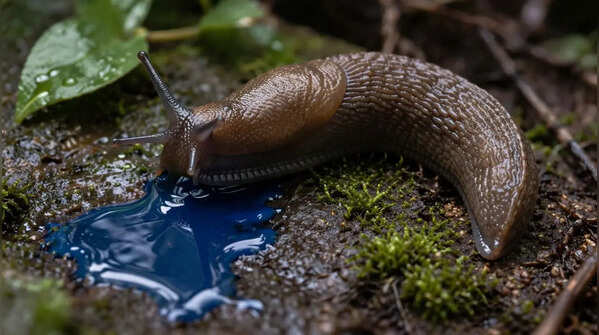
Slugs have blue blood
Slugs' blood is colored blue because slugs use a copper-based molecule, known as hemocyanin, to carry oxygen rather than an iron-based molecule, known as haemoglobin. This helps slugs to carry oxygen effectively, especially in cold and moist climates where oxygen levels are low.PC: AI-Generated
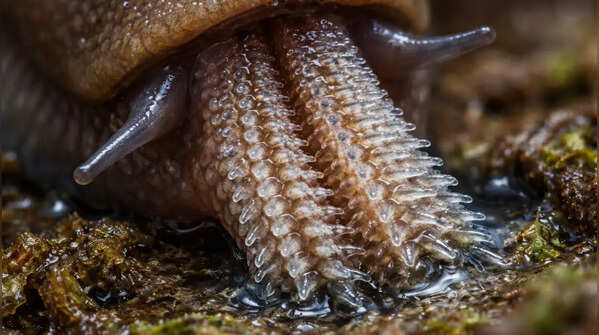
Slugs can have up to 27,000 teeth
Slugs are known to have thousands of microscopic teeth that are arranged in a ribbon-like structure known as a radula. The teeth are always replaced as they wear off, according to the Natural History Museum.
PC: AI-Generated
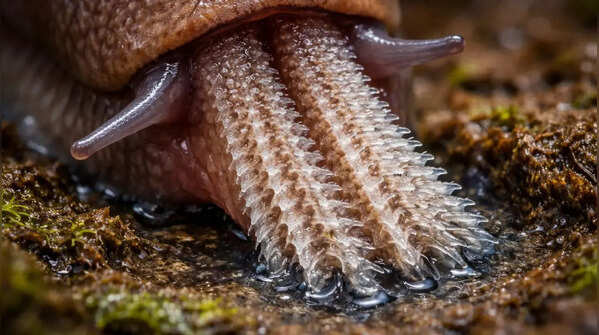
Their teeth are incredibly strong
Despite their small dimensions, slug teeth have been proven to be highly durable and resistant to wear and tear. Research funded by the National Institutes of Health proved that slug teeth have reinforcement minerals, hence making them highly resistant.
PC: AI-Generated
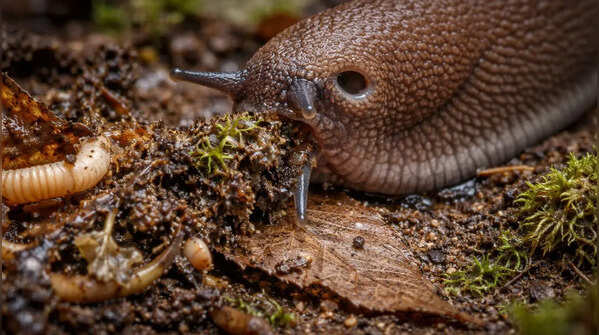
They play a key role in ecosystems
Slugs help in decomposition because they eat decomposing matter. Decomposition helps in recycling matter, hence promoting plant growth and maintaining balance in nature.
PC: AI-Generated
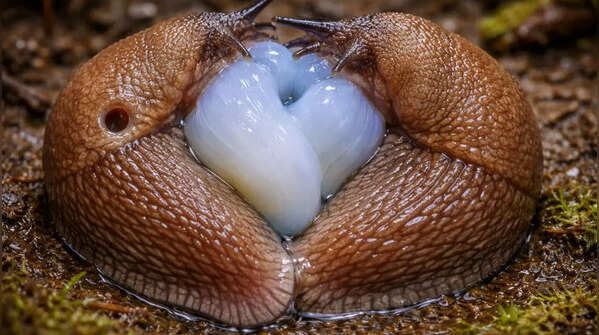
They are both male and female
Most slugs are hermaphrodites, and this means that they have the capacity to mate with any other slug they find, hence maximising their chances of reproduction in case the other species are scarce in the region.
PC: AI-Generated
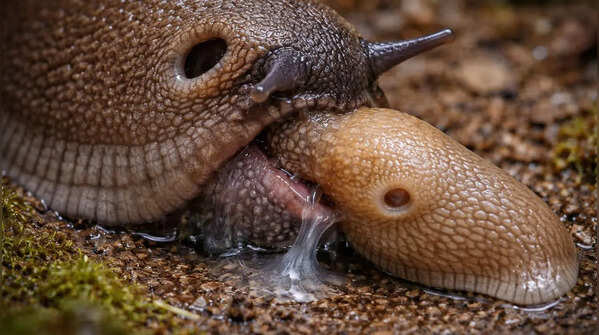
Slugs can be carnivorous
It is believed that most slugs are herbivorous, but some species are carnivorous, and they prey on other slugs, as well as other invertebrates. This shows that the feeding habits of slugs are not as simple as they are perceived to be.
PC: AI-Generated
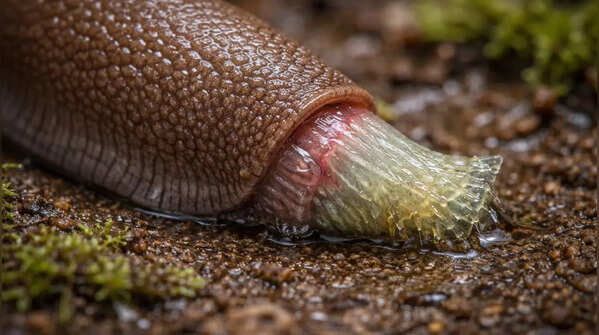
Slugs can regenerate lost body parts
Some species of slugs are capable of regrowing their lost body parts, and this ability helps them to survive, especially when they encounter predators in the wild.
PC: AI-Generated
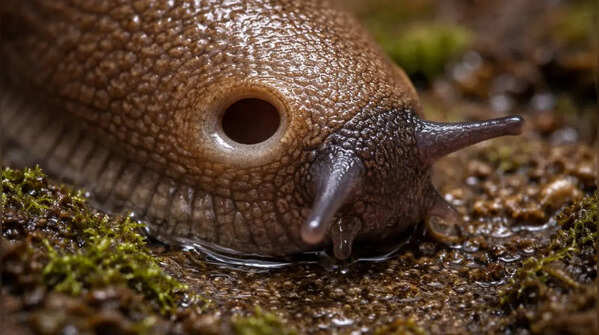
They breathe through a small opening
Unlike humans, slugs do not have lungs and do not breathe through them. Instead, they use a tiny opening called a pneumostome to facilitate respiration, especially when they are on land, and their bodies are moist.
PC: AI-Generated
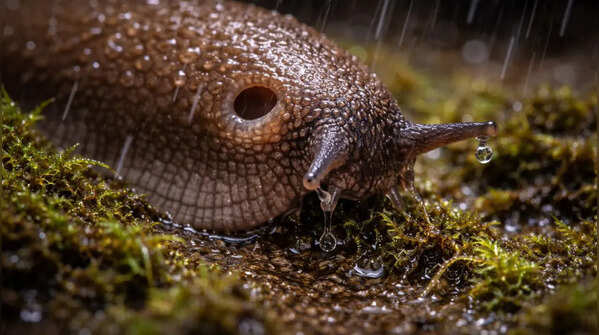
Slugs rely heavily on moisture
Slugs thrive in moist conditions because they can easily dry up if exposed to dry conditions for a long duration. Slugs hide in moist places during the day and come out at night when it is raining.
PC: AI-Generated
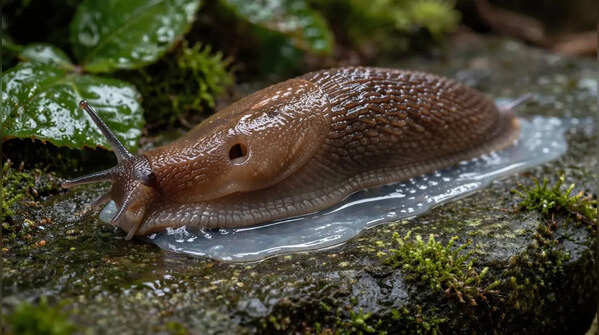
Slugs produce mucus for movement
Slugs have a layer of mucus that helps them glide smoothly over surfaces. It helps reduce friction, protects them from rough surfaces, and retains moisture on their bodies to prevent dehydration.
PC: AI-Generated
Featured In etimes

