
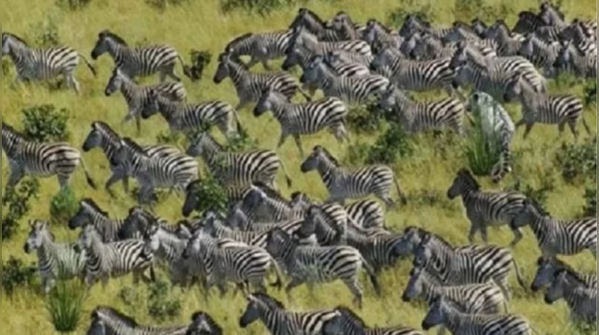
This viral Zebra puzzle has left thousands confused, can you find the hidden Tiger in just 10 seconds?
Spot the Tiger in 10 seconds
There is something strangely exciting about a puzzle that makes the whole family stop scrolling for a moment and stare at the same image together. One person squints at the screen, another points confidently in the wrong direction, and somewhere in the middle of the chaos, a child suddenly shouts, “Found it!”
That is exactly why this zebra-and-tiger optical illusion has become one of the internet’s most shared brain teasers. At first, the image simply looks like a herd of zebras running together. But hidden carefully among them is a tiger waiting silently. The challenge sounds simple: spot the tiger within 10 seconds. Yet many people miss it on their first try.
What makes this puzzle so interesting is not just the hidden animal. It is the way the human brain reacts to patterns, movement, and confusion. The image quietly tests observation skills, focus, patience, and attention to detail without feeling like a classroom exercise.(Image credit: FreshersLive)
Why this illusion confuses the brain so easily
The trick lies in the stripes.
Zebras already carry one of nature’s most confusing patterns. When many zebras stand or run together, their black-and-white stripes blend into one moving wall of lines. Predators often struggle to focus on a single animal during movement because the stripes create visual confusion.
Now imagine hiding a tiger within that same pattern-heavy scene.
The tiger’s body naturally blends into the crowded image because the brain keeps searching for familiar zebra shapes instead of something different. Most people scan quickly, expecting the tiger to “pop out.” But optical illusions rarely work that way. They reward patience more than speed.
Children often perform surprisingly well in such puzzles because they observe without overthinking. Adults, on the other hand, try to solve the image logically and end up missing obvious clues.

The real secret is understanding animal behaviour
This puzzle becomes easier once the scene is viewed like a wildlife moment instead of just a game.
The image shows zebras running together in one direction. In nature, zebras usually move like this when danger is nearby. They stay close to the herd because it improves survival chances and confuses predators.
That small detail becomes the biggest clue.
If the zebras are fleeing, then the predator must be somewhere close. And predators like tigers or lions do not usually stand openly in the middle of prey. They stay hidden, low, silent, and patient before attacking.
This changes the way the eyes search the image.
Instead of randomly scanning stripes, the brain starts looking for something still, watchful, and separate from the herd’s movement.
A simple way to spot the hidden tiger
Many people give up because they look everywhere at once. But this puzzle becomes manageable when broken into steps.
First, avoid staring at the centre immediately. The brain naturally focuses there and misses surrounding details.
Next, notice the direction in which the zebras are running. Since prey animals usually run away from danger, the hidden predator is likely positioned slightly behind or beside them.
Then comes the important part: search for stillness.
A tiger waiting to hunt does not move wildly. It crouches quietly and watches. In this illusion, that hidden stillness becomes the biggest giveaway.
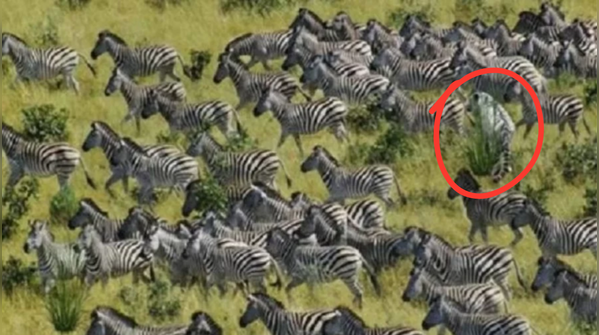
Many viewers eventually discover that concentrating on the right side of the image helps narrow the search. The tiger is cleverly positioned where the eye least expects it.
And once spotted, it suddenly becomes impossible to unsee.

Why optical illusions continue to fascinate the internet
The internet sees thousands of trends every day, but optical illusions continue to survive because they tap into basic human curiosity.
People enjoy being challenged in small, harmless ways. There is satisfaction in spotting something others missed. At the same time, these puzzles remind viewers that the brain does not always see reality perfectly.
The eyes collect information, but the brain decides what deserves attention.
That is why two people can stare at the same image and notice completely different things.
And maybe that is why these illusions remain memorable long after the challenge ends. They are not really about finding a hidden tiger. They are about discovering how the mind works under pressure, distraction, and expectation.
Disclaimer
This article is intended for entertainment and informational purposes only. Optical illusions and brain teasers may improve observation and focus temporarily, but they are not scientific measures of intelligence, eyesight, or cognitive ability.
Featured In lifestyle

