
- News
- lifestyle
- travel
- things-to-do
- All deer species in India, and national parks where visitors can spot them
All deer species in India, and national parks where visitors can spot them
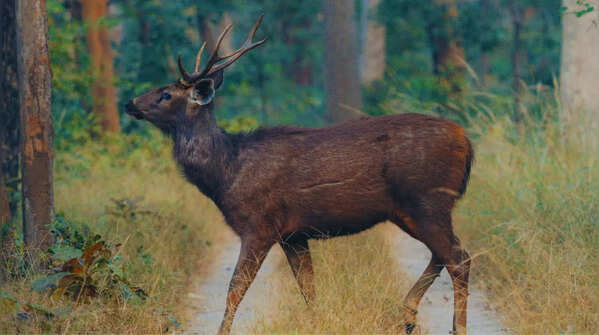
All deer species in India, and national parks where visitors can spot them
From the misty Himalayan forests of Kashmir to the floating wetlands of Manipur and the tiger reserves of central India, deer are among the most fascinating mammals found across the country’s wilderness. India is home to a remarkable variety of deer species, each adapted to a very different landscape, some thrive in dense rainforests, others in swampy grasslands, alpine mountains, or dry deciduous jungles. While there are plenty of species that can be seen while on a safari, including species like the chital, there are others which are extremely rare, endangered, and available only in limited habitats. These herbivores have an important part to play in maintaining the forest eco-systems, besides being prey for other species including tigers and leopards. Wildlife enthusiasts can enjoy viewing these species through safaris in the national parks of India
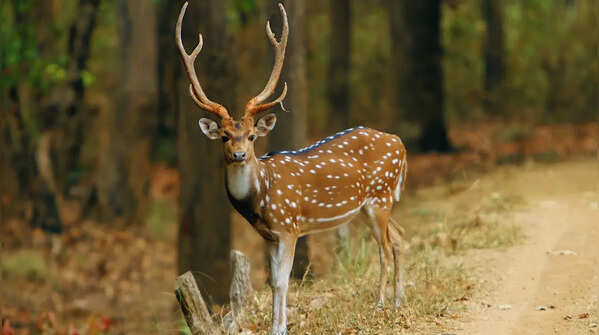
Chital (Spotted Deer)
Chital is one of the commonest species of deer in India. This is because of its reddish-brown body that is spotted with permanent white spots. This deer species is highly gregarious in nature, living mostly in herds of a few to many members. Chitals are found mostly in deciduous forests where they have access to water as well as grazing fields. Because these deer form the prey for tigers and leopards, their presence in large numbers is considered an indication of a thriving predator population. Tourists can easily find chitals in some of the most visited tiger sanctuaries in India like Jim Corbett National Park, Bandhavgarh National Park, Ranthambore National Park and Nagarhole National Park.
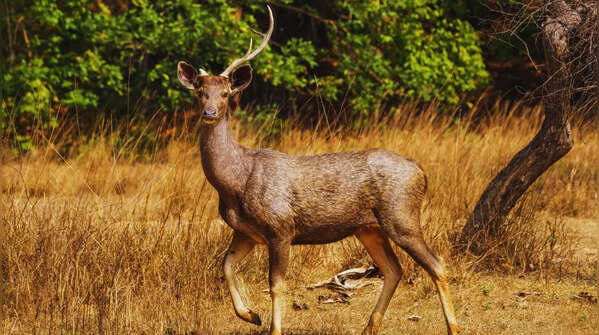
Sambar Deer
The Sambar deer is the biggest species of deer found in India and is extensively spread all over forest regions of the Indian subcontinent. In contrast to Chital, sambars require dense forests and are mostly seen at dawn, dusk and night. The Sambar deer has dark brown fur, big ears as well as tough antlers in case of males. The Sambar deer are known for producing loud alarm calls which serve to warn other animals about any predator in the area. Tigers are greatly dependent on the sambars for their food; hence, the latter are found in abundance near tigers.
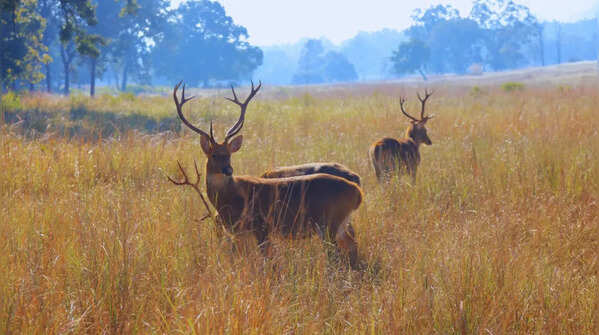
Barasingha (Swamp Deer)
The barasingha, which is also known as the swamp deer, is well known for its huge antlers, which may sometimes grow multiple tines. The barasingha was once common in northern and central India but had suffered massive reduction in numbers due to habitat loss and hunting practices. Today, the animal remains confined to a few sanctuaries where the grasslands are protected. In India, there exist two distinct types of the barasingha - the swamp type, which occurs in northern India, and the hard-ground barasingha, which occurs in central India. One of the most well-known sanctuaries that have helped preserve the latter is the Kanha National Park.
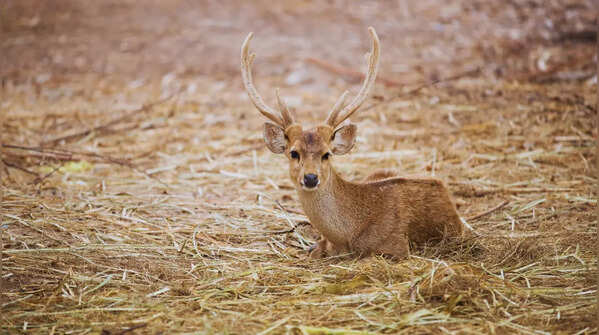
Hog Deer
The hog deer gets its distinctive name due to its unique style of running that resembles that of hogs – characterized by keeping their heads down while moving through grasslands. It is smaller and stouter compared to most Indian deer species. The hog deer inhabits tall grasslands and riverine environments of the floodplains. The animal is common in north and northeast India, mostly in regions influenced by the Himalayan rivers. In contrast to chital, hog deer normally move singly or in small groups. Hog deer form one of the main herbivores of the Brahmaputra floodplains and can frequently be seen in Kaziranga and Manas National Parks.
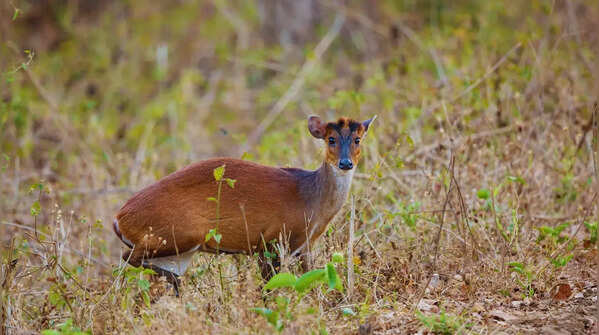
Barking Deer (Indian Muntjac)
The barking deer or the Indian muntjac, is considered to be among the most elusive forest deer of India. The name comes from the shrill barking sound made by the deer similar to that made by dogs, which is used to warn other animals about any threat. While many deer species live in herds, barking deer lead a solitary life and prefer hiding within dense forests. They are small, reddish brown in colour and males are known to have short horns as well as elongated canine teeth. Barking deer can be seen all throughout the forest areas of India, ranging from the foothills of the Himalayas to the Western Ghats.
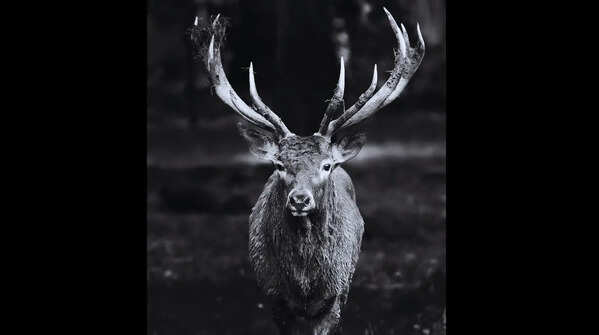
Hangul (Kashmir Stag)
The hangul, or the Kashmir stag, is one of the rarest and critically endangered deer species of India. Found in the Kashmir valley, hanguls are characterized by their massive structure and impressive antlers. Decline in habitat, and reduced breeding grounds were responsible for the sharp decline in the numbers of this deer species in the past century. At present, the hangul can be found only at Dachigam National Park, which serves as their last refuge.
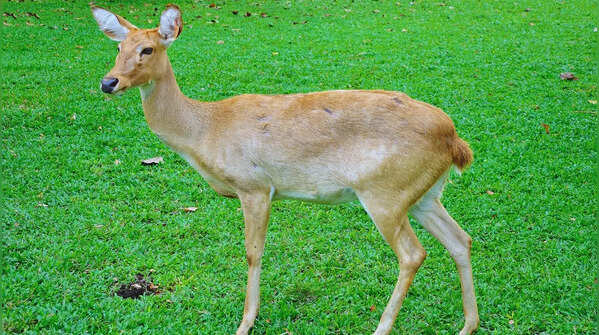
Sangai (Brow-antlered Deer)
Sangai, known popularly as "dancing deer of Manipur," can be found only in the floating wetlands of Manipur in the world. This is a subspecies of the brow-antlered deer which has developed an adaptive behavior towards the unique floating vegetations of Manipur, commonly referred to as the phumdis in Loktak Lake. Because the deer carefully balances itself while moving across these floating marshes, it appears to dance, giving rise to its famous nickname. The sole natural home of the sangai is located in the world's only floating national park named–Keibul Lamjao National Park.
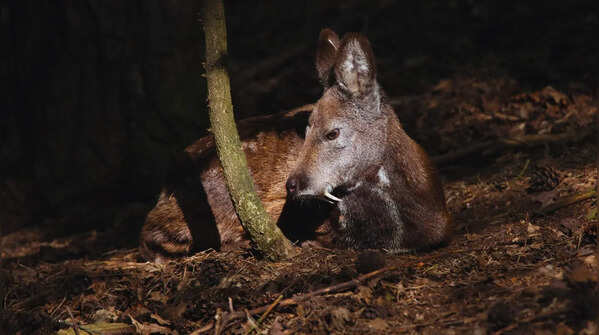
Musk Deer
The musk deer is one of the rarest creatures in the Himalayan region and quite different from other deer. They lack antlers, while male musk deer feature tusks. This species is famous for the presence of the musk-producing gland in males, making them an object of poaching in the past. Musk deer prefer to live in alpine forests and high mountain scrublands of the Himalayas located above 2,500 meters. Because of their shy nature and nighttime activity, these animals can rarely be observed in nature. It is possible to spot musk deer in the Himalayan reserves including Great Himalayan National Park, Nanda Devi National Park, and Kedarnath Wildlife Sanctuary.
Featured In lifestyle

