
- News
- City News
- lucknow News
- Will Yogi govt pursue Ayodhya case through Sunni Waqf Board?
Trending
This story is from March 19, 2017
Will Yogi govt pursue Ayodhya case through Sunni Waqf Board?
Sunni Central Board of Waqfs, the main claimant of the Babri Masjid tittle suit, is a part of Uttar Pradesh government that is going to be headed by chief minister Yogi Adityanath. The recipient of one-third part of the Masjid after the high court’s decision, Waqf Board is now fighting for the case in the Supreme Court.
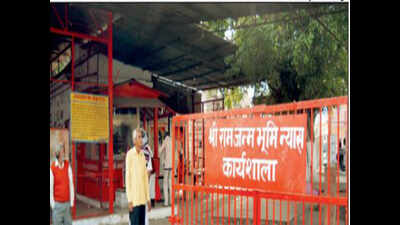
Sunni Central Board of Waqfs, the main claimant of the Babri Masjid tittle suit, is a part of Uttar Pradesh government that is going to be headed by chief minister Yogi Adityanath. The recipient of one-third part of the Masjid after the high court’s decision, Waqf Board is now fighting for the case in the Supreme Court.
In its manifesto, the BJP had announced that it would work for the construction of Ram temple on the Babri Masjid site “within the law”.

The Board’s chairman and members are nominated by the government and it is also funded by the state government. All the moves in case of Babri Masjid, from filling the case of placing of idols in Babri Masjid to the demolition, have been taken by the Uttar Pradesh government in favour of the Masjid till now.
When the idols were placed on the intervening night of December 23-24 1949, the FIR was lodged by Uttar Pradesh government through Ayodhya Kotwal Ram Dev Dubey on the report of beat constable Mata Prasad.
In 1969, after the consent of Uttar Pradesh government, the Sunni Central Waqf Board had filed a suit in Faizabad court claiming the title of Babri Masjid.
“Digvijay Nath, the then-Mahant of Gorakhnath temple and leader of Hindu Mahasabha had engineered the placing of idols in Babri Masjid through local leaders in Ayodhya Mahant Abhiram Das and Mahant Ram Chandra Das Paramhans in 1949,” said Dhirendra K Jha, the author of ‘Dark Night At Ayodhya’.
“In 1991, when Kalyan Singh was sworn in as the first BJP chief minister of Uttar Pradesh after a sweeping majority by BJP on the Ram Mandir issue, the Waqf Board was fighting for the title suit of Babri Masjid. In the regimes of Rajnath Singh and Ram Prakash Gupta, the case continued,” said Mushtaq Ahmad, a senior lawyer who pleaded the case of Babri Masjid in high court.
Mahant Ram Das, the chief priest of Nirmohi Akhara, said, “If the state government takes the step of withdrawing Waqf Board from the case, it will open the way for the construction of Ram Mandir.”
Ranjeet Lal Varma, the lawyer for Nirmohi Akhara, a litigant from the Hindu side, said, “The government can do nothing unless any change in law of Central Waqf Act is made. It might bring some formula of settlement. If the government withdraws Waqf Board from the case, there are more Muslim parties fighting the case as appellants in Supreme Court.”
“We are ready for negotiation over this issue. Let the new government bring some formula in the light of Supreme Court’s full bench verdict of October 24, 1994. In that verdict, there is provision for both mosque and temple,” said Khaliq Ahmad Khan, a litigant in the Babri Masjid case.
“Will Yogi Adityanath allow the Waqf Board to stick to the claim of the title suit of Babri Masjid or will he withdraw the Board from the case? This is a big question,” said Iqbal Ansari, a litigant from the Babri Masjid side.
End of Article
FOLLOW US ON SOCIAL MEDIA










Hot Picks
TOP TRENDING
Trending Stories
In City
Entire Website
- Mumbai schools and colleges shut tomorrow amid IMD's heavy rain alert, BMC issues notice
- Ja'Marr Chase Luxurious Lifestyle: Expensive Properties, net Worth, Car Collections and More
- 'Nandini': The new ghee supplier for Tirupati laddus – who owns it?
- India’s rising influence in the Asia Power Index surpassing Japan and China; ranks 3rd in the list
- 3 Reasons Why Bad Blood 2024 Will Make An Epic Return To WWE PLE Calendar
- 'Diddy List': Names of celebrities connected to Sean Combs viral
- EY Pune employee Anna Sebastian's death: Probe finds MNC lacked labour welfare permit
- Virat Kohli, Gautam Gambhir, Rishabh Pant's buggy-ride goes viral; fans say 'teeno bhai tabahi' - Watch
- 'Virat Kohli has lost momentum, can't beat Sachin Tendulkar's record'
- Pope offers refuge to jailed Suu Kyi: Report
- 'Prepare for entry': Israeli forces brace for possible ground operation in Lebanon
- Mumbai rains: 4 dead so far; flights diverted, schools, colleges shut
- How love for India is bringing NRIs back to real estate market
- Watch: PM Modi enjoys chess showdown between Praggnanandhaa and Erigaisi
- 7-yr-old boy stripped, beaten, given electric shocks by teacher for forgetting bag
- Lipstick row: Chennai's only woman dafadar transferred for 'not carrying out duties'
- Explained: Why SC wants to label ‘child pornography’ CSAEM
- OpenAI’s CTO Mira Murati resigns: Read what CEO Sam Altman said
- Leopard traps fail as goat baits turn into feast's for thieves in UP's Bijnor
- 'Hindus go back': BAPS temple vandalised in US; 2nd incident in month

Popular Categories
Hot on the Web
Top Trends
Trending Topics
Living and entertainment
Latest News
BJP is ending reservation by ending permanent jobs, government education, says HoodaMountaineers scaled unclimbed high peak, names it 'Tsangyang Gyatso Peak’ after Sixth Dalai LamaKaun Banega Crorepati Season 16: Amitabh Bachchan recalls the shooting of 'Sara Zamana' from Yaarana; says 'I was getting electric shocks'Why do kangaroos box and drown predators?‘Yek Number’ trailer launch: Aamir Khan, Raj Thackeray, Rajkumar Hirani and Sajid Nadiadwala grace the eventIndia urges citizens to avoid travel to Lebanon amid escalating tensionsLeo, Daily Horoscope Today, September 26, 2024: Positive developments are expected in love lifeJ&K will never have a BJP government: Mehbooba MuftiChina conducts rare publicised test launch of ICBMVijay Deverakonda extends best wishes to Jr NTR’s 'Devara' team head of releaseRam Charan's 'Game Changer' new single promo to be out of THIS date“I’m just taking every day, I can’t control” - WWE Star Big E's Return UpdateJanel Grant’s lawyer says Mr. McMahon Netflix docuseries only “scratches the surface” of his personalityMammootty and Vinayakan starrer goes on floors in NagercoilHeavy rain floods Chennai roads, disrupt traffic, and cause power outagesGujarat schoolboy Drona Desai scores 498 in Under-19 tournamentRobert Lewandowski winner takes Barcelona past Getafe to extend unbeaten run in La Liga'Welcome to Washington': Biden's latest blunder in New York while addressing world leaders — watch
Copyright © 2024 Bennett, Coleman & Co. Ltd. All rights reserved. For reprint rights: Times Syndication Service