
Why Chef Sanjeev Kapoor suggests visiting Kashmiri Kandur-waan: 7 must-try Kashmiri breads

Understanding the world of Kashmiri bread
Bread is an Indian staple, which goes beyond just accompaniment. It is an integral part of the country’s culinary identity, reflecting regional ingredients, traditions, and techniques. From the soft phulkas of North to ragi rotis of the South each bread tells a story of local culture and flavors. Among these, Kashmiri breads like Kahwa roti, Tschur-ki-rot, and Kandur-ki-roti stand out for their unique preparation and aromatic appeal, which are often enriched with local spices, dry fruits, or clarified butter and offer a reflecting of rich culinary culture existing in the valley for years. According to celebrity chef Sanjeev Kapoor who made a visit to Kashmir, the smell of baking of bread from Kandur-wan or bakery as it is known in Kashmir, is a tough temptation to resist. He states, "On a cold, foggy morning, while I was busy appreciating the scenic beauty of the Dal Lake on the famous Shikara, the irresistible aroma of freshly baked bread wafting from the wood fired tandoor tickled my nose and I was instantly drawn towards the bakery, or Kandur-wan, as the Kashmiris call it."

Chef Sanjeev Kapoor's experience
Chef Sanjeev shared a video on his official YouTube channel and explained that despite of the busy schedule, the kandurs or bakers there, unaware of who I was, warmly invited me to experience the process of making Kashmir’s traditional tandoori bread, Girda, famous Kashmiri morning bread. I was thrilled to soak in the warmth, learn to make a Girda with those special dented patterns, bake it in their clay oven, and of course taste it. I must say, these breads taste extra special when made with love, like the Kashmiris do!
He shares, "Girda is made with just wheat flour, water, milk, where it is all combined and kneaded. What sets it apart is the art and technique of making it." It's a centuries old technique honed by the kandurs (bakers) of the city do it with such speed and smile on their face. It is best enjoyed fresh, confirms chef Sanjeev. The best way to understand the cultural depth of a place is to experience its food, especially bread. The breads of Kashmir baked freshly every morning is a unique experience that one should live. He compares the flaky texture of Bakarkhani and Kulcha with Balushahi. Explaining in the intricacy of these breads, he says while Bakarkhani is baked at very high temperature, Kulcha requires low heat to get the texture right. Praising the kandurs and their control over the tandoors, he says, while the modern science of cooking can be controlled over switches and buttons, but the art of handling these tandoors is exceptional. "We came here unannounced, but every bakery, every home opened their gates with love, heart and food and that is the magic which only food can offer", he concluded.
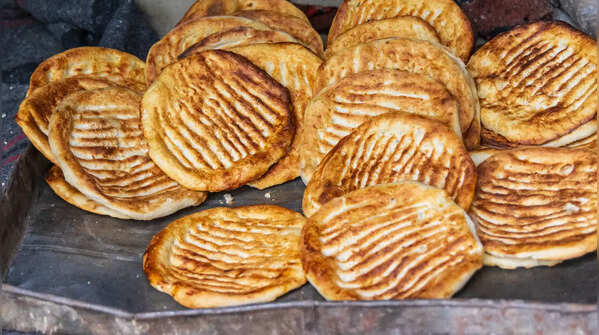
Czot
It is a medium-sized bread made with refined flour with golden and white hues, prepared in Kandurs (clay/tandoor oven) and has finger impressions.
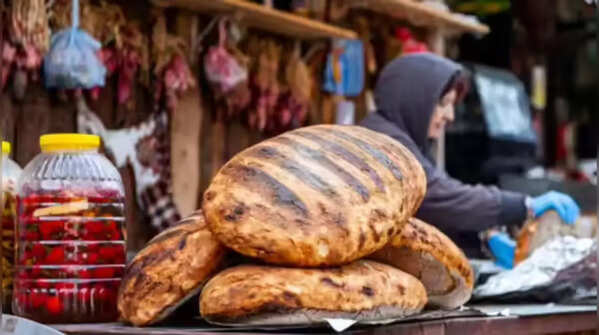
Ghyev czhot
It is a special bread that is similar to czot and uses ghee along with maida, waer, and salt, which makes it extra soft. It is used for special occasions, such as Ramadan and is often served with noon chai, also known as Kashmiri pink salt tea.

Lavasa
It is a thin, large, unleavened flatbread made with refined flour and has a white colour. It is a paper-thin blistered naan and is used to wrap meat and chickpeas. It is often served for breakfast and with the famous pink salt tea. (Image: Instagram/chinar_baner)

Chochwor
Also known as Czochworu, it is a desi soft donut that is small in size and is topped with sesame seeds and poppy seeds. It is typically made from refined flour (maida) or a mix with yeast, shaped into small rings with a hole in the centre. It is best served with butter or jam, along with salted tea.

Shirmal
Also known as Krippè, it is the traditional slightly sweet and saffron-flavoured bread best served with kahwa and is a dry, crumbly bread that has a longer shelf life.

Katlam
It is another layered bread made with refined flour, salt, water, butter, poppy seeds, and milk. It is best served with noon chai. (Image: Instagram/manishb)

Bakarkhani
It is more like a puff pastry, made with refined wheat flour, ghee and sugar and is cooked in layers, and is best served with kahwa. It is made by stretching a sheet of dough repeatedly and interleaving it with ghee before baking in a tandoor. It is crisp on the outside and slightly chewy inside.
Featured In Food

