
- News
- Science News
- Artemis II journey through photos: Nasa goes to the Moon... and around
Artemis II journey through photos: Nasa goes to the Moon... and around
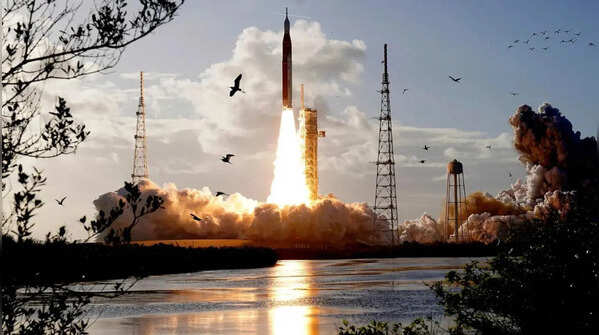
Nasa's Artemis II moon rocket lifts off from the Kennedy Space Center's Launch Pad 39-B Wednesday, April 1, 2026.
Nasa's Artemis II moon rocket lifts off from Kennedy Space Center's Launch Pad 39-B on Wednesday, April 1, 2026. The four-person crew would be the first humans to go beyond low-Earth orbit in more than 50 years. They will fly around the far side of the Moon before returning home. (AP Photo/Chris O'Meara)
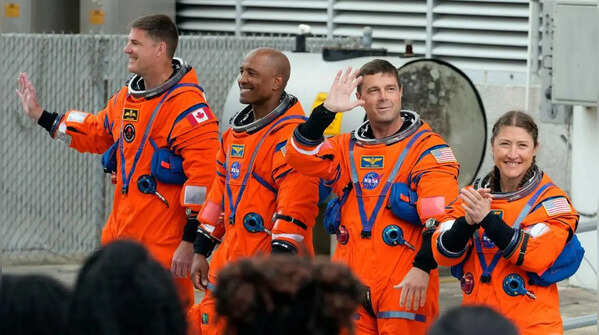
Artemis II astronauts embark on historic Nasa mission as the full moon glows
Astronauts , from left, Mission Specialist Jeremy Hansen, of Canada, Pilot Victor Glover, Commander Reid Wiseman and Mission Specialist Christina Koch leave the Operations and Checkout Building for a trip to Launch Pad 39-B and a planned liftoff on Nasa's Artemis II moon rocket at the Kennedy Space Center Wednesday, April 1, 2026, in Cape Canaveral, Fla. (AP Photo/Chris O'Meara)
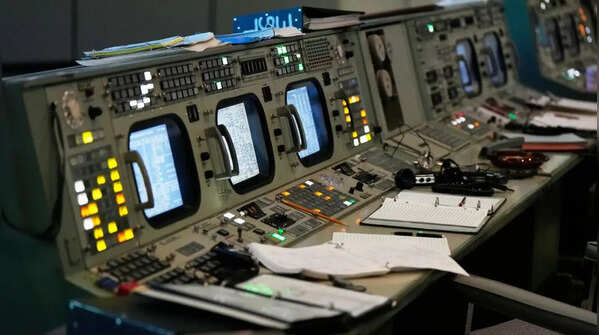
Artemis II Launch Director proceeds with final 10 minute countdown after unanimous 'go'
Nasa reports Artemis II Launch Director Charlie Blackwell-Thompson conducted one of the most important steps before liftoff: the “go/no-go” poll for the team to proceed with the final 10 minutes of the countdown known as terminal count. (AP Photo/Ashley Landis)

Onlookers gather to photograph and celebrate this historic moment.
People gather along Florida's Space Coast as Nasa's Space Launch System (SLS) rocket, carrying the Orion spacecraft and four astronauts, lifts off on the Artemis II mission from Kennedy Space Center in Cape Canaveral, Florida. (@nasahqphoto/X via PTI Photo)
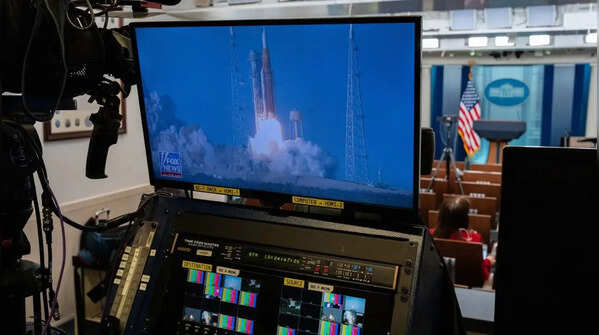
Nsa Artemis II launch as seen from the James Brady Briefing Room of the White House
The launch of Nasa's Artemis II moon rocket from the Kennedy Space Center's Launch Pad39-B is seen on the television monitor in the James Brady Briefing Room of the White House on Wednesday, April 1, 2026, in Washington. (AP Photo/Alex Brandon)
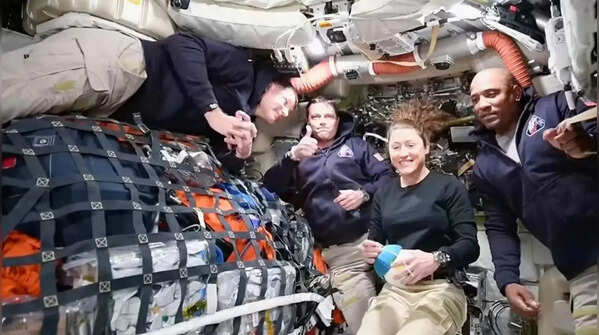
Nasa Artemis crew captured during conference from the moon's orbit
This image taken from video provided by Nasa shows the Artemis II crew, from left, Canadian astronaut and mission specialist Jeremy Hansen, Commander Reid Wiseman, mission specialist Christina Koch and pilot Victor Glover as they speak with Nasa Mission Control via video conference from the moon's orbit Thursday, April 2, 2026. (NASA/PTI)
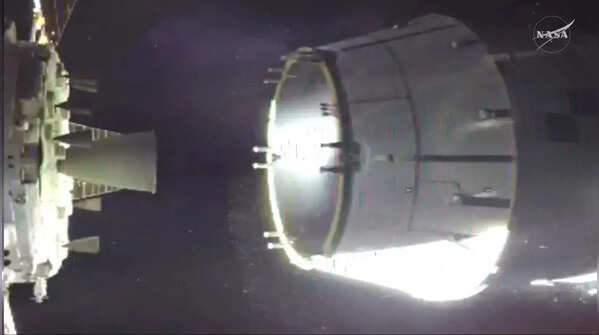
Nasa's Orion spacecraft separates from rocket.
In this screengrab from a video posted on April 2, 2026, Nasa's Orion spacecraft during "proximity operations" after separating from the rocket's upper stage as part of the Artemis II mission. (@NASA/X via PTI Photo)
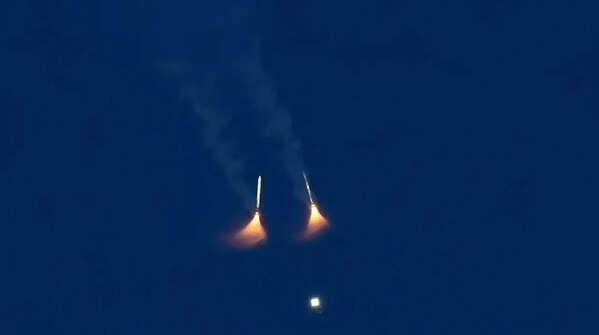
Rocket boosters on Nasa's Artemis II moon rocket fall away after lifting off.
The solid rocket boosters on Nasa's Artemis II moon rocket fall away after lifting off from the Kennedy Space Center's Launch Pad 39-B Wednesday, April 1, 2026, in Cape Canaveral, Fla. (AP Photo/Chris O'Meara)
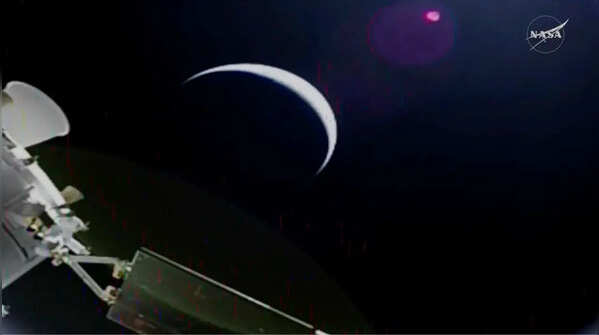
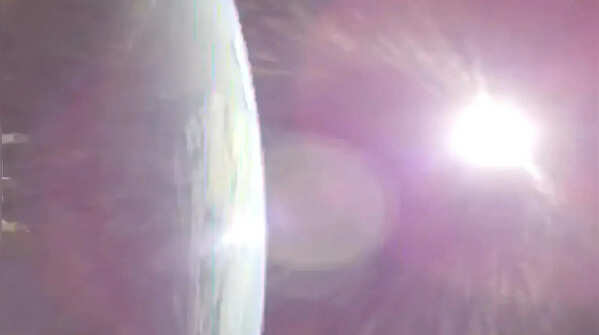
Earth’s crescent is seen from a solar array camera on the Orion spacecraft on the first flight day of the Artemis II mission.
After reaching space, Orion deployed its four solar array wings, enabling the spacecraft to receive energy from the Sun, while the crew and engineers on the ground immediately began transitioning the spacecraft from launch to flight operations to start checking out key systems. This photo of Earth was captured by one of the solar array cameras. (Nasa)
Nasa's Orion spacecraft as it fired its engines heading toward the moon Thursday, April 2, 2026.
During a lunar flyby on Monday, April 6, the astronauts will take high resolution photographs and provide their own observations of the lunar surface, including areas of the far side of the Moon never seen directly by humans.
The partial illumination would create shadows that stretch across the surface, enhancing relief and revealing depth, ridges, slopes, and crater rims that are often difficult to detect under full illumination. (Nasa/AP)
Featured In Science

