
- News
- City News
- chandigarh News
- CBSE's 3-language mandate adds a new layer of stress in classes 9 & 10
Trending
CBSE's 3-language mandate adds a new layer of stress in classes 9 & 10
Central Board of Secondary Education
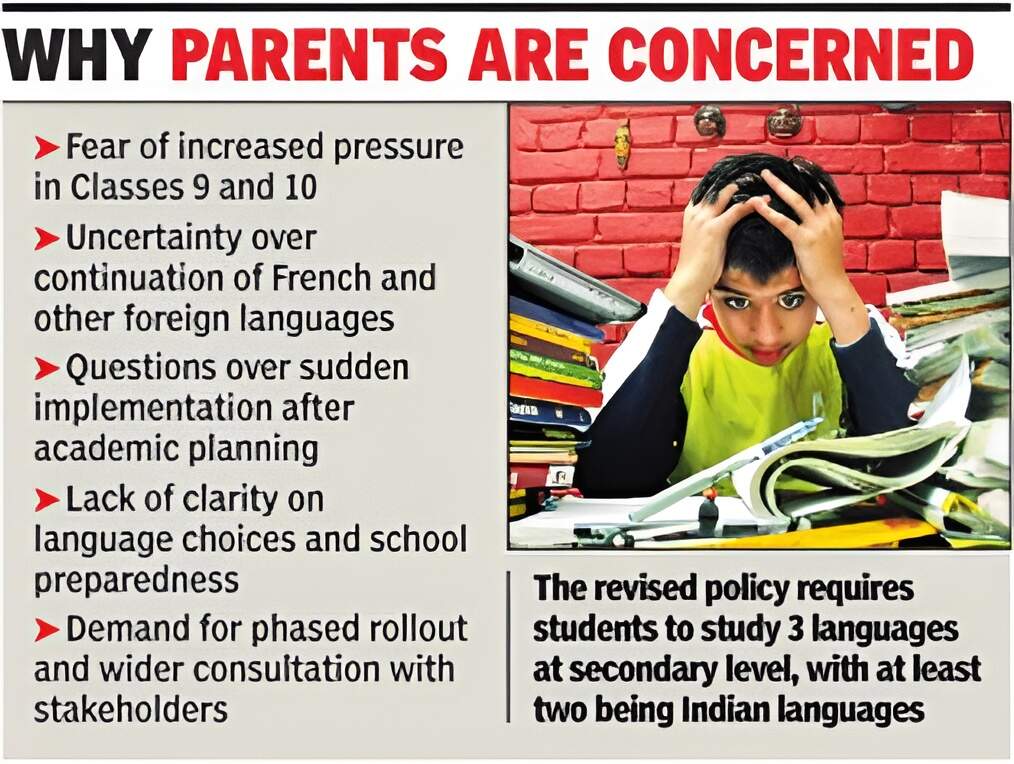
Parents' concern over 3-language policy
End of Article
Follow Us On Social Media

Hot Picks
Top Trending
Tired of too many ads?go ad free now
Trending Stories
In Chandigarh
In City
- CBSE's 3-language mandate adds a new layer of stress in classes 9 & 10
- Bomb scare in Chandigarh as several schools receive threat emails, trigger major security alert
- ‘No-vehicle Wednesday’: Chandigarh bosses, staff trade car keys for cycles, bus rides
- 26-year mystery solved by chance discovery of submerged van; families of four missing persons finally get closure; sold off land & shop to keep search alive
- Ayali quits SAD (Punar Surjit), says won’t join parties ‘run from Delhi’
- Ex-BJP MLA’s son among 7 jailed for 10 years in Ambala attempt-to-murder case
- 7,623 in fray for Punjab civic body polls, but contest hit by claims of bias in Barnala
- Punjab farm fire cases fall to 37 in a day; 738 FIRs filed so far
- SGPC calls ‘Panthic Conference’ to discuss anti-sacrilege law
- Heat wave scorches Punjab, Haryana and Himachal; Rohtak hottest at 46.9°C
- Twisha Sharma's family to approach Jabalpur HC seeking cancellation of mother-in-law's anticipatory bail
- IIT Bombay placements 2024–25: Fewer offers, higher salaries despite global hiring
- BMC empties Bandra Talao to revive the heritage lake
- BJP slams Akhilesh over ‘PDA audit’
- CM orders strict action against drunk driving, overspeeding & illegal vehicles
- BJP at the helm of ‘reservation scam’ in UP, alleges Akhilesh
- CBSE's 3-language mandate adds a new layer of stress in classes 9 & 10
- Calcutta high court directs CBI-SIT to submit report on ‘hushing up’ allegations in RG Kar rape-murder case by June 25
- First Great Indian Bustard day to be celebrated in Jaisalmer on today's May 21
- Tamil Nadu CM C Joseph Vijay expands cabinet, 23 new ministers take oath in Chennai
Tired of too many ads?go ad free now



Explore Every Corner
Across The Globe
IPL Playoff ScenariosUPSC Calendar 2027Sean McVayPrince WilliamHamza BurhanRonda RouseyKarnataka II PUC exam 2 resultMumbai Railway Land DemolitionUP Dowry CaseRonda Rousey Net WorthHPCET result 2026IPL Points Table 2026CSK vs GT IPL MatchTamil Nadu CabinetIPL 2026 Orange CapDelhi Rohini MurderTamil Nadu Ministers List 2026Prashant KishorKerala ResultIPL 2026 Playoff PredictionKCET Result 2026Twisha Sharma DeathDonald TrumpFalta RepollingJalen Williams Injury UpdateNEET UGNEET UG Exam Fee Refund ProcessKarnataka second PUC exam 2 result 2026Tamil Nadu Cabinet ExpansionVirat Kohli

Hot on the Web
R MadhavanAmit ShahRaaj KumarPeddi First ReviewPM ModiSalman KhanDrishyam 3Drishyam 3 Box Office CollectionT.G. Nandish DeathCelina JaitlyBharti SinghAamir KhanSalman KhanNehal ChudasamaDiphtheria OutbreakNiranjana DesaiGlass Shower Screens Cleaning TipsUnique Fruit TreesKaruppu Box Office CollectionKhan SirChandranaag IdentityPopular FoodAC Room Water Bucket TipsMeta LayoffsPanchayat Season 5Anti Lizard TipsHbA1cDhurandhar 2 Box Office CollectionRaja Shivaji Box Office CollectionHoroscope TodayCuba Drone ThreatFatah 3 VS BrahmosUS Powerball LotteryRajnath SinghUAE Nuclear PlantSanjeev AroraNyt ConnectionsEpic Fury 2.0Legal Document PropertySuryastraS 400Captions For Instagram Posts
Trending Topics
MP Wife MurderVande MataramDelhi Transport StrikeNagpur Dowry CaseBJP Leader Pappu SanaWest Bengal Annapura YojanaMumbai Garib Nagar DemolitionUK Grooming CaseMohammed ShamiUGC NET June 2026REET Mains Result 2026Jenny GilruthRohit SharmaRaul CastroPep GuardiolaTrump IRS settlementIPL Orange CapLogan PaulWho is Ines GarciaJapan earthquakeDonald Trump Iran strategyNew Mexico substance exposureUSS NimitzRaul CastroCandace owensHeatwave alertFalta repollingIndia criticizes pakistanIndia Italy relationsPrashant KishorLip-Bu-TanKevin O LearyMark CubanOpenAI And Anthropic LayoffGoogle New Ad FormatMatt GarmanTrump AdministrationJensen HuangGarena Free Fire MAX Redeem CodesPeroxide CodesGenshin Impact Codes
Popular Categories
HeadlinesSports NewsBusiness NewsIndia NewsWorld NewsInternational SportsHealthIndian TV ShowsTechnologyTravelEtimesAstrologyDeorhiAutoTechnology NewsGold Rate TodayWeather TodaySilver Price TodayDelhi Weather TodayPetrol Price TodayDiesel Price TodayCNG Price TodayLPG Price TodayPetrol Price MumbaiDelhi AQIIs Bank Open TodayMumbai AQI TodayIs Bank Open TomorrowPublic Holidays in MayBank Holidays in May
Trending Videos
Capricorn ,Aquarius & Pisces : Your Karma Cycle Is Finally Coming Back Around | Ft. Shruti KharbandaIran War: Trump Ditches Netanyahu’s Pressure To Active Combat, Heated Conversation LeakedFeeling Spiritually Blocked | Maa Ganga May Help You Heal From Within | Ft. Shishir Usha BhartiSalman Khan Accepts Paparazzi’s Apology After Privacy RowRakesh Bedi’s Fun Reunion With Sukhbir In GoaRakesh Bedi’s Fun Reunion With Sukhbir In GoaTamannaah Bhatia Stuns In Bold Red LookPrince Yadav's father reacts to son's India ODI call-up vs AfghanistanRitabhari Chakraborty in her boss modeA Rare Double Moon Impact Could Shake the Stock Market Soon | Sell or Hold Now ? | Ft. Gaurav MittalYellow Yellow Dirty Fellow - Official Title TeaserSonakshi-Zaheer join viral Melody trend after Modi-Meloni moment takes over internetIndia At UN Accuses Pakistan Of ‘Barbaric’ Kabul Hospital Airstrike During RamadanSarpanch - Official Teaser‘Enemies Will Regret…’: Iran Vows Revenge As Trump, Netanyahu ‘Secretly Plan’ New Round Of WarUS House Hearing Descends Into Chaos After ‘White Supremacy’ Debate | WatchThe Human Mind Can Be Controlled| | Hypnosis ,Mind Control & Brain Hacks Exposed Ft. Ravindra KumarIndia-US Nuclear Talks Focus On Small Modular Reactors, Future Energy Expansion
Latest News
Hazaribag man drowns while fishing in lake"Behen Darr Gayi!": Fans relive ‘Bhagam Bhag’ era after watching Akshay Kumar's 'Bhooth Bangla' trailerMBOSE HSLC result 2026 to release tomorrow: Check details hereIran war risk: JPMorgan CEO Jamie Dimon warns of oil shocks, sticky inflation and higher interest ratesMake your clutch last longer with these easy driving tips“Three-against-one situation”: El Rubius opens up on being “targeted” in MrBeast’s viral $1M challengeBihar BTSC lab assistant notification released for 1091 posts at btsc.bihar.gov.in; apply hereIPL craze costs techie Rs 1.46 lakh in fake RCB vs CSK ticket scamRaising “robot-proof” kids: Why creativity and curiosity matter more than everInside ‘Satguru Sharan’: Exploring Saif Ali Khan and Kareena Kapoor Khan’s Rs 100 crore Bandra homeHow selling Alaska in 1867 was a costly mistake for Russia'Hera Pheri 3 is coming': Paresh Rawal dismisses delay reports and reveals he will 'start shooting soon'US-Iran War: A daring rescue Hollywood blockbuster is on its way. Till then, pick your favourite from these 10 films on bringing someone home against all oddsKolkata team unveils fan mural at Rash Behari Avenue, celebrating city’s first loveHow US spread a lie to rescue a pilot of a jet shot down in IranNetflix unveils ‘VOID’, an AI model that can change a movie plotAI data centers are causing 'stress' not just to tech companies, but also private insurers"Trans women are.....": Clavicular’s viral moment with trans women sparks fresh conversation on internet culture
Copyright © 2026 Bennett, Coleman & Co. Ltd. All rights reserved. For reprint rights: Times Syndication Service