
- News
- City News
- delhi News
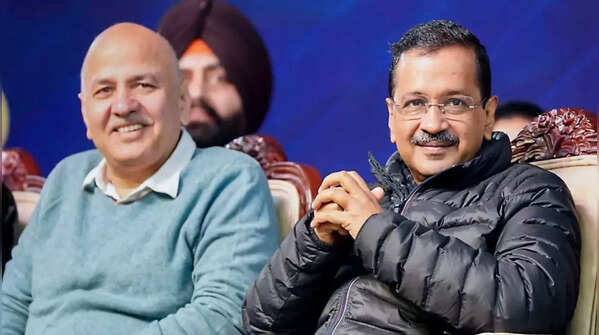
- ‘Truth wins’: Arvind Kejriwal, Manish Sisodia break down after major court relief in excise case
‘Truth wins’: Arvind Kejriwal, Manish Sisodia break down after major court relief in excise case

Court discharges Kejriwal and Sisodia
The Rouse Avenue Court discharged former Delhi chief minister Arvind Kejriwal and former deputy chief minister Manish Sisodia in the excise policy case, ruling that the allegations failed to meet the legal threshold required for framing charges.

No evidence crossed threshold of charge
Advocate Vivek Jain said the court meticulously examined all evidence produced by the CBI and found that not a shred of allegation could cross the threshold of charge, leading to the discharge of the accused.
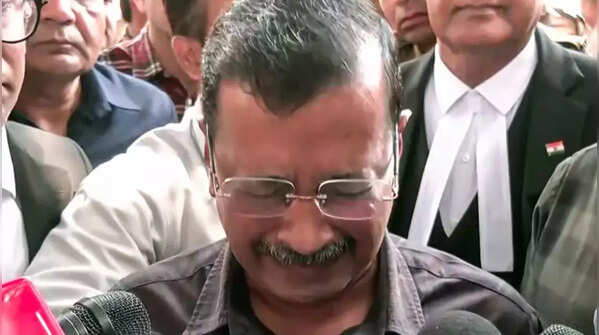
Alleged conspiracy not substantiated
The court observed that the alleged central conspiratorial role attributed to the accused could not be substantiated. It held that the prosecution failed to provide material strong enough to sustain the conspiracy theory.
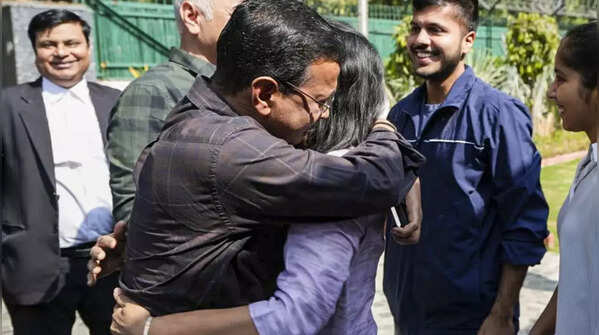
Family greets Kejriwal after verdict
Moments after the court’s decision, Kejriwal met his family outside the court complex. Emotional scenes unfolded as relatives embraced him, marking a moment of relief after months of legal proceedings.
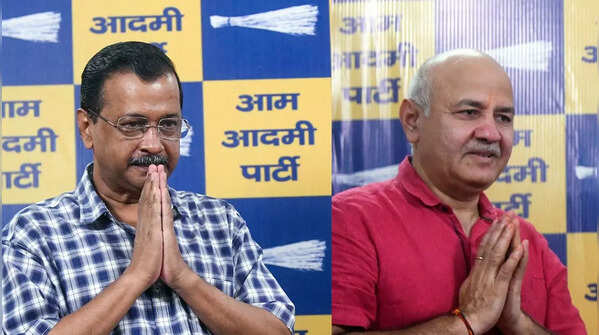
No criminal intent found
In its observations, the court said the allegations failed judicial scrutiny and found no criminal intent on the part of Manish Sisodia. The order stated that the charges did not stand up to legal examination.
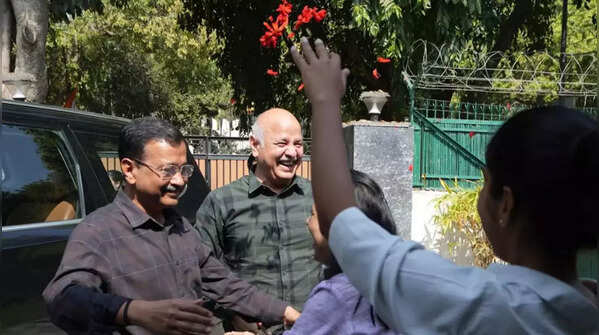
Truth emerges victorious, says Kejriwal
Kejriwal said the verdict reaffirmed his honesty and faith in the judicial system. He maintained that neither he nor Sisodia was corrupt and that the court had cleared their names in the case.

23 accused named in probe
A total of 23 individuals were chargesheeted in the case, including political leaders and businesspersons. The probe had become one of the most high-profile investigations in recent years.
Kejriwal calls case political conspiracy
After the verdict, Kejriwal alleged that top BJP leaders hatched a political conspiracy to weaken AAP. He claimed that five senior party leaders were jailed as part of a larger plan to damage the party.

Major setback for CBI
The discharge order marks a significant setback for the CBI in a politically sensitive case that had sparked sharp exchanges between AAP and BJP over the past two years.
Featured In City

