
- News
- City News
- visakhapatnam News
- Machkund hydropower project modernization to commence by end of 2023
Trending
This story is from August 19, 2023
Machkund hydropower project modernization to commence by end of 2023
The modernization works of the Machkund Hydropower project are likely to commence by the end of this year, as the management of the power project has already completed the reassessment life extension study of three out of the six units. The power generation capacity is expected to increase from the existing 120 MW to 150 MW over the next three to four years once the modernization is completed.
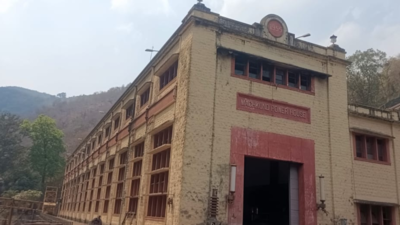
The power generation capacity is expected to increase from the existing 120 MW to 150 MW over the next three to four years once the modernization is completed.


The maintenance and power generation sharing from the Machkund Hydropower project, situated on the Andhra Odisha state border, will be equal, as both states have taken on the responsibility. Initially, the power generation was shared 70% to Andhra Pradesh and 30% to Odisha. However, this agreement was changed seven years ago, and now both states equally share the power.
The project survey was conducted by British Engineer Henry Howart in 1931 when the entire area was part of the Madras Presidency. Subsequent surveys were conducted from 1941 to 1943 to determine the power generation centre. Construction commenced in 1946, with the first unit being commissioned in 1955.
All the turbines and transformers were imported from foreign countries. However, acquiring equipment from foreign nations and dealing with ageing machinery has posed challenges for repairs and operations, according to a Genco employee at the centre.
The consistent water flow from the Duduma and Jolaput reservoirs has been advantageous for the Machkund power project. "Both states have now agreed to contribute equal funds for the modernization works. Reassessment and life extension studies have been conducted for three units, and the studies for the remaining three units are expected to be completed in the next two months, paving the way for the commencement of modernization," said AV Subrahmanyam, the superintendent engineer of the power project, in an interview with TOI.
As part of the modernization efforts, turbines, transformers, and other necessary equipment will be replaced, given that the hydropower project has been generating power for the past 69 years. The first three units are currently generating 17 MW each, while the second phase's three units are producing 23 MW each.
End of Article
FOLLOW US ON SOCIAL MEDIA






Hot Picks
TOP TRENDING
Trending Stories
In City
Entire Website
- UPS vs NPS Calculator: Is A Switch From National Pension Scheme to Unified Pension Scheme Really A No-Brainer? Check Calculations, Benefits - Top Points
- Monster vs Monster: WWE announced massive match for this week's Monday Night Raw
- UPI transaction limit to change from September 16! Here are the new limits for various UPI payments
- File movement linked to weight of money: Nitin Gadkari
- Apple's biggest 'iPhone update' for year 2024, iOS 18, rollout starts today - September 16: India time and how to prepare your iPhone for iOS 18 download
- Arvind Kejriwal's resignation: Who will be next Delhi CM? Atishi seen as top choice
- UP medical aspirants converting religion to secure MBBS seats: A look at NEET UG admission criteria around minority reservation rules
- Protests against students wearing hijab in school play, principal forced to apologize for promoting religious harmony
- Pitru Paksha 2024 Date and Time: Know Significance of Shradh Paksha
- Andhra suspends 3 IPS officers for 'framing', arresting Mumbai actress
- Kolkata police commissioner, two health officials removed after Mamata's meeting with docs
- BAPS swaminarayan temple vandalised in New York; 'unacceptable', says Indian consulate
- Cow vigilantes killing a Brahmin is the wake-up call India needed
- Modi govt will bury bid to revive 90s-like terrorism in J&K: Amit Shah
- 'Look at own record': India condemns remarks by Iran's Supreme Leader Khamenei
- Attempt to derail Delhi bound Swatantrata Senani Express
- Will Atishi replace Arvind Kejriwal as Delhi CM?
- Apple's biggest 'iPhone update' for year 2024 rollout starts today
- Watch: BJP MLA falls on rly tracks while flagging off Vande Bharat train
- UPS vs NPS Calculator: Switch a no-brainer? Not really! Check top points

Popular Categories
Hot on the Web
Top Trends
Prince HarryWho is Ryan RouthUPI Transaction LimitArvind Kejriwal ResignationNEET UG Admission CriteriaKolkata Doctor Rape CaseUS Presidential ElectionsRohit SharmaSports Stars Turned Power CouplesIBPS RRB Clark PO ResultDonald TrumpCristiano RonaldoIndia vs Korea HighlightsBMW Accident Madhya PradeshUPS vs NPS CalculatorMiami Dolphins OwnerLive Cricket Score
Trending Topics
Living and entertainment
Latest News
Vempalle Shareef's story is now a lesson for degree students in Andhra PradeshGovt launches programme to tackle glacial lake outburst flood threat in Himalayas, all 190 high-risk lakes to be monitoredKhatron Ke Khiladi 14: Shalin Bhanot hosts a fun party for his co-contestants Krishna Shroff, Abhishek Kumar, KaranVeer Mehra and othersAstrological Influence on Zodiac Signs' Career ChoicesBike rally held to raise voter awareness in Jammu and Kashmir's Doda ahead of assembly electionsFalcons' Predictable Offense and Cousins' Prime-Time Woes Spell Trouble in PhiladelphiaTaurus, Daily Horoscope Today, September 17, 2024: Anxiety and stress diminishLiza Colon becomes 1st Latina to win Best Supporting Emmy Award'Oh no!': Hilarious goof-up leads to missed catch, leaves bowler in smile. WatchTop NFL Superstars Who Are Vegan: Derrick Morgan, David Carter, Theo Riddick and moreKSCA Invitational: Arjun Tendulkar takes match haul of 9 wickets in big Goa CA XI winAbhishek Kumar shares selfies with Alia Bhatt; recalls the time when he worked as a crowd artist in ‘Humpty Sharma Ki Dulhaniya’Shocking! Man celebrates birthday by lying among massive PythonsSohum Shah says 'Tumbbad 2' will be different from 'Munjya' and 'Stree 2': 'They are not making dadi-nani ki kahaniyaan'1031 candidates to contest Haryana Assembly Elections to be held on October 5: CEO J AgarwalSathiyan set to partner Sreeja in mixed doublesHere's why multiple WWE Hall of Famers refused to team up with Kevin Owens on SmackDownCarlito's Net Worth 2024, Current WWE Salary and More
Copyright © 2024 Bennett, Coleman & Co. Ltd. All rights reserved. For reprint rights: Times Syndication Service