
- News
- Health News
- The ‘wall up’ test: A simple daily check to detect hidden back pain, posture issues, and protect your spine health
The ‘wall up’ test: A simple daily check to detect hidden back pain, posture issues, and protect your spine health
What the ‘wall up’ test reveals about your spine health
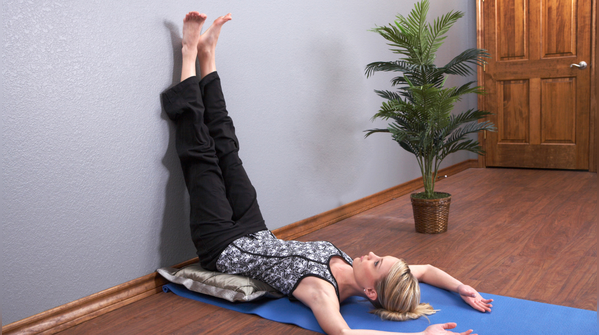
There is a simple way to check how the spine is holding up, and it needs no equipment at all. The “wall up” test looks basic, yet it can quietly reveal posture issues, muscle imbalance, and even early signs of back strain. Many people only notice their spine when pain begins, but this test shifts the focus to prevention. It shows what the body is already trying to say, even before discomfort becomes obvious.
What exactly is the ‘wall up’ test?
The test is straightforward. Stand against a wall with heels, hips, upper back, and head touching it. Arms stay relaxed, and the body should feel natural, not forced.
Dr Vaibhav Tandon explains it clearly, “Wall-up test is a simple yet often overlooked way of assessing body posture and muscular imbalance. A simple procedure that involves standing with your heels, buttocks, shoulder blades and head against a wall, can help visualize the early markers of hyperkyphosis (excessive mid-back rounding) and cervical lordosis (abnormal neck curvature).”
Why naps sometimes make you feel worse: The science of sleep inertia and how to nap the right way
At first, it feels like nothing more than standing still. But the gaps and strain the body reveals in this position tell a deeper story.
Dr Deepak Joshi, Director, Orthopaedics & Spine Surgery, Fortis Hospital Mohali, explains clearly how to perform wall up exercise, "The “Wall-Up” test is a simple way to check spinal alignment. Stand against a wall with your heels, hips, upper back and head touching it. This position should feel comfortable, with a slight natural curve in the lower back. Difficulty in maintaining it may suggest poor posture, reduced flexibility, muscle tightness or early strain in the spine."

What your spine alignment reveals instantly
A healthy spine maintains natural curves. When standing against a wall, these curves should feel supported, not exaggerated.
If the head struggles to touch the wall or the shoulders round forward, it may signal early upper back issues. If the lower back arches too much, it may hint at lumbar strain.
Dr Vaibhav Tandon adds, “If unchecked or not treated, these can lead to a significant reduction of the chest cavity due to the rounding of the thoracic spine and pain in the nerve roots of the neck, respectively.”
This is where the test becomes more than posture. It becomes a window into long-term spinal health.
The hidden signs of back pain before it starts
Back pain rarely begins overnight. It builds quietly through daily habits like sitting long hours, poor ergonomics, and lack of movement.
The wall test helps catch these early signs.
“The test can hint at ‘hidden’ back pain by revealing stress patterns in people who may not yet report symptoms but already have underlying strain,” says Dr Vaibhav Tandon.
Even small imbalances matter. Difficulty keeping the neck aligned or feeling tension in the lower back during the test may point to stress already building in the spine.
Why posture today affects health tomorrow
Posture is not just about appearance. It directly affects breathing, energy levels, and even organ function.
Dr Sandeep Kumar Kundal explains, “The ‘wall-up’ test is a simple yet effective way of assessing the alignment of your spine and whether your posture is silently affecting your back in a negative manner.”
He further adds, “If there is a significant gap between the neck and back, or a trouble maintaining these points in contact with the wall, one may be at risk of developing problems like abnormal curvature of the spine and weakened back and core muscles.”
Poor posture can also reduce lung capacity. When the chest collapses forward, breathing becomes shallow. Over time, this affects stamina and overall health.
What science says about posture and spine health
Research has consistently linked posture with musculoskeletal health and quality of life.
A study by the National Institutes of Health highlights how prolonged poor posture contributes to chronic back pain and spinal degeneration.
Similarly, the World Health Organization notes that musculoskeletal conditions, including back pain, are among the leading causes of disability worldwide.
These findings reinforce why early detection through simple methods like the wall test can make a real difference.
When the test signals a deeper issue
Not every imbalance means a serious condition. But repeated difficulty in maintaining posture during the test should not be ignored.
Dr Sandeep Kumar Kundal says, “These problems may eventually lead to stiffer back muscles, fatigue and even reduced lung capacity due to improper thoracic alignment.”
In simple terms, the body starts compensating. Muscles tighten, joints lose flexibility, and fatigue sets in faster. Over time, this can turn into chronic discomfort.
How to use the test as a daily check-in
The real value of the wall test lies in consistency. Doing it once gives insight. Doing it regularly builds awareness.
“This test lets us know the early signs of a problem before the pain even begins,” says Dr Sandeep Kumar Kundal.
“It is a test that provides the opportunity to fix the posture and prevent problems from arising in the long run.”
A quick daily check can help track changes. If alignment improves, posture habits are working. If it worsens, it signals a need to correct daily routines like sitting posture, screen height, and movement breaks.
Something to think about…
The “wall up” test may look simple, but it offers powerful insight. It highlights how the spine aligns, where stress builds, and what risks may be quietly forming. In a world where most people sit more than they move, such small checks can prevent bigger problems.
The body rarely fails without warning. The wall test helps notice those warnings early.
Medical experts consulted
This article includes expert inputs shared with TOI Health by:
Dr Vaibhav Tandon, Consultant Neurology, Fortis Hospital Ludhiana.
Dr Sandeep Kumar Kundal, Consultant, Neurosurgeon, Fortis Hospital, Jalandhar.Dr Deepak Joshi, Director, Orthopaedics & Spine Surgery, Fortis Hospital Mohali.
Inputs were shared to explain how the ‘wall up’ test can reveal hidden posture problems, early signs of back strain, and help protect long-term spine health.
Featured In Health

